Indianapolis Public Schools will send $4 million to charter schools next year

Add Axios as your preferred source to
see more of our stories on Google.
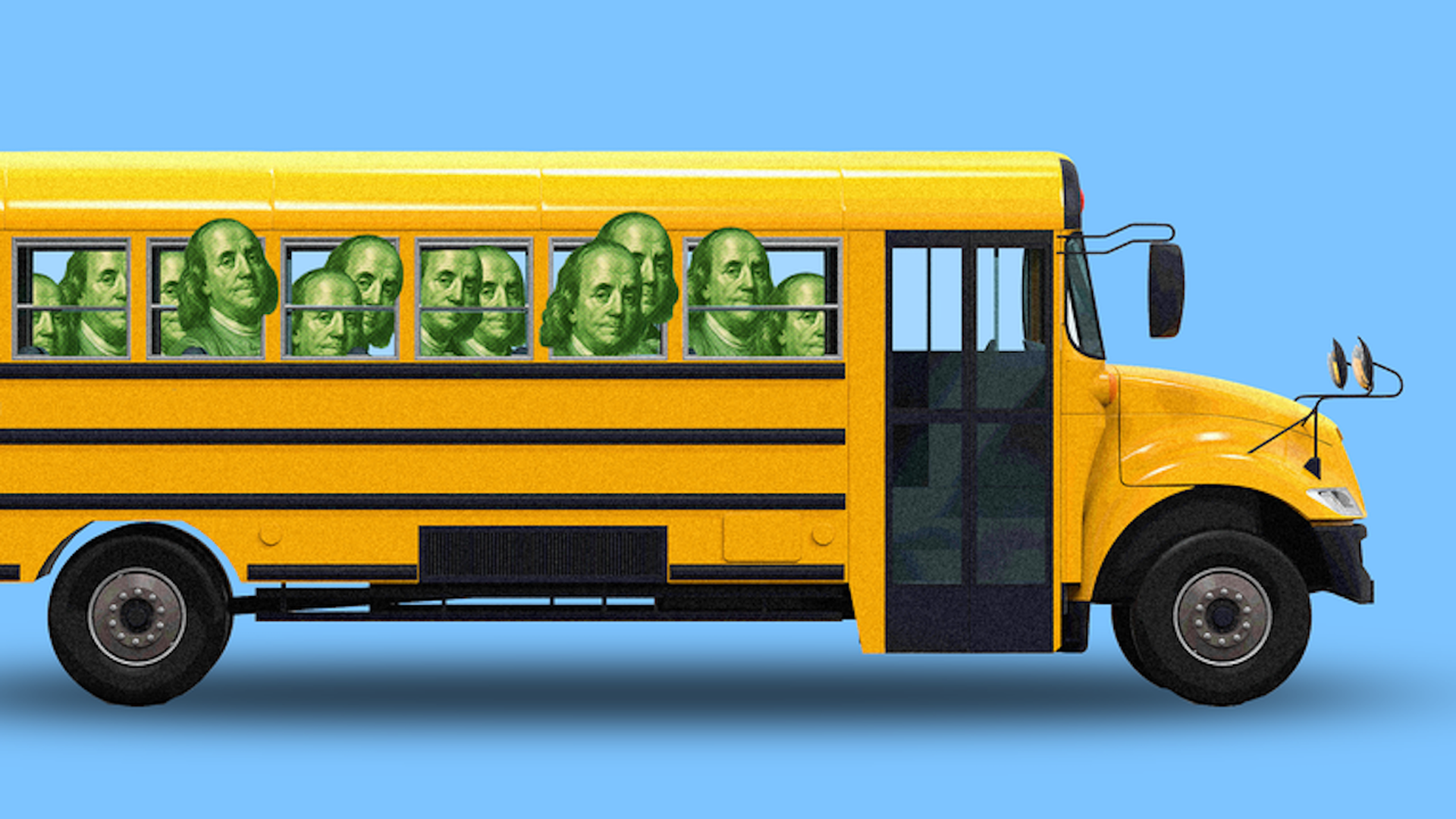
Illustration: Rebecca Zisser / Axios
For the first time, Indianapolis Public Schools will send a portion of new property tax revenue to charter schools.
Why it matters: The district is already facing a budget deficit in the coming years and sharing revenue to comply with a new state law will exacerbate the expected funding cliff.
What's happening: A state law passed last year requires school districts in Marion, Lake, Vanderburgh and St. Joseph counties to share new tax dollars they receive from increasing property values.
- The intent behind the law is to even the playing field between districts that receive property tax dollars for operating costs — and are benefitting from the recent rise in home values — and charter schools, which receive a flat per-pupil grant from the state in lieu of property taxes.
- It's expected to cost traditional school districts $9.3 million in 2025 and $12.5 million in 2026, per a legislative estimate.
How it works: Districts in the four counties only have to share new dollars, so they won't see a cut if property tax revenues go down.
Yes, but: Expenses are increasing, too, and districts have struggled to keep pace with inflation.
Zoom in: IPS officials estimate its cost will be around $4 million — just under 1% of its annual budget the district's board adopted last week — but state data predicts that figure will increase into the future.
- Pandemic-era stimulus dollars are set to expire later this year and an operating referendum will expire in 2026.
- Without intervention, the district will spend through its cash balances and be operating at a deficit by 2027.
Between the lines: While the $4 million is a small percentage of IPS' total spending, losing it will likely require the district to transfer more money from its education fund — the pot of money that pays for things like teacher salaries and textbooks — to its operations fund, which pays for non-classroom expenditures, like transportation or building expenses.
- The state has tried to push schools to spend more in the classroom and transfer fewer dollars into their operations funds, but this change may make it harder for districts in the four targeted counties to do so.