Indianapolis suburbs drive metro area growth

Add Axios as your preferred source to
see more of our stories on Google.
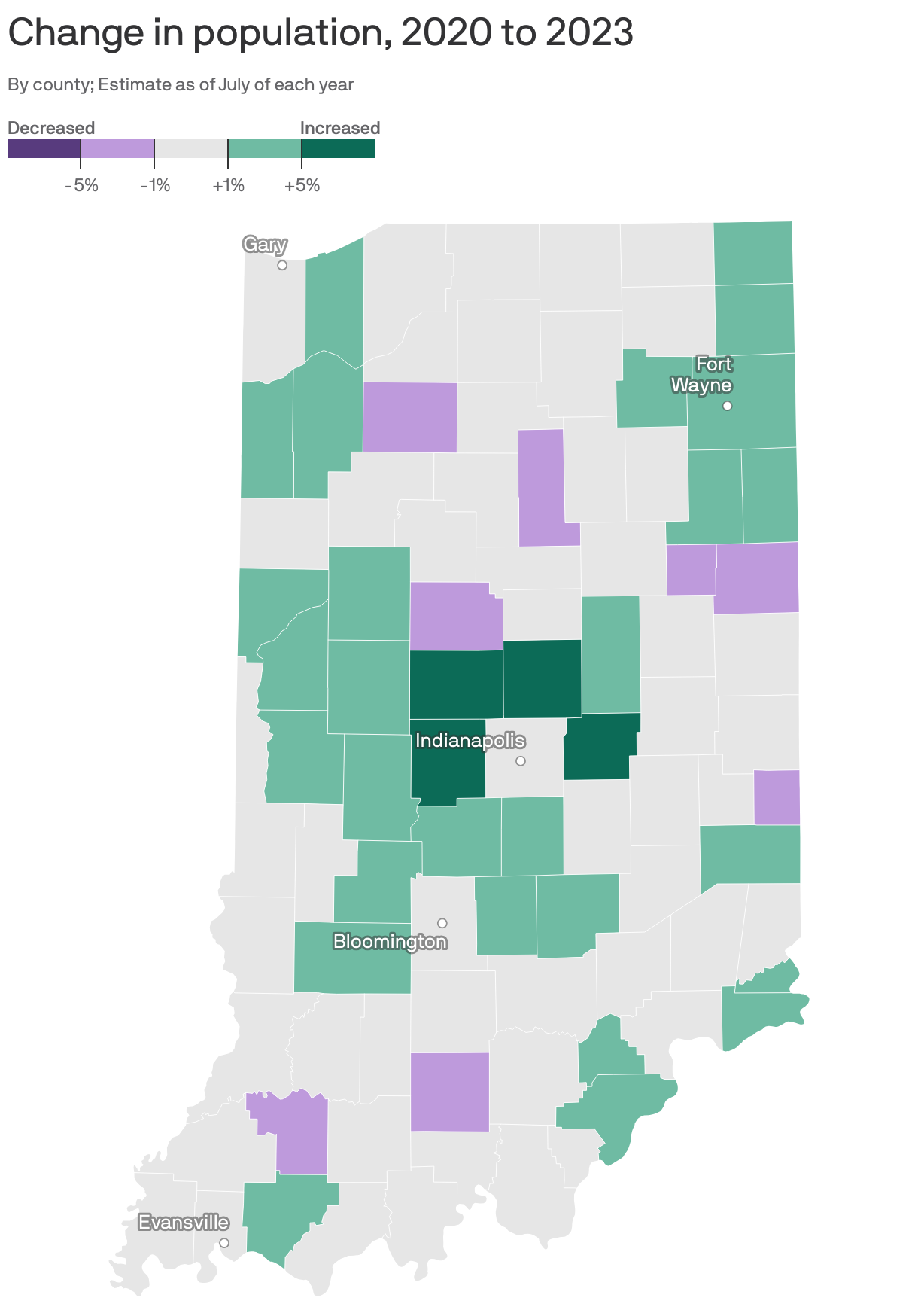
The Indy area has grown at twice the pace of the national average since 2020, but the city itself isn't driving any of the gains.
Why it matters: After two years of comparatively slow growth, Indiana's population gains last year nearly matched pre-pandemic annual growth, making the state home to 6.86 million residents.
- The Indianapolis metro area accounted for more than half of those gains.
Yes, but: All of the region's growth comes from the 'burbs.
By the numbers: The Indianapolis metro area grew 2.2% between 2020 and 2023, with more than 45,000 new people calling the region home.
- The largest drivers of that growth were Hancock (7.5%), Boone (7), Hamilton(6.5) and Hendricks (6.2) counties.
- Marion County's population has dipped in the last three years, shedding nearly 8,200 people since the pandemic — a drop of more than 0.8%.
Driving the news: Last week, the U.S. Census Bureau released data for its annual Population Estimates Program, which calculates the population between censuses.
What's happening: Rebounding birth rates coupled with continuing high levels of in-migration boosted the state's population growth back to pre-pandemic levels last year, according to Matt Kinghorn, senior demographer at the Indiana Business Research Center.
Zoom out: The population increased by 1% nationwide over the last three years, driven largely by increases across the South and West.
- The country's top four fastest-growing metro areas over the past three years were all in Florida, with Provo, Utah, and Austin, Texas trailing just behind, according to the new data.