Lawmakers considering legislation to hold back third graders who can't read

Add Axios as your preferred source to
see more of our stories on Google.
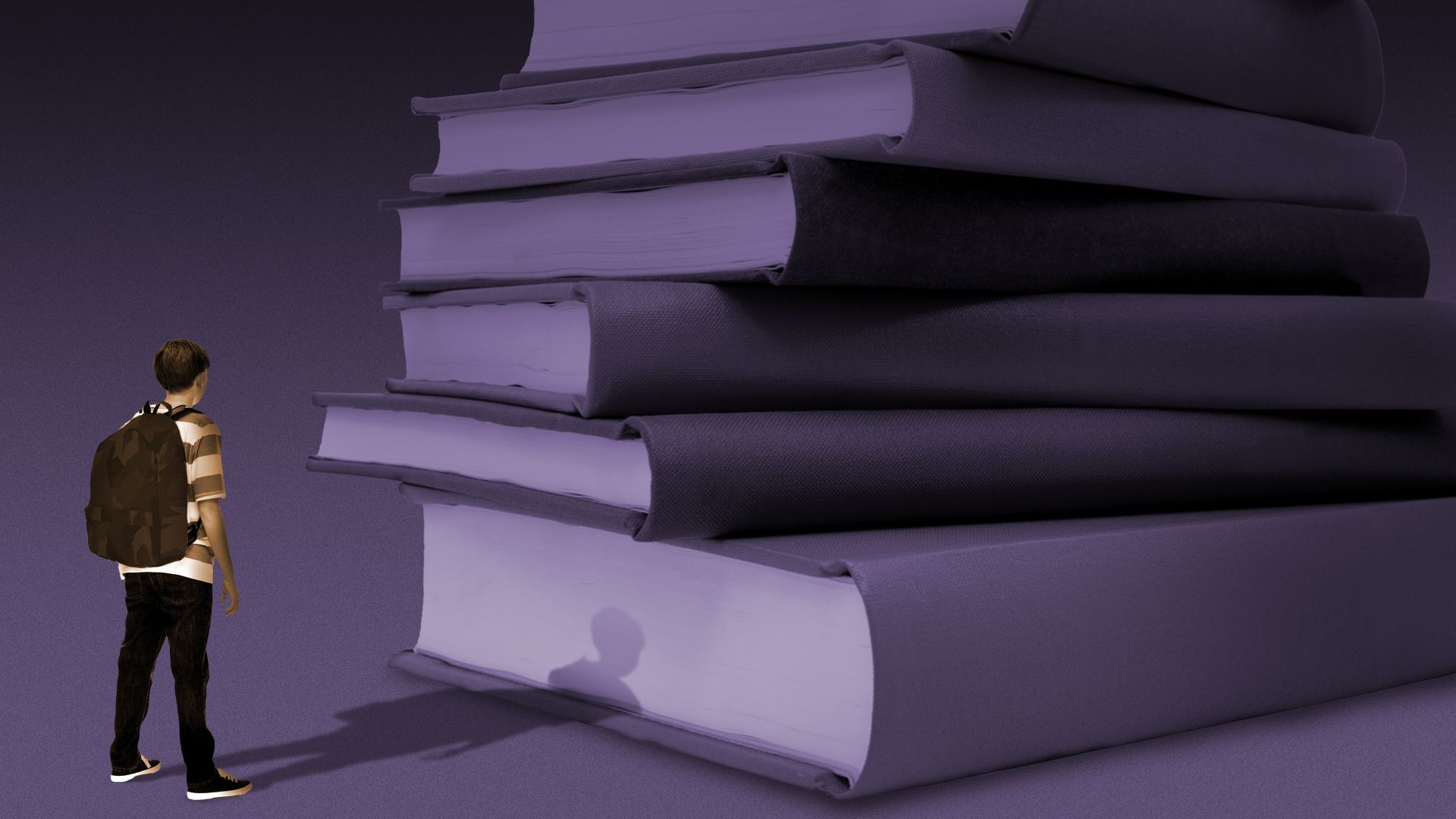
Illustration: Shoshana Gordon/Axios
The latest proposal from Statehouse leaders to get more Hoosier kids reading could cost the state more than $100 million.
Driving the news: House Speaker Todd Huston, R-Fishers, said last week that House Republicans are considering legislation for the upcoming session that would hold back third graders who can't read on grade level.
Why it matters: Third grade is considered the point at which kids transition from learning how to read, to needing to be a proficient reader in order to learn more advanced skills.
State of play: One in five Hoosier third graders aren't reading on grade level.
Context: Lawmakers have been trying to solve the state's reading problem for more than a decade.
- In 2010, they passed legislation that created the IREAD-3 exam, which tests whether students are proficient in reading at the end of third grade. Last year, more than 14,000 kids didn't pass the IREAD-3.
- Those who don't pass are supposed to be held back to repeat third grade, save for a few narrow exceptions.
Yes, but: Lawmakers say those exceptions have widened over the years and too many students are being passed to fourth grade without the required reading skills and falling further behind in later grades.
The latest: Huston said lawmakers would look at legislation to end that practice.
- He said the goal is not to retain students but to get them proficient and called on schools to focus on fundamental reading skills.
- Senate President Pro Tempore Rodric Bray, R-Martinsville, said he sees "a lot of value" in the proposal and his caucus would also look at the issue.
Between the lines: While promoting students who can't read can set them up for failure and frustration, studies also show that students who repeat a grade are at a higher risk of dropping out later.
Of note: The state passed a massive reading curriculum overhaul last year, directing schools to teach the science of reading.
By the numbers: On average, the state will spend about $8,200 per student next year.
- If all the students who don't pass the IREAD-3 are retained and spend an extra year in the public school system, it could cost the state nearly $120 million.
- The state will spend an estimated $9 billion on public education next year.
What they're saying: "We'll figure out the budget thing," Huston said. "But we are doing those kids a total disservice."
- "If it's going to cost us more money, we should pay more money."