Indiana's mental health progress — and pitfalls

Add Axios as your preferred source to
see more of our stories on Google.
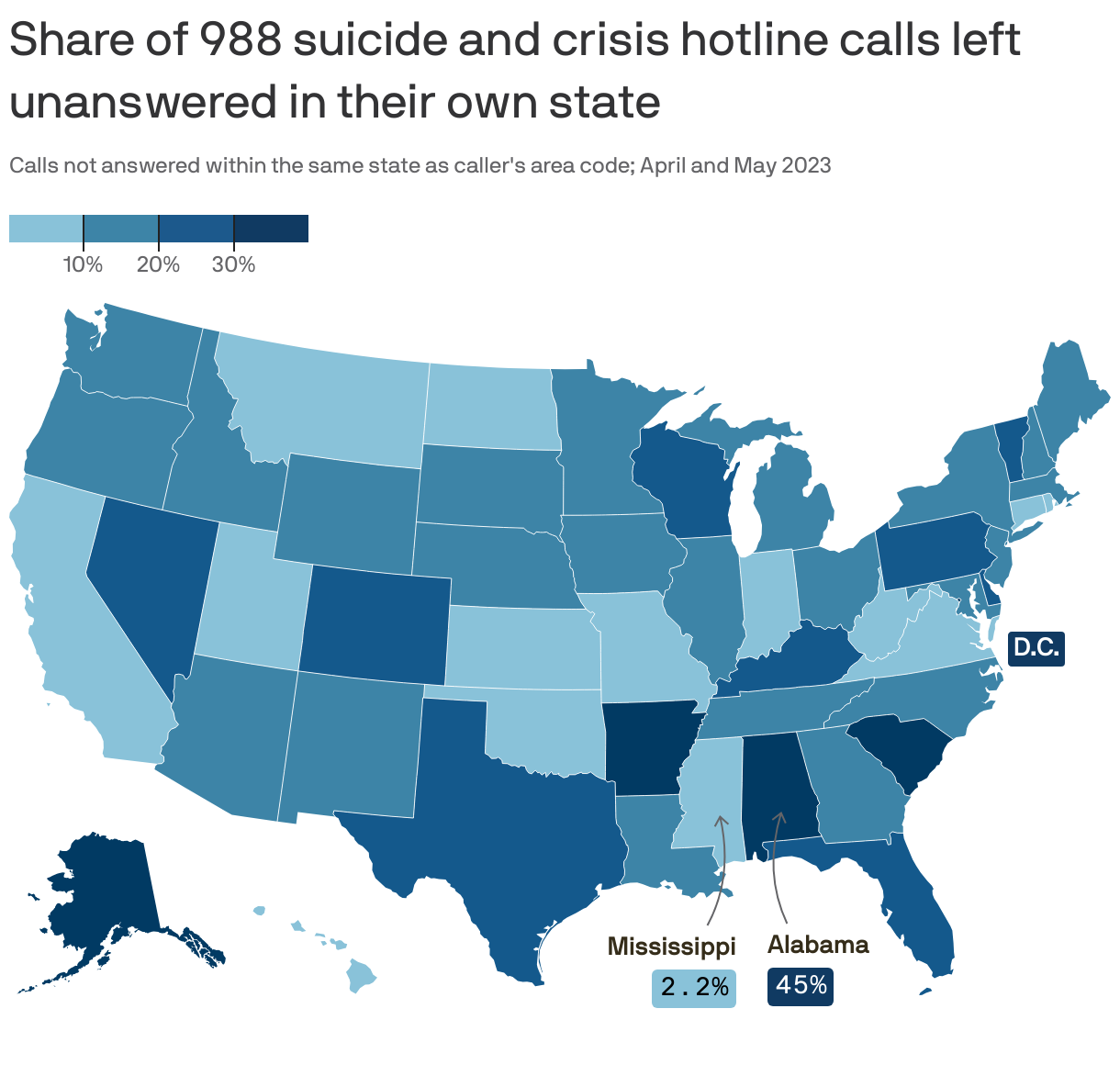
Indiana is in the top tier of states for local response rates to the 988 crisis and suicide lifeline.
Driving the news: More than 95% of nearly 7,400 calls made by Hoosiers to 988 during April and May this year were answered in-state, according to a new analysis from health research outlet KFF.
Why it matters: Over half a million lives were lost to suicide between 2010 to 2021 nationwide.
- Indiana's suicide rate climbed by 25% during that same time.
How it works: The "in-state answer rate" is a measure of the percentage of calls answered within state borders.
- 988 uses the caller's area code to route the call to the closest crisis center.
- If local centers don't answer calls, they are redirected to out-of-state overflow facilities staffed by counselors who may be unfamiliar with the area and struggle to connect callers with local resources.
State of play: Indiana's 988 answer rate is high, but some advocates are concerned about the state's long-term commitment to providing access. The federal government initially footed the bill to implement 988, but state and local governments are responsible for ongoing funding of area call centers.
- This past legislative session, the Indiana General Assembly opted against instituting a cell phone fee to provide a dedicated funding stream to support 988 in Indiana.
- Six states have already implemented a similar fee.
The big picture: Securing state support for the hotline is just the first step toward building a more robust mental health care system.
- Sen. Mike Crider, R-Greenfield, who advocated for the implementation of the cell phone fee, also sponsored legislation to build upon 988 with mobile crisis response teams and community-based mental health clinics.
- He proposed an annual investment of more than $100 million to improve the state's mental health system, but lawmakers opted to only provide $50 million for each of the next two years.
What they're saying: While advocates were glad for a long overdue focus on mental health in a state that ranks near the bottom nationally, some are still calling for a dedicated funding source for 988, like the cell phone fee.
- "We need some kind of ongoing funding," said Stephen McCaffrey, president and CEO of Mental Health America of Indiana. "There needs to be something so that we're not faced with a question literally every budget cycle as to whether we're going to fund 988."
Zoom out: Plans to use some of the nearly $1 billion in federal funding for a nationwide public service campaign haven't materialized, partly due to a fear that marketing 988 could overwhelm the lifeline beyond capacity.
- Since the National Suicide Prevention Lifeline was replaced last year with the easier-to-remember number, 988 has been contacted nearly 5 million times nationwide.
- Officials, mental health advocates and call center leaders say they’re pleased with that number.
Yes, but: More than 80% of Americans still aren't familiar with the new hotline, according to a recent National Alliance on Mental Illness survey.
Meanwhile, Crider told Axios he'll continue working on the issue with the goal of building out a statewide network of mental health resources for every Hoosier who needs them — not just those with serious mental illness or who are already in crisis.
The bottom line: "The goal is you keep people from reaching that crisis point," he said.
If you or someone you know is currently experiencing thoughts of suicide, or a mental health or substance use crisis, please call 988 to reach Suicide & Crisis Lifeline and speak with a trained crisis specialist 24/7.