World Cup fans enjoyed Houston. Tourism leaders see it as a win.

Add Axios as your preferred source to
see more of our stories on Google.
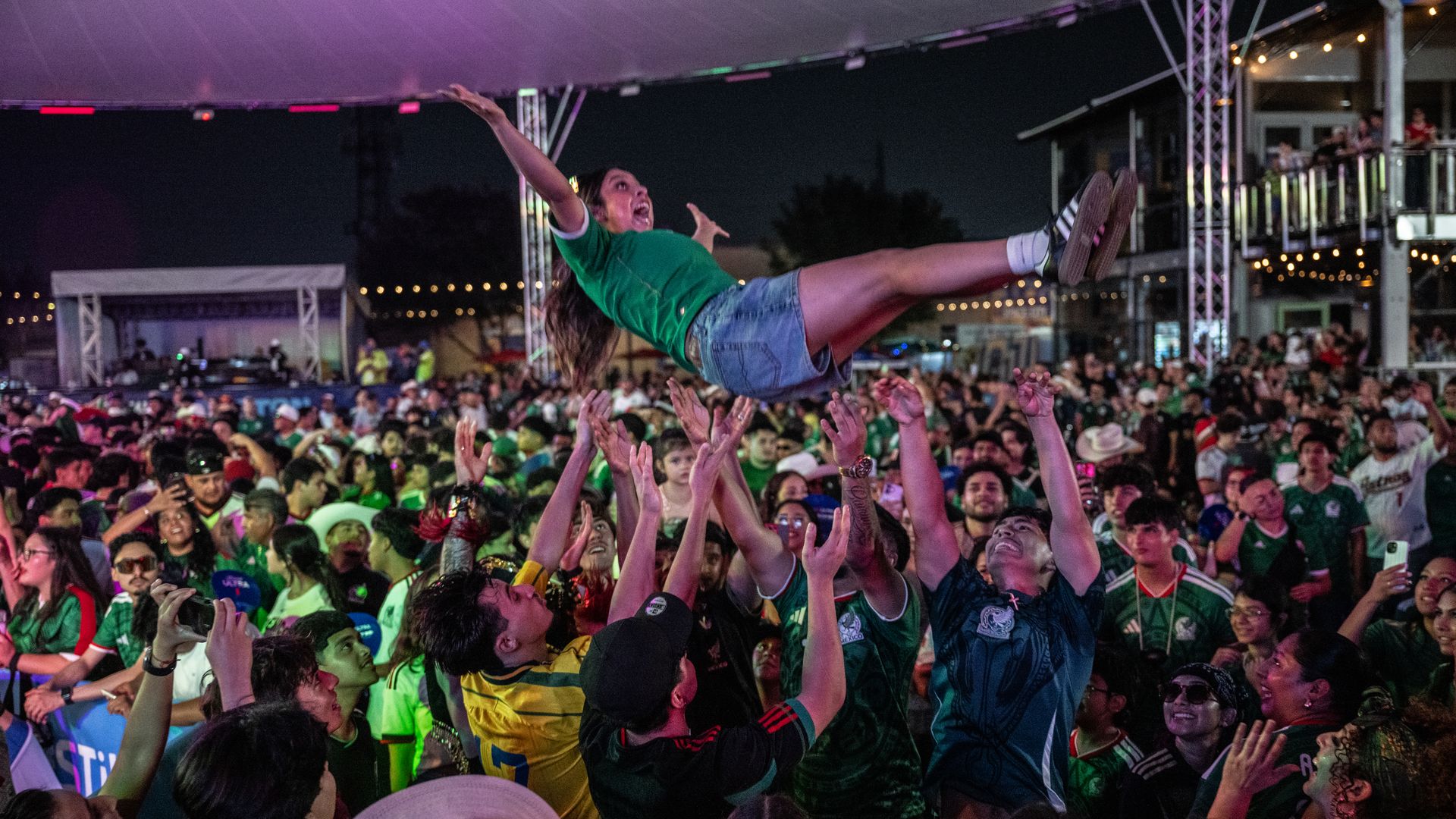
It was a party every day. Photo: Giacomo Cosua/NurPhoto via Getty Images
The World Cup gave Houston a chance to introduce itself to hundreds of thousands of visitors — and tourism leaders say the city made the most of it.
Why it matters: Winning the World Cup bid was the start of the challenge. Pulling off one of the world's biggest sporting events — and making it enjoyable for visitors — gave Houston a chance to strengthen its reputation on a global stage.
- "They left with a positive impression of Houston, and that's all we can ask for," Michael Heckman, president and CEO of the city's tourism organization, Houston First, tells Axios.
State of play: For about a month, visitors experienced America and Texas through Houston.
- Many fans told Axios their visits to Houston centered on matches, Fan Fest, watch parties and gathering with fellow supporters. Between games, they praised Houston's hospitality, food scene, diversity and — perhaps most importantly — its air conditioning.
What they're saying: "People arrived in the United States, they arrived in Texas, they arrived in Houston, and it was a much different experience than what maybe they had originally thought, and in a very, very favorable way," Heckman says.
- Houston Host Committee president Chris Canetti also told Axios he was proud of how Houston hosted the tournament, from Fan Fest programming to overall operations.
By the numbers: Houston airports welcomed an estimated 4.5 million passengers during the tournament travel period.
- More than 439,000 international passengers arrived through Houston's airports, up more than 2% from the same period in 2025.
- Houston hotel occupancy dipped slightly in June, but higher room rates lifted revenue nearly 15%. Full World Cup hotel figures are still to come.
Between the lines: Houston already welcomes more than 1 million international travelers every year, so unlike some smaller host cities, the World Cup wasn't introducing the city to global tourism, but "you saw a more concentrated amount here, and they were very visible," Heckman says.
- "The best advertising you can do is word of mouth by somebody having a great experience," Heckman says. Tourism supports local jobs and can encourage future leisure travel, conventions and business investment, he says.
The intrigue: Social media amplified Houston's reach, from German tourist Freddy's viral posts to Japanese fans documenting their trips around the city.
Zoom out: The World Cup has been America's chance to win back foreign visitors amid falling international tourism and unpopular federal policies.
The bottom line: "I think that Houston shined, and I think that we did really well," Heckman says.