What the 1915 Red Book reveals about Houston's Black history

Add Axios as your preferred source to
see more of our stories on Google.
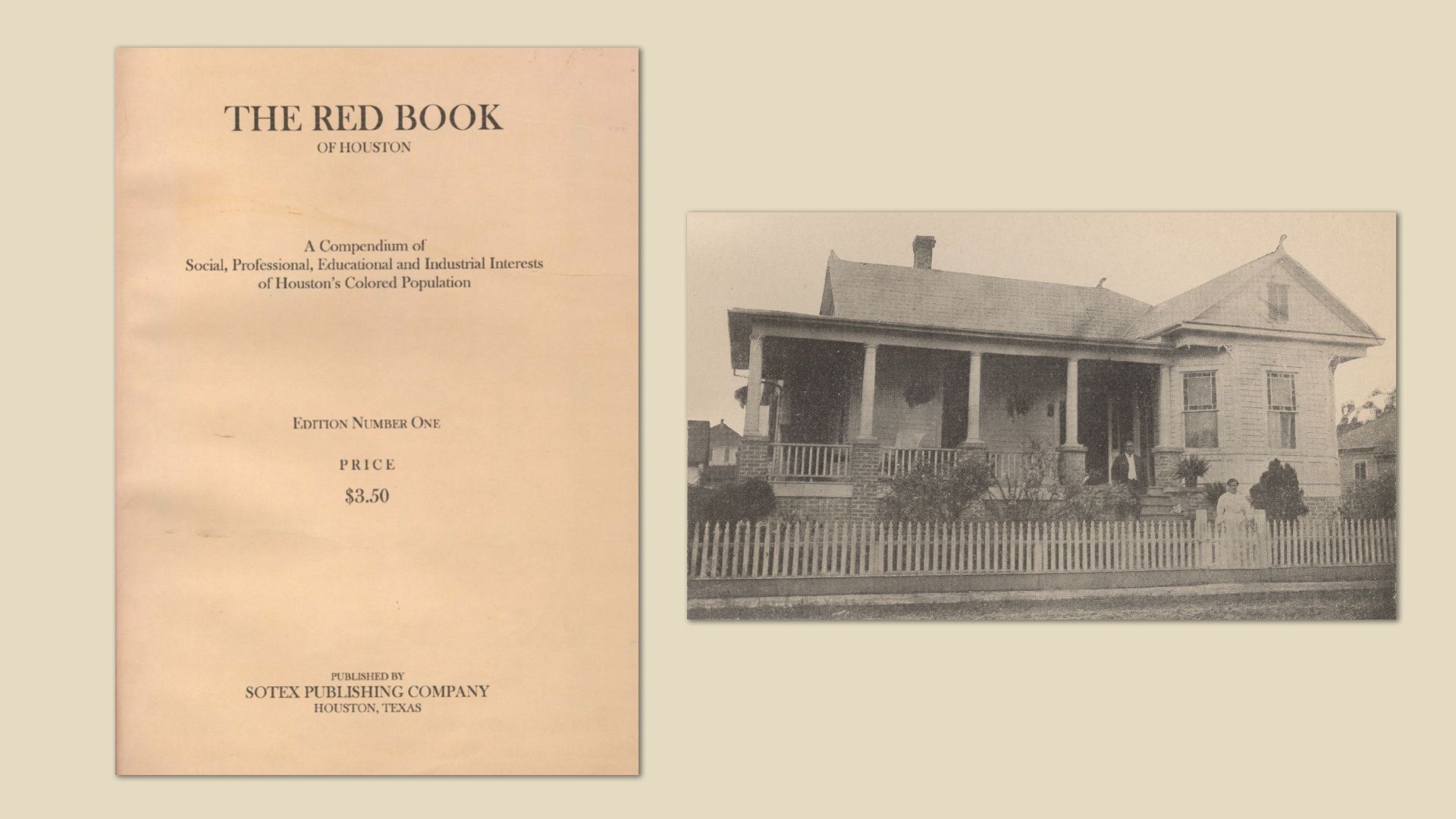
The "Red Book of Houston" and Rev. Ned P. Pullum residence, one of only two remaining homes from the book. Photos: Fondren Library Woodson Research Center Special Collections and Archives.
More than a century ago, Black Houstonians documented what they built in "The Red Book of Houston," which is still used today to trace family histories and understand how Black communities helped shape Bayou City.
Why it matters: The "Red Book of Houston" is a rare, detailed snapshot of Black Houston in 1915 — told through the people who lived it, and what they wanted others to know about them, researchers and archivists tell Axios.
- It includes who owned businesses, led churches and schools, and where families lived and what mattered to them, showing the "who's who" of Black Houston, Rice University history professor Fay Yarbrough says.
What they're saying: "It's letting you see what they think is important, what they want to portray about themselves . . . They're clearly wanting to show you all that they've achieved in the 50 years since [emancipation]," Yarbrough says.
- "So 50 years out, after people have made all kinds of racist assumptions about what Black people can't do, they're letting you see all the achievement and all of the things that they have done."
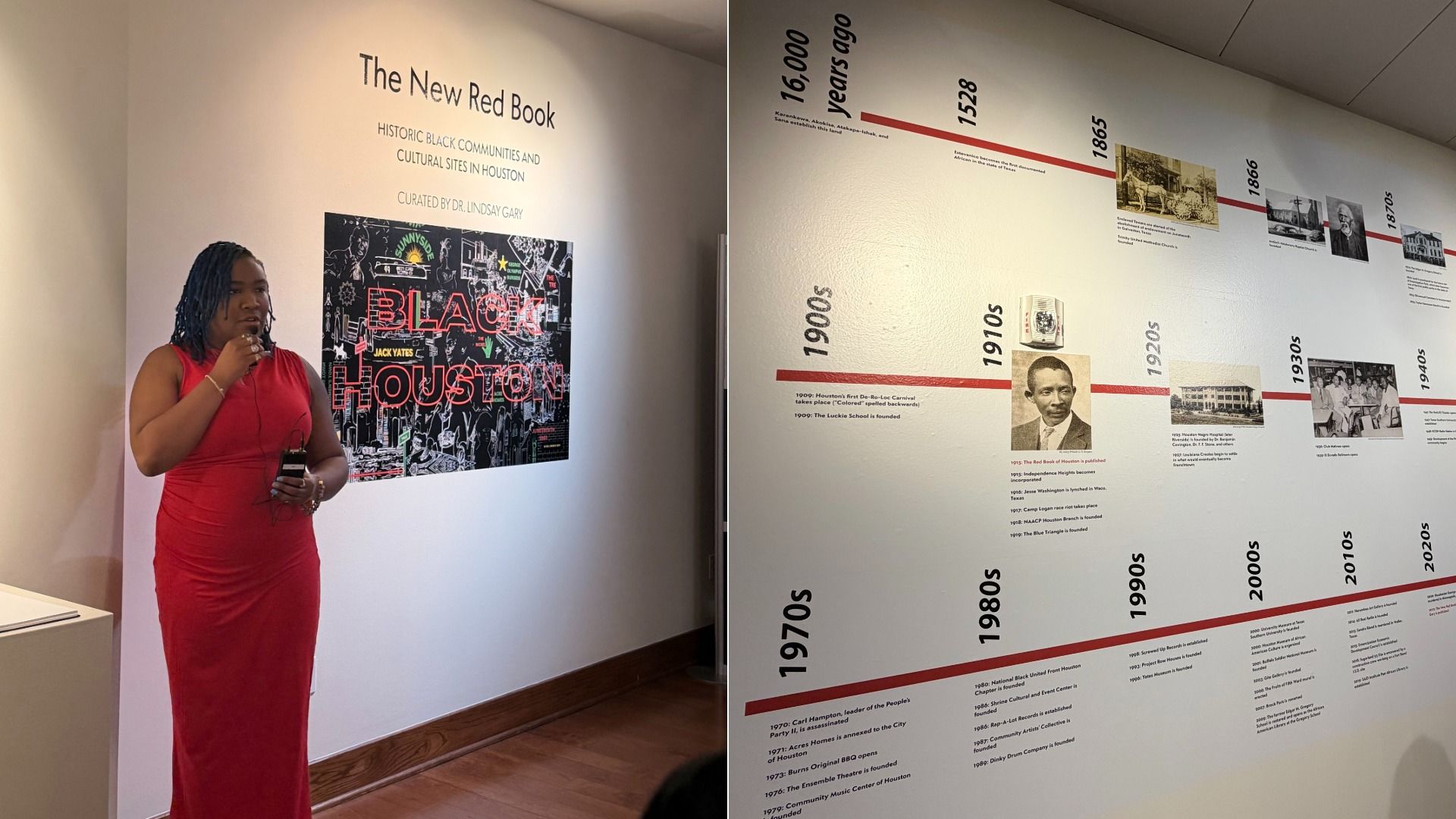
Driving the news: The Houston Public Library is hosting "The New Red Book Exhibit: Historic Black Communities and Cultural Sites in Houston," which moves through Black Houston history from emancipation to the People's Party II and maps neighborhoods across the city, including Third Ward, Fifth Ward and Freedmen's Town.
- It's on view through April 13.
Flashback: The original Red Book of Houston was compiled by local editors and community leaders. It features photographs and short biographies, according to archivist Norie Guthrie, who helped launch Rice University's Red Book project.
- The book also includes addresses that can still be traced on a map today, offering a geographic snapshot of Black communities in Houston from more than a century ago.
Follow the money: The book sold for $3.50 at the time — roughly $100 today.
- "The pages are much fancier than you think they're going to be," Guthrie says, adding that she suspects many of the well-to-do families connected to the book likely owned copies.
- Some families still have copies that have been passed down through generations.
Zoom in: Guthrie says one of the takeaways from the book was how many women ran their own businesses — often restaurants operated out of their homes.
- The book also underscores how central education was to Black Houstonians in 1915, from teachers to neighborhood schools woven into daily life.
- Guthrie and her students have been sifting through old records to decode unfamiliar job titles, such as "bell ringer," and what they reveal about everyday Black work in early 20th-century Houston.
Threat level: Only two homes connected to people in the Red Book are believed to still stand: the Rev. Ned P. Pullum and Alexander Z. Hester and Julia C. Thomas Hester residences, Guthrie says.
- It's notable because of what areas Houston decides to develop in, Yarbrough says, pointing to highways and redevelopment that continue to reshape historically Black neighborhoods.
- Earlier this month, construction workers for a private developer improperly removed more than 120 historic bricks in Freedmen's Town.
The latest: Rice University has a digital archive of the 1915 Red Book of Houston, including a high-resolution scan, mapped addresses and biographies of the people and families listed inside.
- Students are continuing to add to it — tracing descendants, digging through old newspapers and piecing together fuller life stories.
The bottom line: History isn't that far removed. For some Houstonians, a grandparent or great-grandparent's name appears in its pages.