Houston neighborhood restores decades-old street pillars

Add Axios as your preferred source to
see more of our stories on Google.
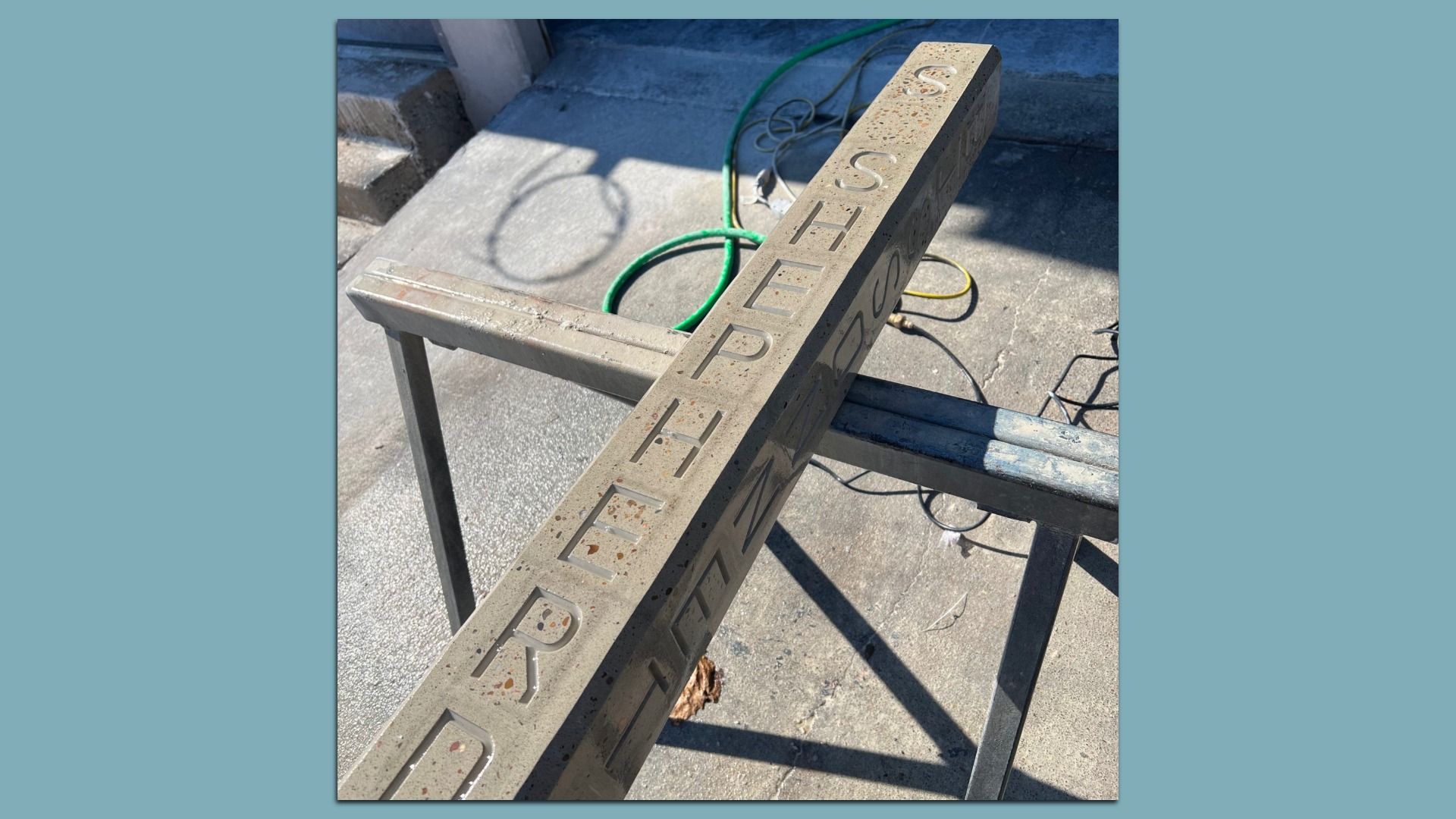
A replicated pillar for the intersection of South Shepherd and Bissonnet before installation. Photo: Courtesy of Joe Fischer
A group of Houston neighbors banded together to repair and replace historic concrete street signs installed in their neighborhood more than 80 years ago.
Why it matters: Their restoration efforts won them an award from the Bayou City's premier preservation society.
Driving the news: In Southampton, civic association leaders restored or replaced 55 concrete pillars within the association's boundaries.
- The group started the restoration project in 2021 and completed it last year. More than 150 individual donors contributed nearly $40,000 to fund the efforts.
What they're saying: Joe Fischer, a Southampton resident who helped lead the project, tells Axios the goal was to preserve the character and history of their neighborhood.
- "We wanted to retain the historic ones but also make it consistent with what the neighborhood looked like at the time that they were installed," Fischer said.
Flashback: By the 1940s, navigating Houston streets was like trekking through a "wilderness" with no uniform street signs, according to an article in the Houston Post from the era. The city's Chamber of Commerce identified thousands of intersections that could use permanent, concrete pillars marking the streets and urged city leaders to act.
- "Most intersections had no street signs," Fischer said after researching the history of the pillars. "If there was one, it might have been on a piece of wood that was posted to a tree or somebody's fence."
- In 1941, the city received $38,000 from the New Deal's Works Progress Administration and contributed $12,000 of its own funds for 5,000 initial pillars. That $50,000 is about $1.1 million in today's dollars.
- The first was erected at 11th Street and Heights Boulevard in November that year.
Catch up quick: Many are still standing today throughout Houston, particularly inside the Loop in older neighborhoods like the Heights, Montrose and Museum Park.
- Countless are in a state of disarray. So, Southampton neighbors decided to do something about it.
Yes, but: "It was kind of a nightmare," Fischer said of the undertaking.
- The group assessed each pillar and determined which were worth repairing and which needed to be replaced.
- Some pillars needed supplemental concrete and straightening out. But most of the neighborhood's pillars — 31 — were missing or needed replacement.
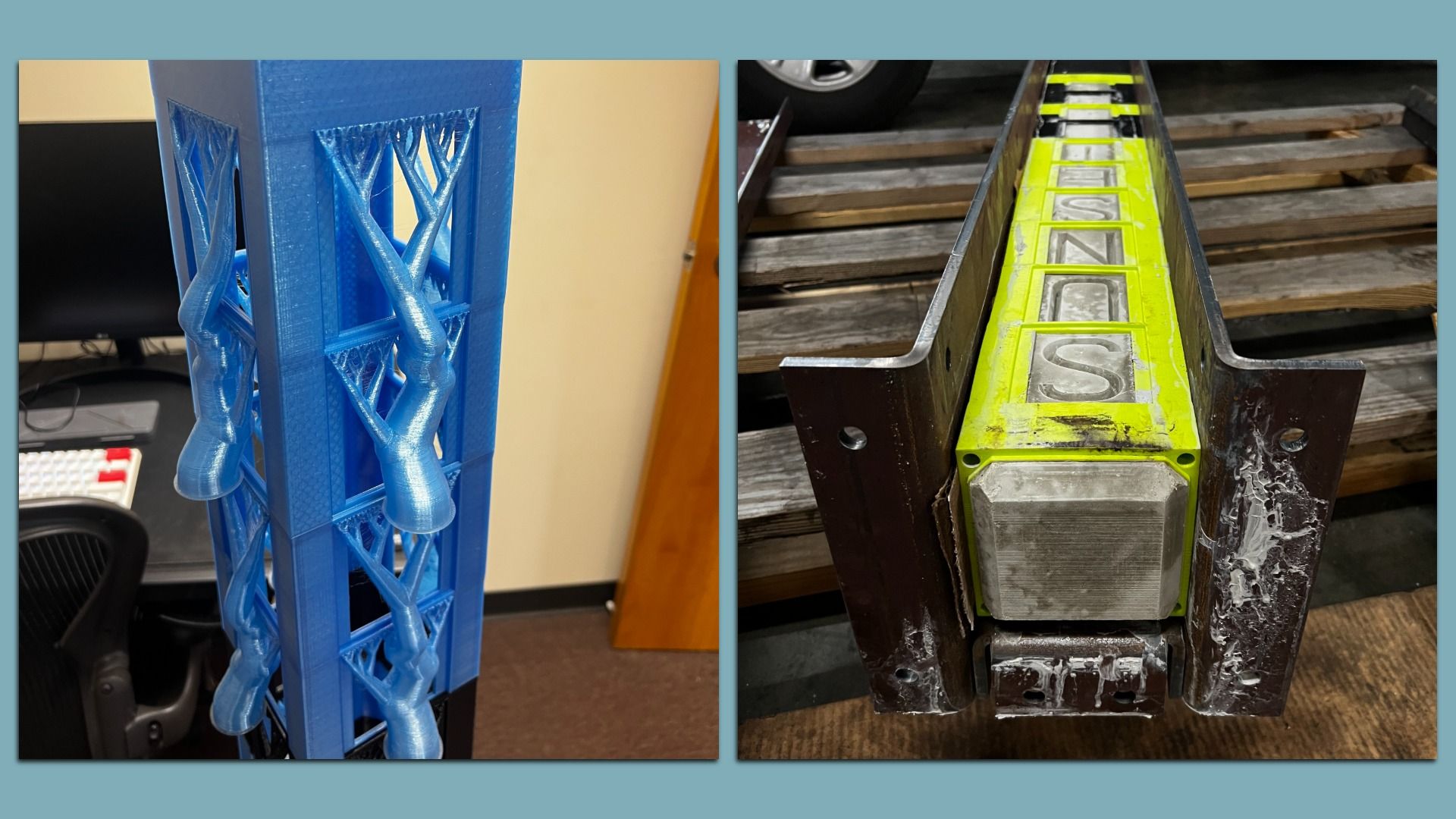
How it worked: The group worked with Eric Hester, Rice University School of Architecture's co-director of fabrication, to create 3D-printed molds of each sign.
- That meant creating 104 individual pieces for the full set of letters used in the molds, which were set and removed a painstaking 1,240 times to make the replacement pillars. The work included sanding them down to give them a natural weathered look.
💭 Jay's thought bubble: In 2022, I wrote about one of these pillars in my neighborhood that contained a typo that's been in place for 80 years. I finally have what might be an explanation.
- Fischer said it was likely because of a high employee turnover rate during the New Deal program that funded the signs.
- "With this federal program, because they wanted to employ people that needed employment, they could only stay on the program for so many hours or so many weeks," he told me. "And once they reached that, they had to roll off, and somebody else that needed employment rolled on."
- "I'm convinced with what we see today, such as with your street marker, that reflects the various people and skills that were involved."
What's next: The group will be presented with Preservation Houston's Good Brick Award at the organization's Cornerstone Dinner Feb. 27.