One year after Beryl, recovery divides Houston by income

Add Axios as your preferred source to
see more of our stories on Google.
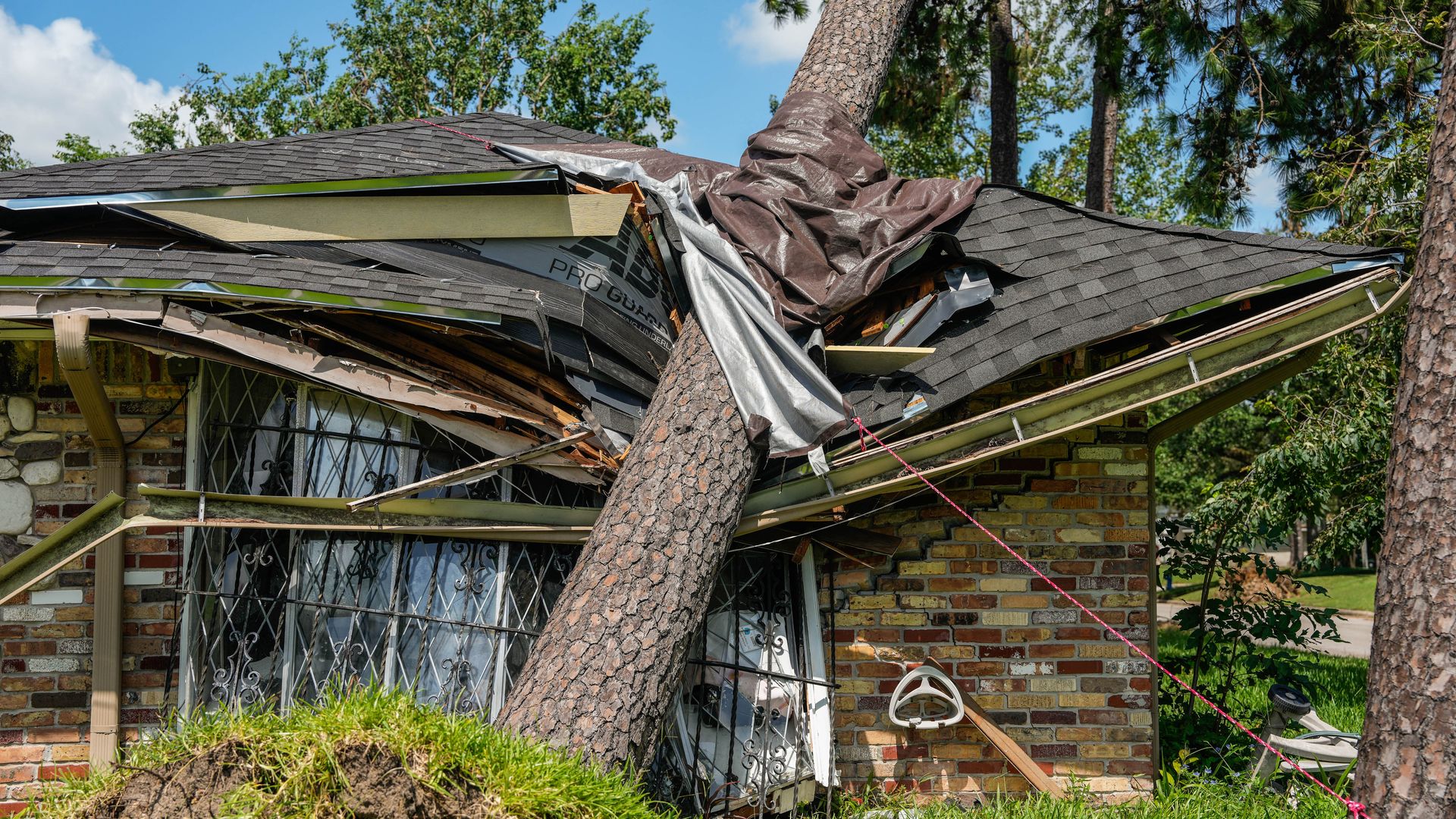
A fallen tree on the roof of a home during Beryl. Photo: Raquel Natalicchio/Houston Chronicle via Getty Images
More than a year after Hurricane Beryl hit Houston, the storm's impact still lingers in the daily lives of many residents, per a new report.
Why it matters: Roughly 1 in 8 of residents say they still haven't recovered — with lower-income households bearing the brunt of long-term disruption, according to a Kinder Institute report released Thursday tracking the region's Beryl recovery effort.
The big picture: Over 8,900 people in Fort Bend, Harris and Montgomery counties responded to the survey, conducted in June and July.
- 3 in 4 residents said they were back to normal within weeks, but recovery stalled for others. About one-third of households making under $25,000 reported being fully recovered, compared with 80% of those earning more than $100,000.
- 72% of residents now say they feel moderately to extremely prepared for another major storm, but perceived preparedness was closely linked to income and recovery status.
What they're saying: "Now, a year down the road, residents are having to grapple with the reality of repairs that are still needed, credit card bills from unexpected hotel rooms or refilling the fridge that are still unpaid, and their expectations that these things should already be resolved but they're not," Dan Potter, lead researcher on the survey, said in a statement.
Flashback: Beryl made landfall as a Category 1 hurricane on July 8, 2024, leaving 42 people dead and causing wind damage estimated between $2.5 billion and $4.5 billion.
State of play: Federal aid has largely run its course. FEMA delivered about $495 million in household relief to Harris County, but experts say it fell short of long-term needs.
- "Maybe they've received some FEMA money up front and they were able to repair a part of their roof, but they weren't able to repair interior damage. Or maybe they were able to get their fence fixed, but there's still something else that needs to be done," Major Latin, the disaster case management program manager for Cypress-based nonprofit Hope Disaster Recovery, said in a statement.
What's next: A final $150 million in federal housing repair aid is expected, but experts say it will cover only a fraction of the unmet costs.