See how Trump's Big Beautiful Bill tax cuts will impact Texans

Add Axios as your preferred source to
see more of our stories on Google.
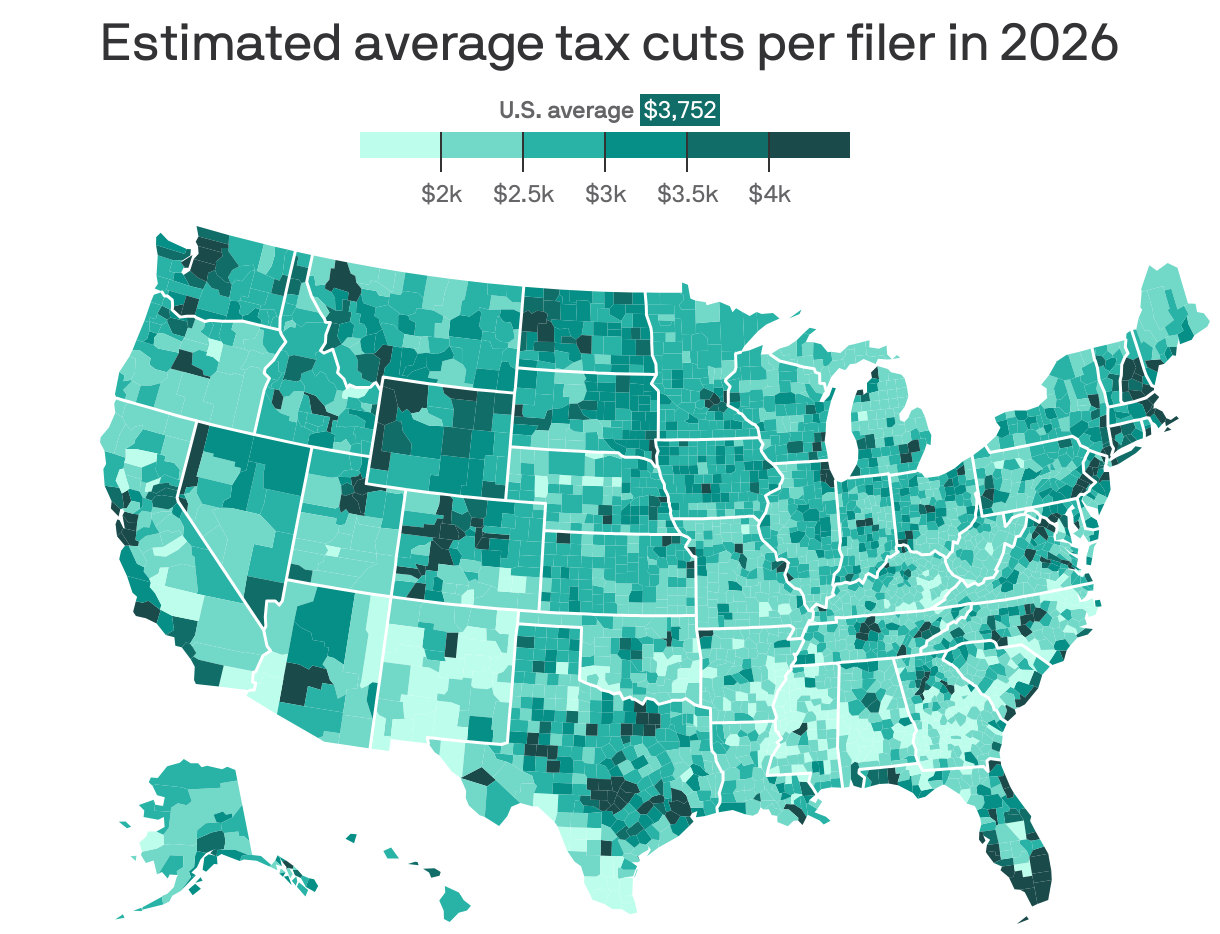
The average Texas resident will see a federal tax cut of about $3,942 in 2026 thanks to the "big, beautiful bill," according to an analysis from the Tax Foundation, a nonpartisan research group that mostly supports lower taxes.
Why it matters: That's money people can spend on rent, groceries or bills, which may be needed next year as inflation outpaces wages, and tariffs threaten to increase costs even further.
How it works: The spending bill not only made the 2017 tax cuts permanent, it added on new breaks: deductions for tips and overtime income, a cut for seniors and an expanded child-care tax cut.
- These are temporary provisions.
Zoom in: In Harris County, the average tax break is expected to be $4,083 next year.
- In Montgomery County, it's $5,315. In Fort Bend, it's $4,189.
Zoom out: Travis County residents will see some of the largest average tax cuts in the state ($8,342), while taxpayers in the border counties of Zapata and Starr will see the smallest (just over $1,000).
Between the lines: There are broad geographic differences in tax benefits from the spending bill due to variations in state and local taxes, plus areas where more high-earners live, Axios' Emily Peck and Jason Lalljee report.
- But business owners will get some of the biggest cuts — thanks, in part, to tax breaks being made permanent for research and development expenses and other provisions.
Reality check: The big bill also made some steep cuts to social spending on food benefits and Medicaid, but those mostly don't kick in until 2027 and 2028. For many lower-income Americans, those cuts will outweigh any benefits of these tax breaks.