Post-Dobbs abortions rise in Texas



Add Axios as your preferred source to
see more of our stories on Google.
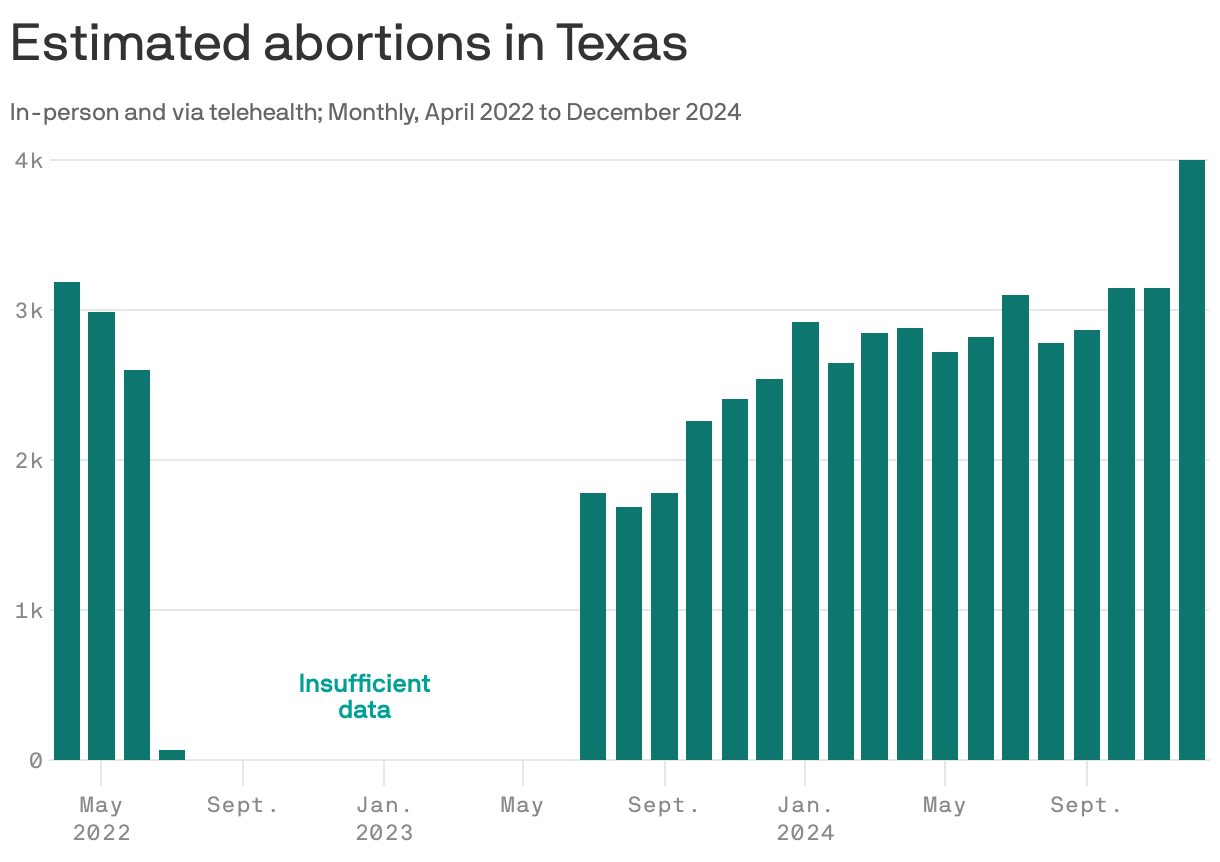
Texas has seen the country's highest number of medication abortions via telehealth under shield law protections, per a recent national report.
The big picture: The number of abortions in the U.S. continued to rise in 2024 — totaling 1.14 million — despite bans and restrictions in more than half the states, including Texas.
- Expanded telehealth access to medication abortion has allowed patients to circumvent state laws banning the procedure.
By the numbers: There were an average 3,427 monthly medication abortions via telehealth in Texas in the final quarter of 2024, according to the #WeCount report from the Society of Family Planning, a nonprofit that advocates for abortion access.
Stunning stat: Texas, which has a near-total ban on abortions, saw more monthly abortions by the end of 2024 than in the months before Dobbs was decided, the report says.
How it works: Shield laws are meant to provide legal protections to clinicians who offer telehealth abortion care to patients in states with restrictions.
Yes, but: In February, a Texas judge ordered a doctor to stop prescribing and sending abortion pills under New York's shield law to patients in Texas and to pay a penalty of more than $100,000.
The latest: A New York county clerk has refused to file the judgment against the doctor. Texas Attorney General Ken Paxton said he's taking legal action to enforce it.
- This week, Paxton joined a coalition of attorneys general urging Congress to pass legislation that would preempt shield laws in pro-abortion states.
What they're saying: Paxton said in a statement that shield laws "embolden lawlessness, weaken our ability to enforce Texas laws, and trample on the rights of sovereign states to protect the unborn."
The other side: "These extremists are determined to punish a New York doctor for providing safe, legal abortion care," New York Gov. Kathy Hochul responded in a statement this week. "It won't happen on our watch."
What's next: It's "inevitable" that the case will make it to the U.S. Supreme Court, Carmel Shachar, director of the Health Law and Policy Clinic at Harvard Law School, told Harvard Law Today in February.