Trump travel ban may hit Astros players from Cuba, Venezuela


Add Axios as your preferred source to
see more of our stories on Google.
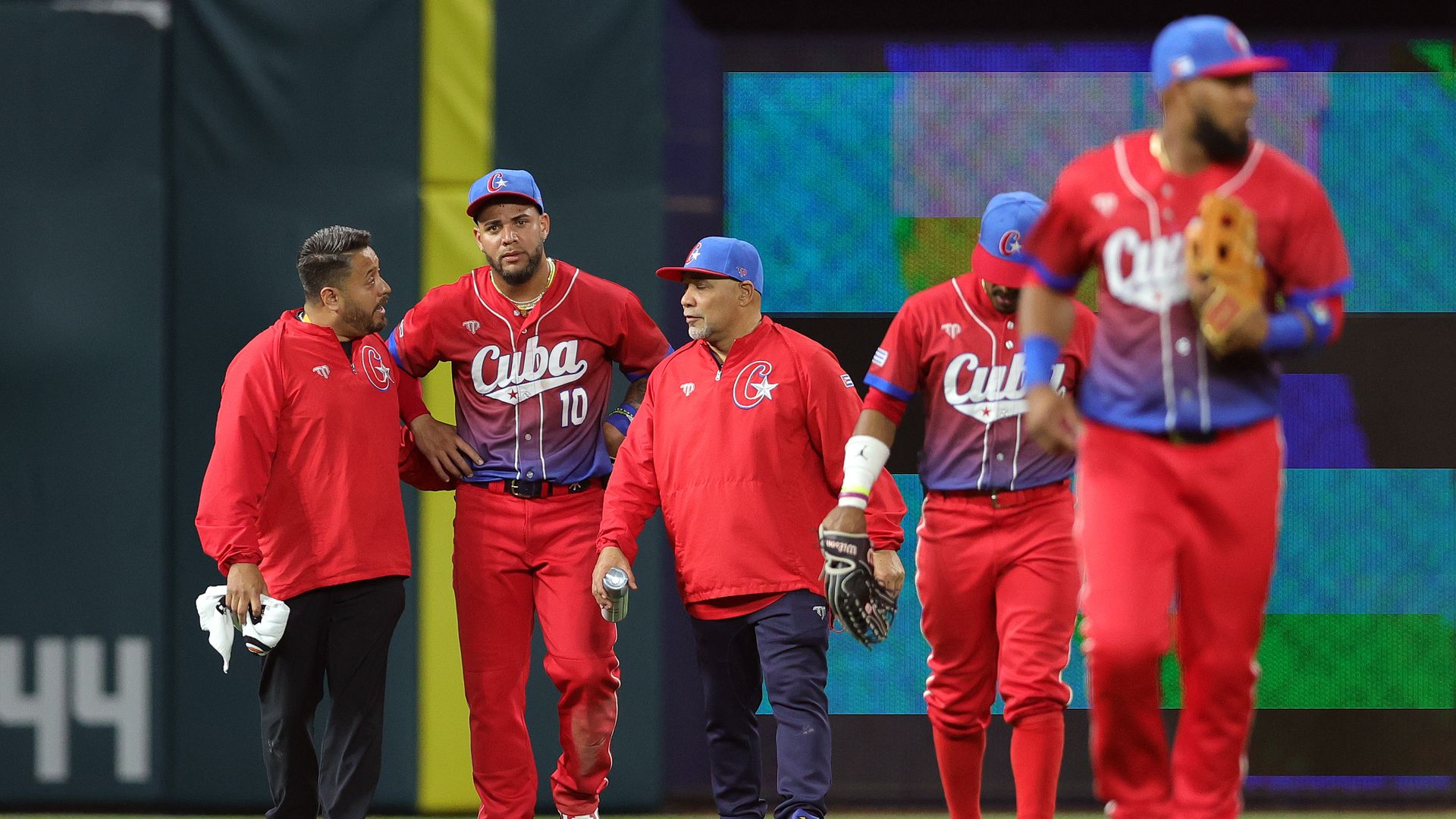
Team Cuba during the sixth inning against Team USA in the World Baseball Classic Semifinals in Miami in 2023. Photo: Megan Briggs/Getty Images
President Trump's expected travel ban on more than three dozen countries could prevent some Astros and other Major League Baseball players from Cuba and Venezuela from coming into — or leaving — the United States.
The big picture: Trump's travel ban would mean that Cuban and Venezuelan major and minor league baseball players with P-1 visas — non-immigrant visas for internationally recognized athletes and entertainers — could face new difficulties in the U.S., immigration lawyers say.
- Without a special exemption, those players would have a hard time returning to the U.S. after games against the Toronto Blue Jays or after playing in winter baseball leagues in Mexico, Venezuela or the Dominican Republic.
Catch up quick: Trump signed an executive order in January requiring the State Department to identify countries "for which vetting and screening information is so deficient" that a travel ban is needed.
- The order gave the State Department 60 days to complete the report, which was due Friday.
- Countries that could be subject to the harshest visa restrictions include Afghanistan, Iran, Cuba, Sudan, Syria and Venezuela, news reports said.
The latest: A White House official tells Axios no decisions have been made, and an MLB spokesperson did not respond to a request for comment.
Zoom in: On Opening Day last year, the Astros had 16 players born internationally — including Cuban- and Venezuelan-born stars — the most in the league, according to MLB.
- Across the league, 18 players from Cuba and 58 from Venezuela were on Opening Day rosters in 2024.
- The league's total doesn't count the many players in the minor leagues and those who were called up or signed later in the 2024 season.
It's unclear which players hold P-1 visas, but the Astros' 2025 roster includes second baseman José Altuve of Venezuela and outfielder Yordan Alvarez of Cuba.
State of play: MLB's official Opening Day is Thursday.
- Major league players who could be affected by new travel restrictions are already with their MLB teams in the U.S.
- But for those with P-1 visas who are from any of the countries with the harshest restrictions, an "absolute ban would mean that these players won't be able to travel" internationally, said Amy Maldonado, an immigration lawyer in Michigan who handles baseball players' visas.
Between the lines: In recent years, Cuba and Venezuela have been essential pipelines for talent in an increasingly international game.
- Those two countries, along with the Dominican Republic, also have helped diversify MLB by increasing the number of Afro-Latino players as the number of Black American players has declined.
The number of baseball players who could be affected by a travel ban remains unknown, but Maldonado said it would mainly hurt younger players and those in the minor leagues.
- Most foreign stars or those experienced enough to qualify for salary arbitration typically have obtained green cards, she said.
Coaches, scouts and staff members from those countries who have P-1 visas also would have limited ability to travel, she said. And teams could have a hard time bringing drafted or signed players into the U.S.
Yes, but: The Trump administration could give athletes and entertainers exemptions from total visa restrictions.