Texans could pay $460 more annually for insurance without ACA subsidies


Add Axios as your preferred source to
see more of our stories on Google.
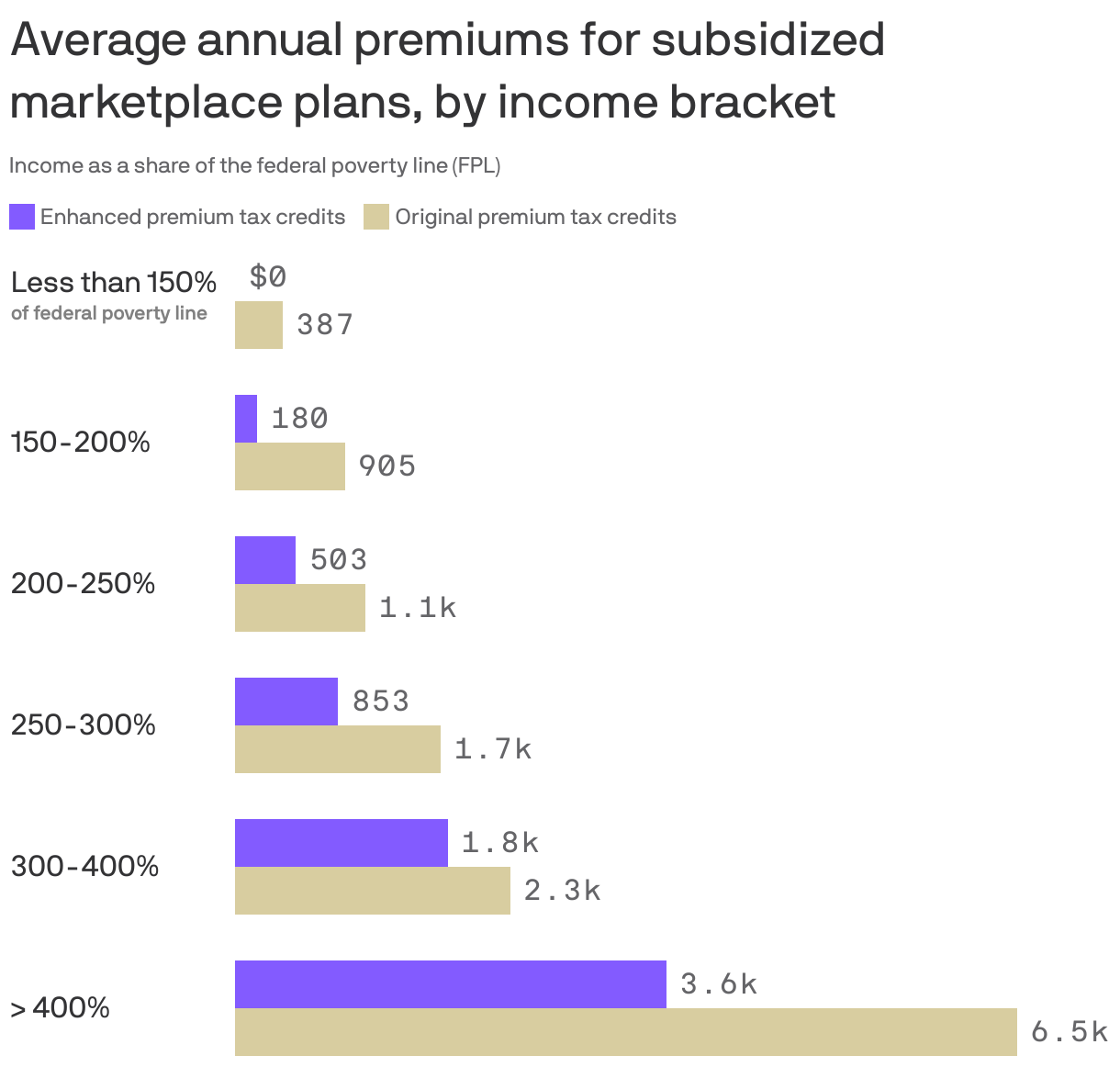
Household spending on health insurance will increase across multiple income groups if enhanced Affordable Care Act subsidies are allowed to expire next year, Urban Institute researchers found.
Why it matters: The fate of the tax credits is shaping up to be one of the biggest health policy fights next year, with Republicans increasingly unlikely to renew the assistance.
- Congressional Republican negotiators this month rejected a Democratic proposal for a one-year extension as part of a year-end health deal.
- President-elect Trump, on NBC's "Meet the Press," wouldn't rule out replacing the Affordable Care Act, repeating that he still had "concepts of a plan" for health care.
What they found: Expiration of the subsidies would mean people making 200% to 250% of the federal poverty level, or about $37,000 in annual income, would see their spending double to as much as $1,076 in annual premiums.
- Those with incomes between 150% and 200% of FPL would see their premium spending increase more than 400% from $180 to $905 per year.
Zoom in: In Texas, those with incomes below 250% of FPL would see an average annual increase of $466, the institute found.
- For those who earn more than 250% of FPL, premiums would rise from $424 a year.
Between the lines: If enhanced subsidies are allowed to expire, enrollment in ACA marketplaces is projected to drop by an estimated 7.2 million people, per the report.
- A report from the Congressional Budget Office last week estimated that, without an extension through 2026, the number of uninsured will rise by 2.2 million that year.
- The number could rise by 3.7 million in 2027 and by 3.8 million, on average, in each year between 2026 and 2034.
- The CBO has estimated it would cost $335 billion over 10 years if the subsidies were made permanent.