Map to go: Indigenous Peoples Day


Add Axios as your preferred source to
see more of our stories on Google.
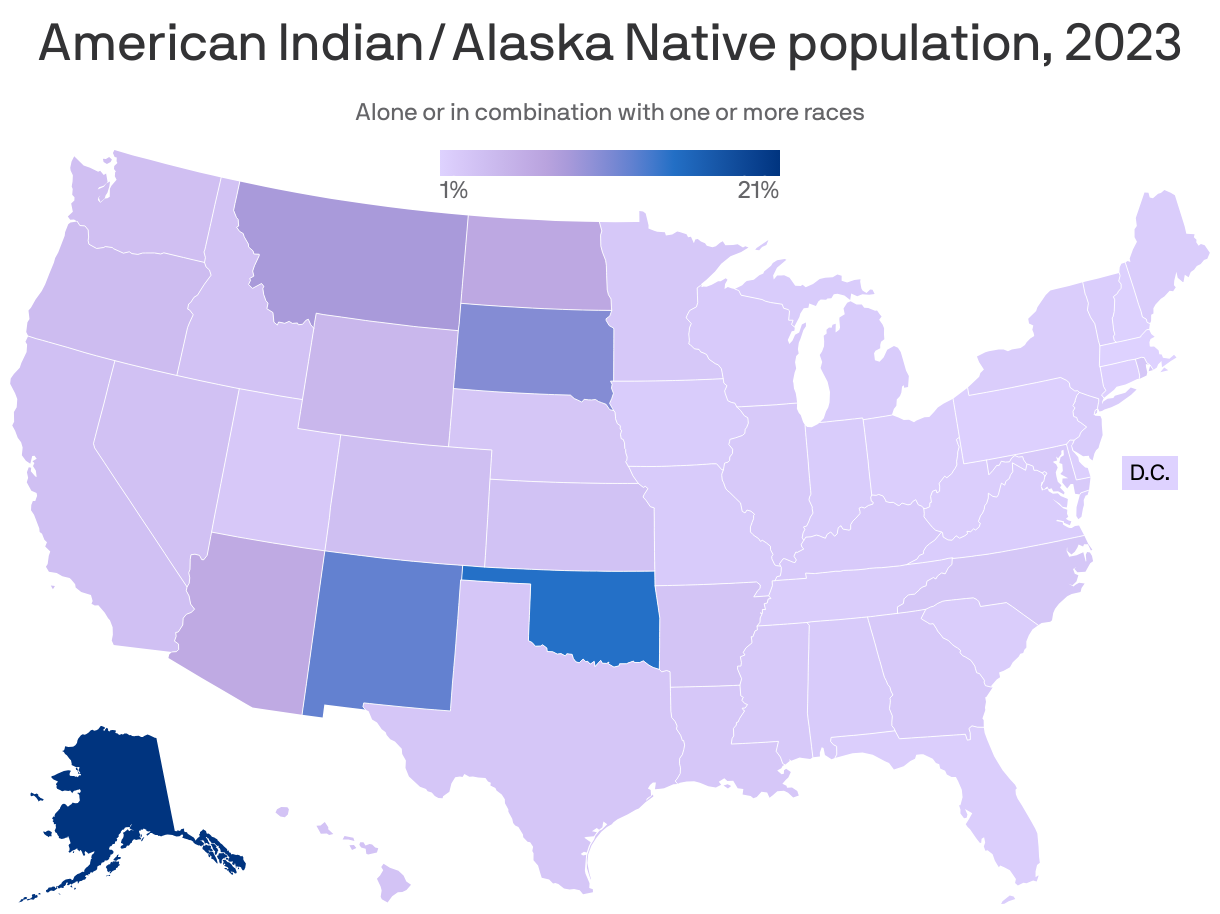
Land acknowledgments — the recognition that Indigenous people are the original inhabitants of what is now American land — have become more common among academics, nonprofits, companies, celebrities and even in social media bios.
Why it matters: The well-meaning attempts to educate non-Indigenous people risk being ineffective without concrete action to support Indigenous communities.
- "It has to be this reminder of having ongoing action — of being a steward, continuing to do things, of making space, making [systemic] change," Lydia Jennings, a citizen of the Pascua Yaqui Tribe and soil scientist, tells Axios.
Worthy of your time: Check out this map to see which Indigenous lands you're on.
The phrasing of a land acknowledgment can sometimes put Indigenous people in the context of history, rather than in the present, said Michaela Madrid, the program director at Native Governance Center and a citizen of Lower Brule Sioux Tribe.
- "As a Native person, it can feel kind of awkward during these land acknowledgments," Madrid said. "We know that this is our land and that it was stolen."
By the numbers: 141,000 people in Harris County identify as American Indian or Alaska Native (2.9% of the county's population), per the 2023 American Community Survey.
Go deeper: Several Houston-area organizations promote Indigenous culture and education, including the American Indian Center of Houston, the American Indian Genocide Museum, Houston Aztec Dance and Drum and the Gulf Coast Tia Piah Society.