Texas is among states with the most low-wage workers

Add Axios as your preferred source to
see more of our stories on Google.
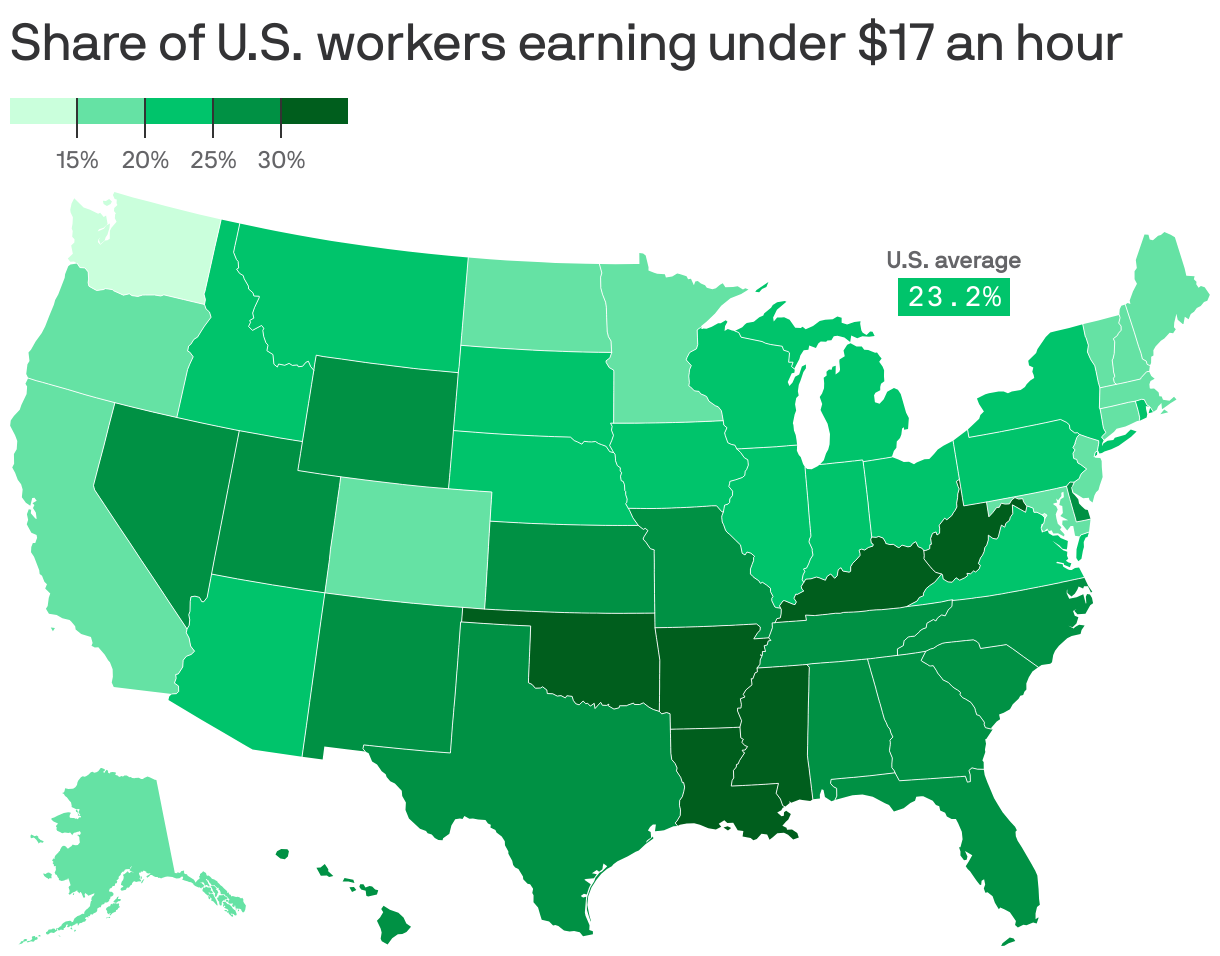
Nearly a third of workers in Texas earn less than $17 an hour, per new data from Oxfam, a global nonprofit advocacy group for income equality.
Why it matters: While wages have increased throughout the country, Texas is among the states with the highest proportion of low-wage workers.
By the numbers: Oxfam revised its definition of a low-wage worker this year, from those earning less than $15 an hour to those earning less than $17.
- Today, 23.2% of U.S. workers fall into the new low-wage worker category, per Oxfam. In 2022, 31.9% of workers earned less than $15 an hour.
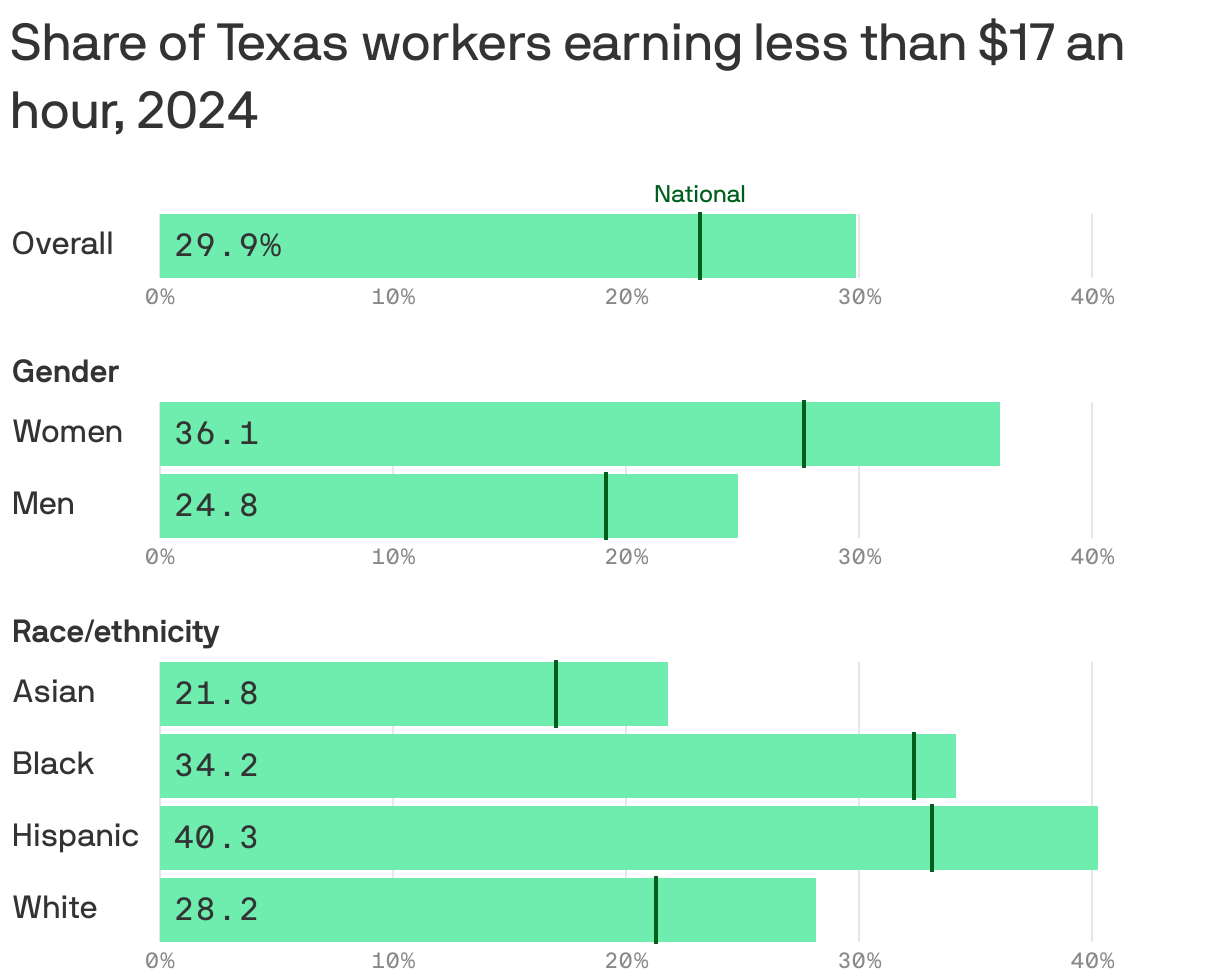
- Workers in Texas also felt the wage boost, with 29.9% — or 4.5 million — workers falling into the low-wage worker category now, compared with 39.8% in 2022.
Between the lines: Women and people of color are far more likely to have a lower wage, Oxfam reports.
- In Texas, 34.2% of Black workers and 40.3% of Hispanic workers make less than $17 an hour.
- Meanwhile, 49.3% of Hispanic women in Texas earn low wages.
Zoom in: The states with the highest proportion of low-wage workers, like Texas, Mississippi and Oklahoma, adhere to the federal minimum wage of $7.25 an hour.
- The federal minimum wage hasn't increased in 15 years.
- Other states have implemented far higher minimum wages. California's minimum wage is $16 an hour, for example, and only about 16% of its workforce is earning less than $17 an hour, per Oxfam.
Context: A single person with no children must earn $20.92 per hour to make ends meet in Texas, according to MIT's Living Wage Calculator, a commonly accepted barometer.
The big picture: Wages nationwide have risen partly because of inflation, a strong labor market and advocates pushing for minimum wage increases.
- Pandemic-era benefits also helped these workers be choosier about finding better-paying jobs as the country recovered from record unemployment in 2020.
- "Because people had more money, they were able to hold out for higher-paying positions," says Kaitlyn Henderson, a senior researcher at Oxfam who wrote the report.