Counting Houston's unhoused population

Add Axios as your preferred source to
see more of our stories on Google.
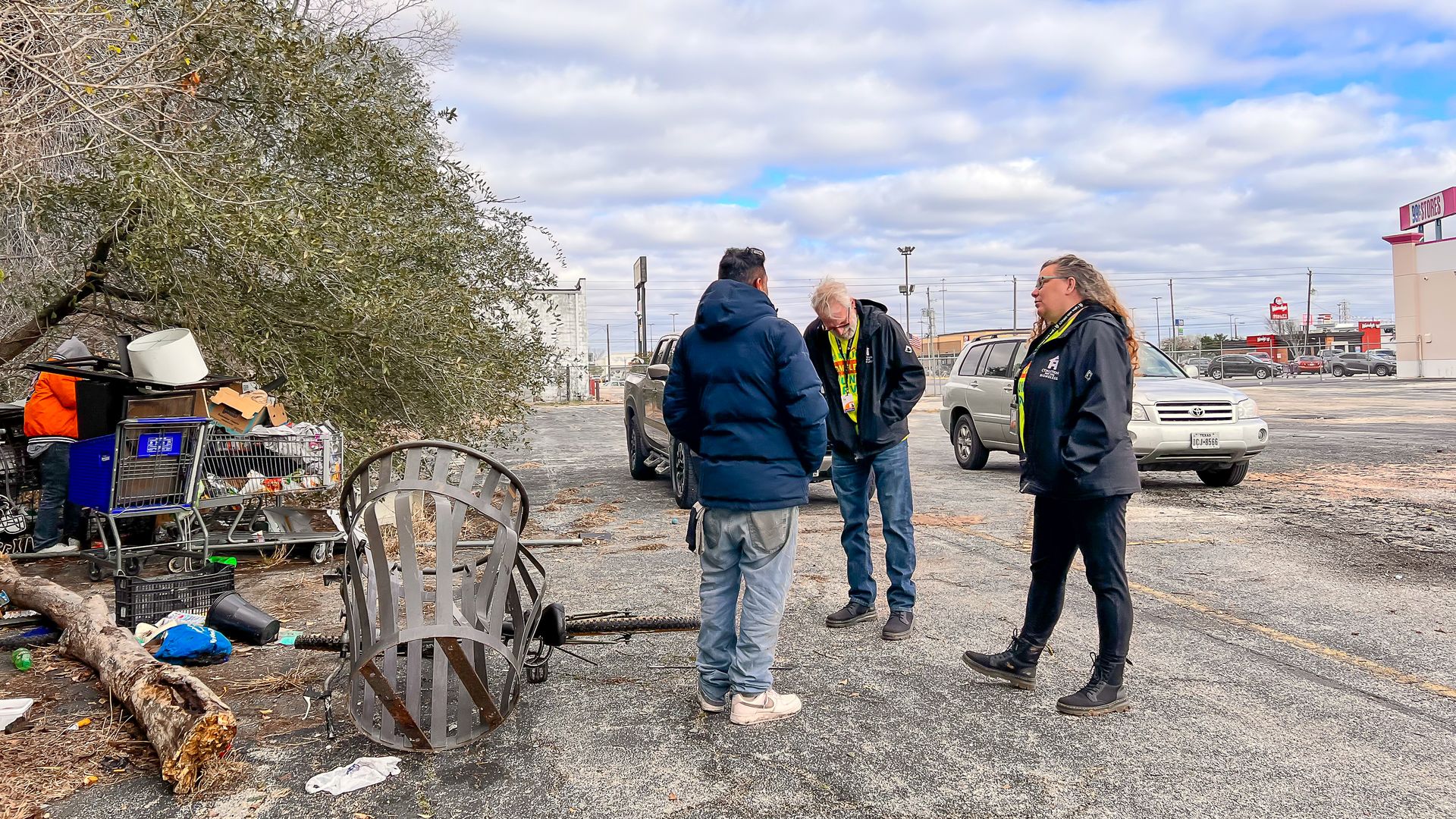
The Point-in-Time count from 2023. Photo: Courtesy of Coalition for the Homeless of Houston/Harris County
The annual homelessness count is happening this week in Houston and throughout Harris, Fort Bend and Montgomery counties.
Why it matters: The Point-in-Time Homeless Count & Survey provides updated data about unhoused folks in Houston and will gauge how the city is doing in providing sustainable shelters, Ana Rausch, one of the organizers, tells Axios.
Between the lines: New Mayor John Whitmire has pledged to decrease homelessness in Houston. "The city has done a good job, but we must do better," he said in his inauguration speech.
- Most recently, he said unhoused people do not have the right "to camp out on our streets," per Fox26.
What's happening: Nonprofit Coalition for the Homeless of Houston/Harris County and about 400 volunteers and staff members of local nonprofits will canvass the 3,700-square-mile three-county region to survey people living unsheltered, using a mobile app.
- The official "night of record" was Monday, when the sheltered population was counted, using records from the Homeless Management Information System.
- And from Wednesday to Friday, the unsheltered population will be counted based on where they were Monday. Originally, that count was supposed to start Tuesday, but it was pushed back due to the weather.
Of note: The count is required by the U.S. Department of Housing and Urban Development and helps determine how much federal funding the area receives for housing programs and supportive services.
- In 2023, HUD granted more than $46 million to the Houston area.
By the numbers: Texas saw a 13% increase in people experiencing homelessness from 2022 to 2023, per HUD data released last month, whereas homelessness in the Houston area remained flat.
What they're saying: "I always hope that there's going to be a decrease. That is my eternal hope. I always have my fingers crossed. But at the end of the day, we don't know — there's a lot of societal factors that happen for someone to become homeless," Rausch says.
- "There's just not enough affordable housing to meet the demand of individuals. There's also inflation with rising housing costs. And it's just making it really hard for people to find affordable housing. So those are just things that we can't control."
What's next: The results of the count will be released in the spring.