Foraging guide for beginners

Add Axios as your preferred source to
see more of our stories on Google.
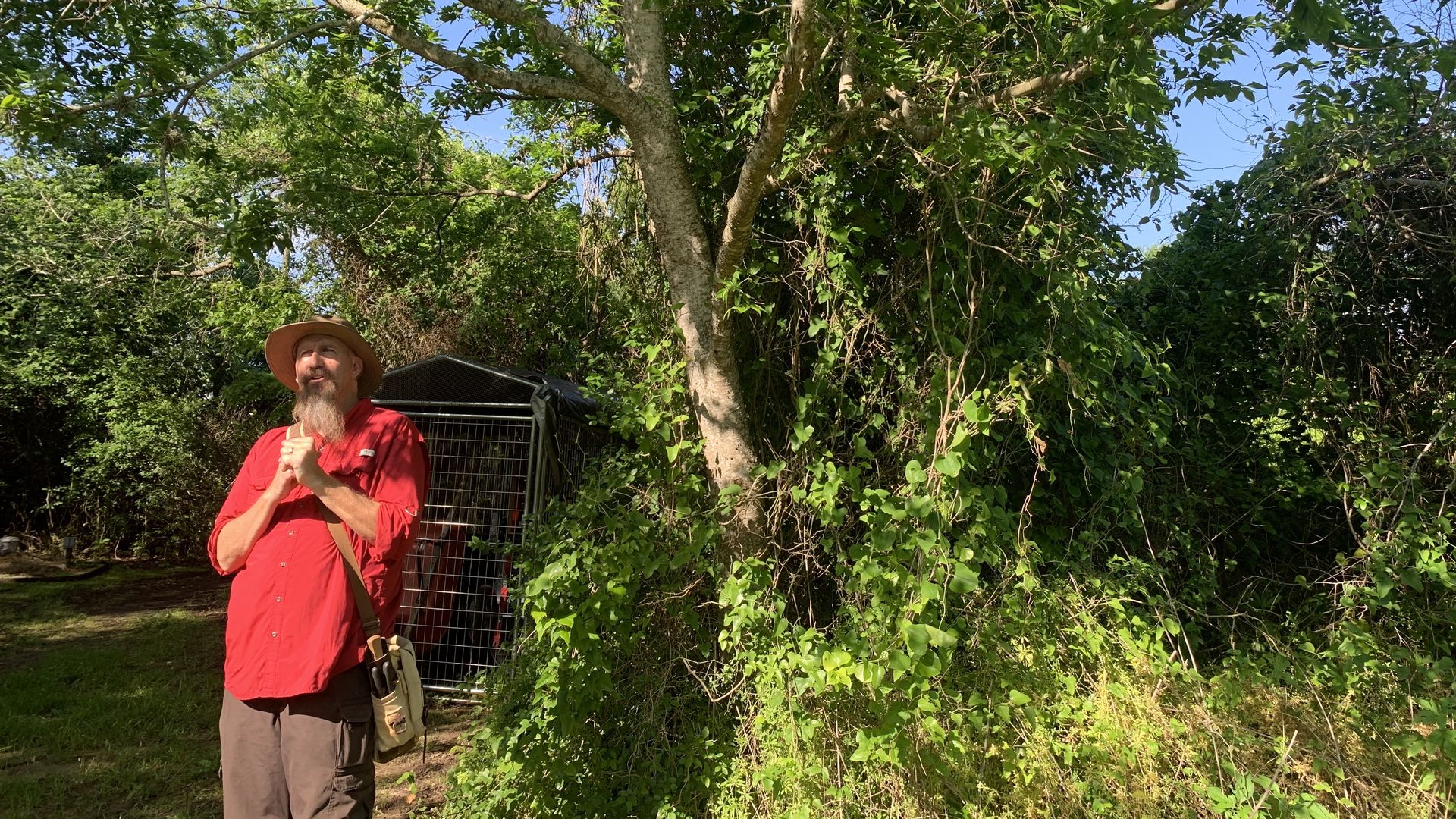
Mark Vorderbruggen at the Blackwood Educational Land Institute. Photo: Shafaq Patel/Axios.
To a forager, a lawn of so-called weeds can be turned into a meal or medicine. And with our growing zone, lots of "weeds" thrive year-round.
Driving the news: 👋 Shafaq here! I went on my first foraging trip last weekend with forager Mark Vorderbruggen to learn more about wild food I can eat.
Context: Regular readers of the newsletter might remember that I've become passionate about growing food. Foraging always seemed like a vast unknown, but I became more and more interested after consistently watching Alexis Nikole Nelson on Instagram and TikTok.
The intrigue: The pandemic forced people to go outside for recreation, and with the rise of foragers on social media, more people have turned to the outdoors to gather food.
- Vorderbruggen says he's seen people get interested after watching survival shows like "Alone" and "Naked and Afraid." There are also people who begin to forage because of culinary interests, for environmental reasons, or out of fear after seeing empty grocery shelves.
What I learned: While I may not be able to confidently identify any plants while taking a stroll just yet, I learned what to look for, like hairs on the stem, leaf patterns, and stem and leaf shape.
- According to Vorderbruggen, if you can point out five unique features of a plant, you can essentially identify it.
- Yes, but: I found that detailed observation of plants is hard skill to hone, and it can be difficult to tell plants apart. For example, a plant that looks like a common dandelion might be a lookalike, like the Texas Dandelion, Cat's Ear or Sow Thistle.
Common plants you can eat: Purslane, lamb's quarter, wood sorrels, pine needles for tea, and wild onions are all abundant in the Houston area in the spring and summer, according to Vorderbruggen.
- Of note: Since Texas is so large, most of the plants found in North America can be found in this state, Vorderbruggen said.
Be smart: Public places to forage legally are somewhat limited in Texas. For instance, collecting plants is prohibited in Texas state parks.
- Vorderbruggen says the best way to forage is on private property, like your lawn or your neighbor's lawn or acreage — after asking for permission, of course.
- Respect the plants and the land by cutting the plants properly using sharp shears and not overharvesting.
- And don't eat the plants unless you're positive they're safe to consume.
Worthy of your time: Foraging has been a common practice for Indigenous and Black folks, and many are finding freedom in foraging and connecting to their roots.
Readers, do you forage for your own food? If so, I'd love to hear from you.