Evictions rising in Houston, new data shows


Add Axios as your preferred source to
see more of our stories on Google.
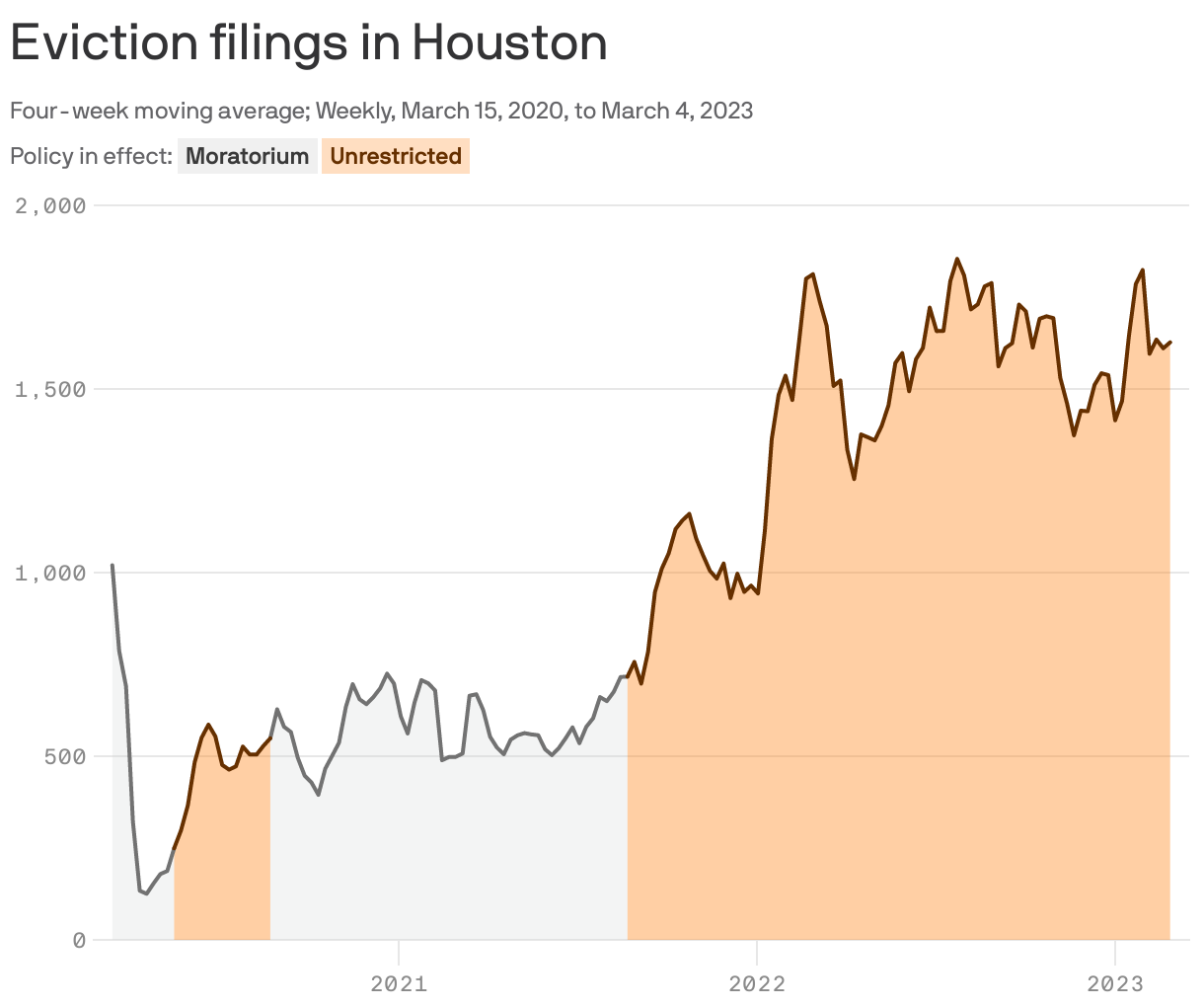
Eviction filings in Houston have exceeded early pandemic levels, according to data compiled by the Eviction Lab at Princeton University.
Driving the news: Sweeping local and national eviction moratoriums helped keep many families in their homes through the heart of the COVID-19 pandemic. Since those moratoriums have ended, many Americans are once again exposed to the threat of displacement.
- That's especially true as high rent prices have renters spending record shares of their paychecks on their monthly housing bills.
- The eviction crisis tends to disproportionately affect minority groups — particularly Black women, says Eviction Lab research specialist Jacob Haas.
By the numbers: On average this year, 1,627 evictions were filed weekly in Houston, per Eviction Lab data as of March 4.
- That's down 10% from the same time last year — but is 200% higher than the average of 538 when moratoriums were in place.
What's happening: In Houston, ballooning eviction dockets mean that cases are often considered in 90 seconds or less, per the Houston Chronicle.
- The news comes as Texas again opened — and quickly closed — applications for its rent relief program, which leverages $96 million to help residents with rent and utility bills, as well as those facing eviction.
Of note: The Eviction Lab notes that its data doesn't capture illegal evictions or cases where renters are effectively forced out by large rent hikes, and it may be undercounting recent evictions due to processing delays.
Between the lines: The Eviction Lab's data set, which includes 34 cities, is the closest thing available to a nationwide evictions database.
- While the U.S. Department of Housing and Urban Development is working on new data-collection efforts, "there's still no government database nationwide with full coverage," Haas says.
- That data void makes it all but impossible to adequately track — and therefore address — the problem at scale.
What they're saying: "We've seen a return to or beyond pre-pandemic averages in a large number of areas where we've been tracking [eviction] data," Haas says.
- "To return to that is disappointing given all of the initiatives that were taken to prevent housing instability."
Editor's note: This story has been updated.