Detroit seeks developer for Oakland Avenue

Add Axios as your preferred source to
see more of our stories on Google.
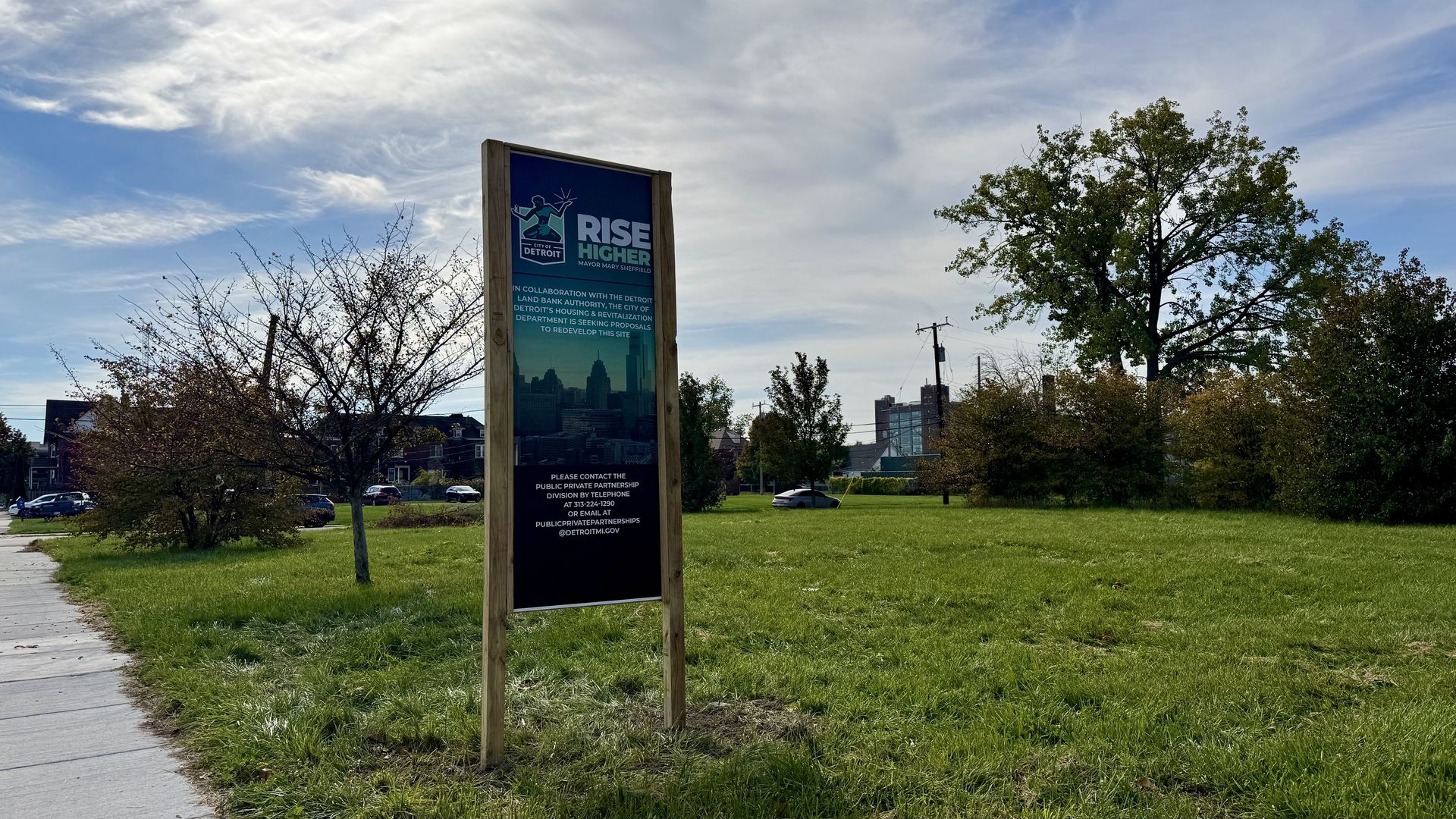
The Oakland Avenue site. Photo: Annalise Frank/Axios
Detroit wants developers to submit ideas for new construction along the historic but somewhat vacant Oakland Avenue corridor.
Why it matters: The city's request for proposals is the latest step in years of planning to revive the historically important corridor.
State of play: The Housing and Revitalization Department wants to choose a developer for four vacant, publicly owned lots along Oakland, between Bethune and Custer streets — not too far from East Grand Boulevard.
- The new construction should help make Oakland more walkable and vibrant. If there's housing, it should include affordable units.
- Once the developer closes on the property, which has an asking price of $65,000, they need to start construction within 180 days.
Zoom out: The city has positioned Oakland Avenue in the North End as a destination for business and cultural revitalization for years.
- In its neighborhood-based planning efforts, the city has taken feedback from residents who want to see it thrive again while celebrating its history.
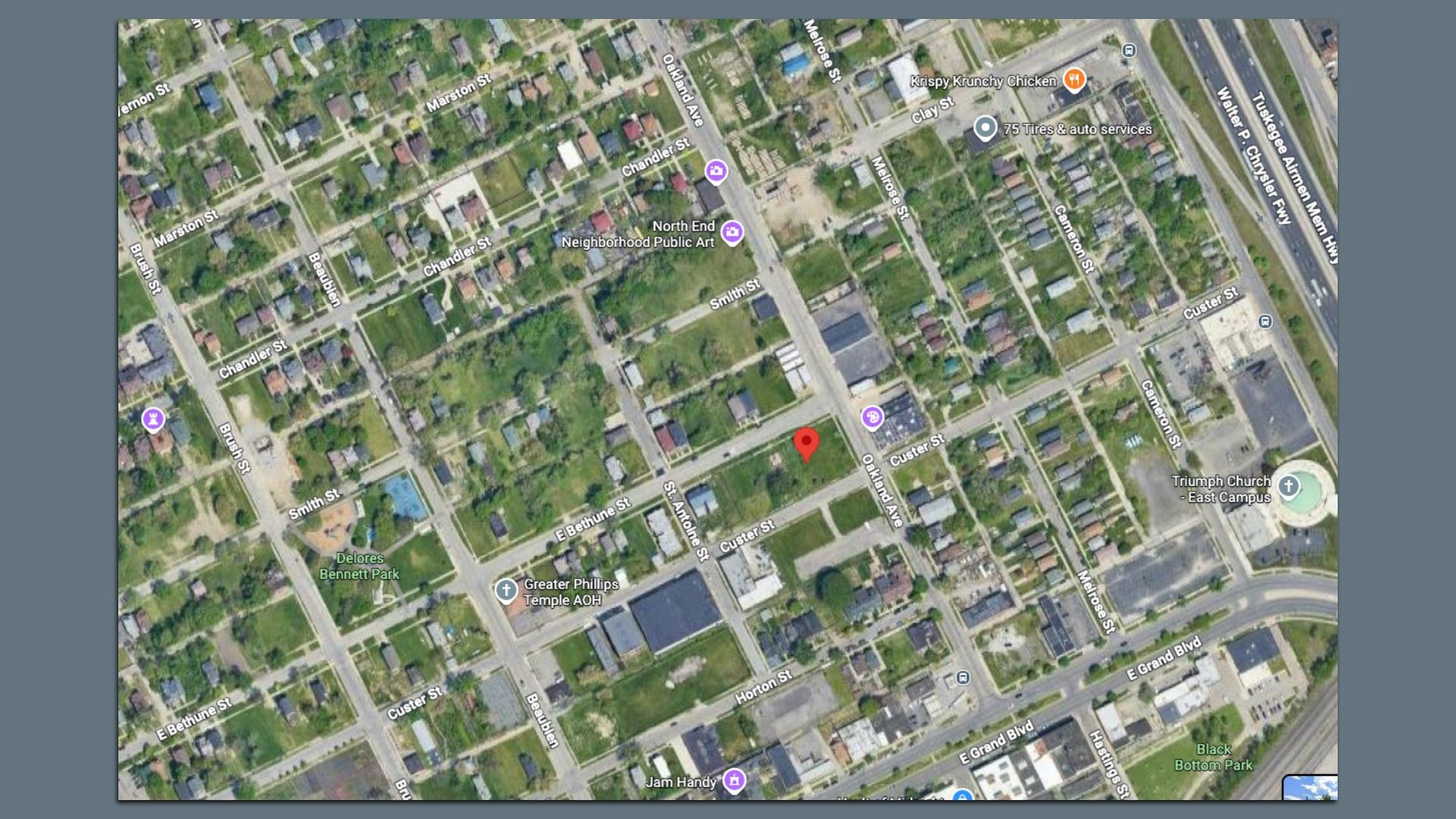
Flashback: Oakland Avenue was lined with popular music venues, bars and shops that drew Black patrons and performers around the 1940s-80s.
- Nightclubs there like Phelps Lounge hosted national acts such as James Brown, The Temptations and Gladys Knight & The Pips. They were a "hub for Black musical innovation" and "the heart of Detroit's blues and jazz scene," the city wrote.
Context: Oakland is now lined with empty buildings and vacant land. But it also hosts open businesses, apartments, churches, homes and public art.
- The North End is home to generations displaced from Black Bottom after it was destroyed in the name of urban renewal.
- In recent years, the neighborhood has seen significant new construction, along with urban farms and investment from community-led nonprofits.
What they're saying: "The North End is at the dawn of a new, important era," Jerry Ann Hebron of Oakland Avenue Urban Farm told the Michigan Chronicle.