Detroit's century-old brick sewers endure

Add Axios as your preferred source to
see more of our stories on Google.
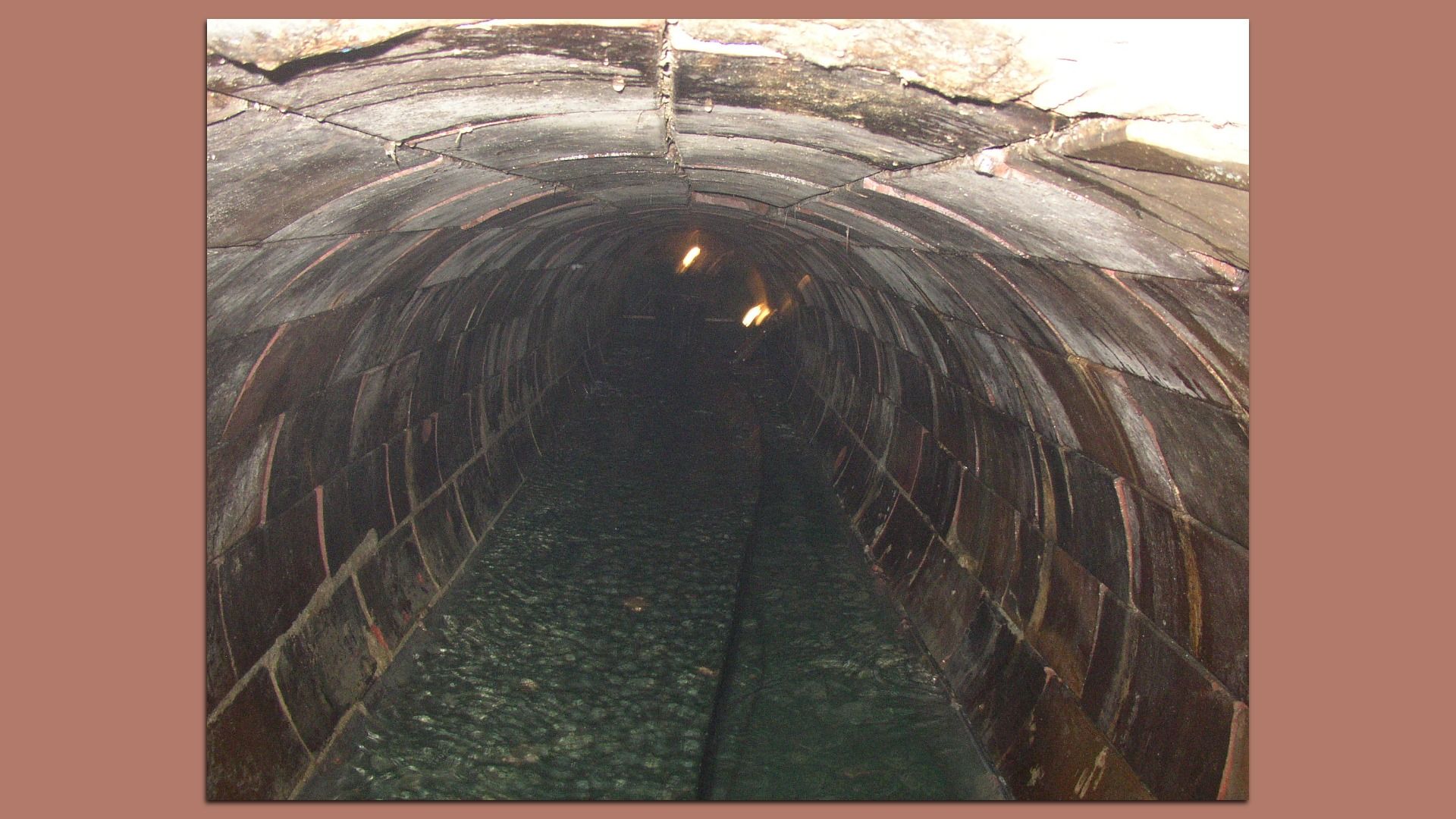
A brick sewer in Detroit. Photo: Courtesy of DWSD
Some of Detroit's most impressive brickwork isn't holding up a historic building, but is buried beneath our feet and still carrying sewage today.
Why it matters: Detroit's mid-19th-century leaders invested in sewer infrastructure that today's city officials believe could last another hundred years.
- That legacy of hand-laid brick sewer craftsmanship is largely unseen by the public — though some contractors and developers interact with it as they fuse their new construction with the old city.
What they're saying: "... You have these really kind of ornate masonry configurations that it's truly amazing to see," says Michael Marks, partner at Detroit engineering firm Giffels Webster. "They're buried 50 feet below Woodward, and no one would ever know that it's there.
- "... Maybe, you know, 20 people in the last hundred years have seen it, and your jaw hits the floor, like, how much time did a team spend here constructing this?"
Flashback: Detroit's sewers marked a major early investment in the city's future, starting even before the city paved its streets. The goals were to improve public health and grow the economy, per an 1846 city directory and an 1890 history of Detroit by Silas Farmer.
- Per the records, Detroit spent $34,496 on sewers from 1835 to 1845 — about $1.5 million today — including $22,607 on the landmark new Grand Sewer.
- Its stone walls and brick arches enclosed a creek, with the sewer flowing from Cadillac Square to the Detroit River, per water department history.
- By around 1890, more than 200 miles of sewers were built at a cost then exceeding $3 million, according to Farmer.
Today, about 500 miles — 16% — of Detroit's sewers are brick, according to the Detroit Water and Sewerage Department (DWSD).
- Most are downtown, but some stretch across the city, including the 12-mile-long, 8- to 16-foot diameter Detroit River Interceptor that was built in the early 1900s to channel waste downstream.
The big picture: These old, multilayered brick sewers are often in good repair and could last another 100 years, DWSD deputy director Sam Smalley tells Axios.
- Yes, but: Brick sewers are rigid, meaning if the ground above them settles unevenly, it can threaten their stability.
Zoom in: New construction near old brick sewers can require care, including before-and-after video inspections to assess their condition, Smalley says.
- Costs for developers vary widely, from almost nothing if they can reuse existing connections to tens or hundreds of thousands for new sewer tie-ins, per Marks.
- Big expenses can come from navigating electrical and other infrastructure between the sewer and surface.
How it works: DWSD's brick sewer rehab work includes fitting smaller, damaged lines with a resin liner that essentially creates a new pipe inside the old one.
- Modern DWSD standards use PVC or reinforced concrete sewer pipes.
- If brick pipes need full replacement, DWSD uses concrete, not brick.
- "We don't have the craftsmanship anymore, or the resources to do something like that," Smalley says.
Treasures surface from sewers
Nearly as old as some of the brick sewers is industrial cleaning company Doetsch Environmental Services.
The big picture: Founded in 1898, the Warren-based family business has had a front seat to Detroit's enduring sewer lines as it clears them of decades of debris.
- The old lines have also become accidental havens for buried history, some of which Doetsch keeps in its museum that'll be shown during an open house Thursday.
State of play: Doetsch uses high-pressure water and vacuums to remove accumulated sand, rock and other debris that reduce a pipe's capacity, Joe Schotthoefer, VP of operations, tells Axios.
- They find brick sewers in other old communities, but Detroit's sizes stand out.
What they're saying: "Oftentimes, we find these brick sewers in the same condition they were at the turn of the century," Schotthoefer tells Axios.
- "Why we often marvel at these is that when they were built, with limited resources, you know, mortar, buckets and boards and workers stacking rows of bricks, that they're still in that condition from the original construction."
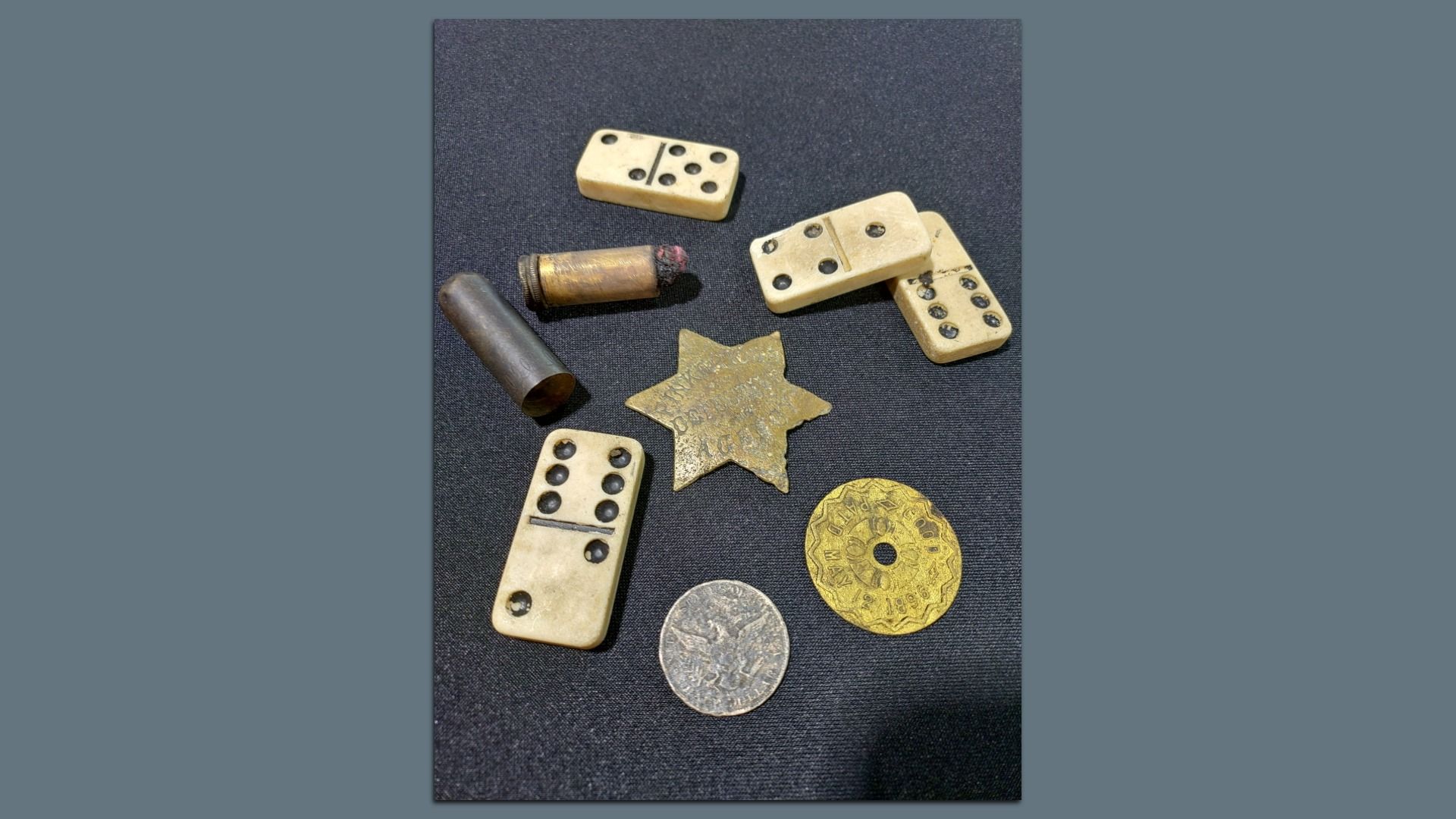
The intrigue: Doetsch workers have found old bicycles, kitchenware, car parts, rings, guns, hubcaps from the 1930s, dominoes, a coin from 1896 and what Schotthoefer says appears to be a vintage Pinkerton National Detective Agency badge.
- The company preserves historic artifacts in collaboration with local historians.
The bottom line: "There is a fine line between chaos and civilization, and that is what these brick conduits represent," Schotthoefer says.
- "These are the structures … that provide us a clean community for us to live, for us to recreate, for us to continue to offer future generations."