RenCen redevelopment faces early skepticism

Add Axios as your preferred source to
see more of our stories on Google.
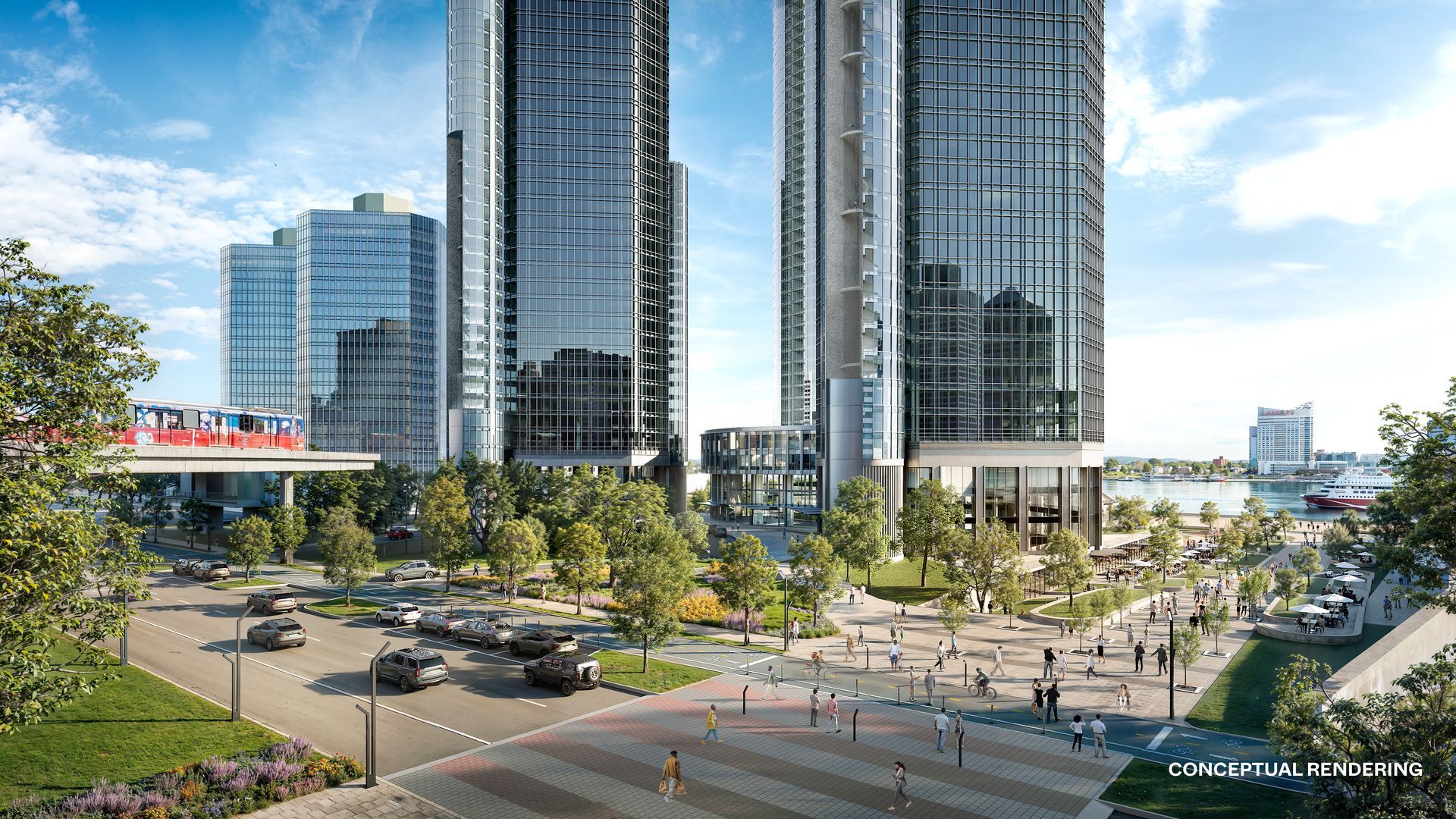
A rendering of the Renaissance Center redevelopment. Image: Courtesy of Bedrock
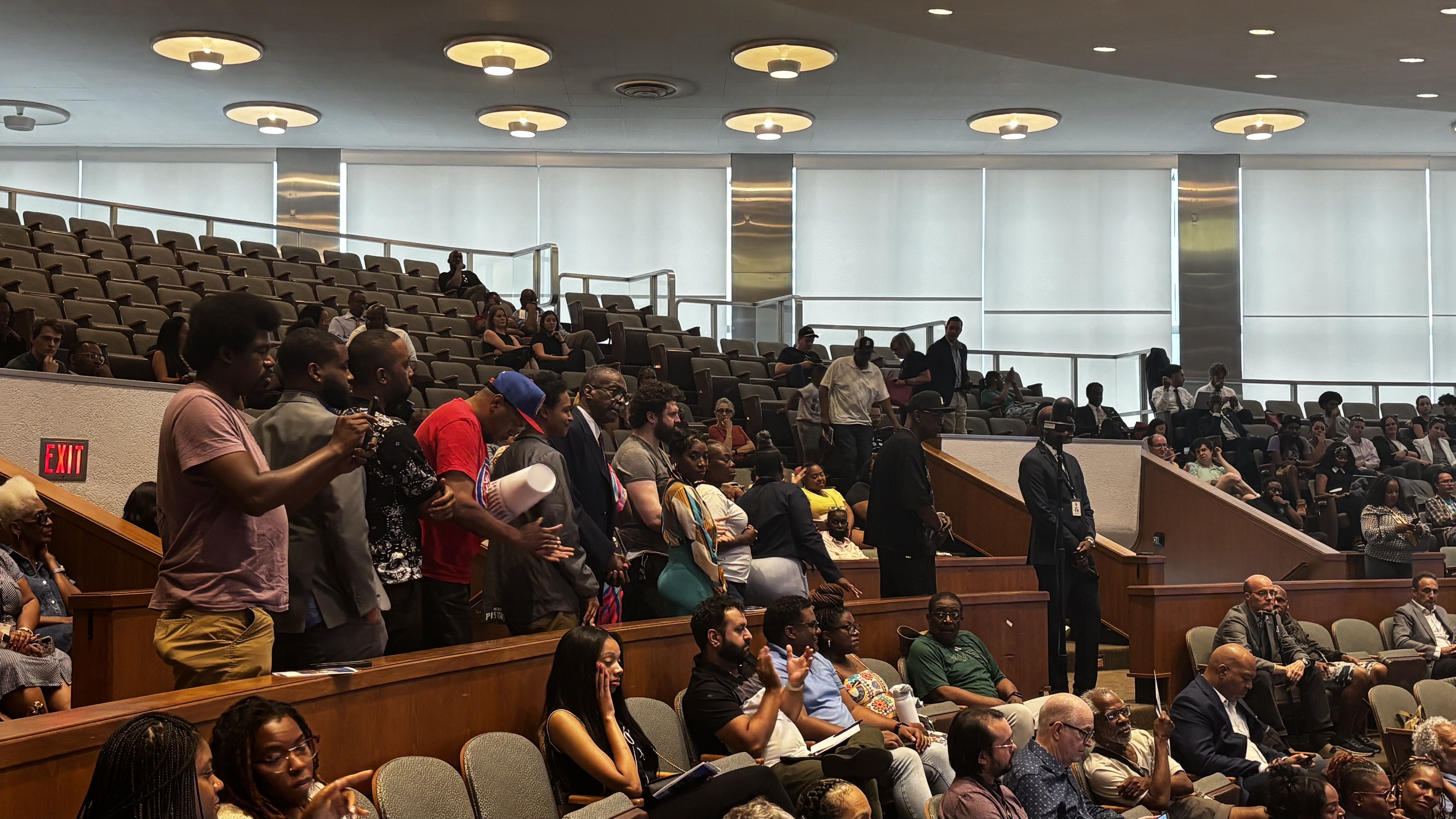
Developers seeking to remake the Renaissance Center made their opening arguments Tuesday at Detroit city hall. The initial response was skeptical.
Why it matters: The first public meeting exposed an early tension over whether a project developers say will benefit all Detroiters is giving residents enough time and influence to shape it.
Driving the news: Several residents questioned the roughly 11-week community benefits process for GM and Bedrock's redevelopment and argued that the project's formal impact area — home to about 4,600 people — is too narrow for a redevelopment of the city's iconic riverfront complex.
What they're saying: "What is the rush?" Eric Dueweke, a board member of Community Development Advocates of Detroit, asked during the first public comment period.
- Dueweke argued the process should take more time and that the RenCen's impact extends across the entire city.
The other side: GM and Bedrock argue the redevelopment would replace an increasingly vacant, exclusionary complex with a more accessible connection between downtown and the riverfront.
- Their plan would preserve and redevelop three of the RenCen's five original towers while removing the other two, adding housing and opening more of the site to public riverfront space.
- The RenCen is now 95% vacant, Bedrock's Steve Ogden said Tuesday.
- GM's Jennifer Stallings Dewey said the complex was intentionally designed as a "fortress" that kept workers inside and others out.
Zoom out: Bedrock is also launching a citywide engagement effort beyond the city's community benefits process.
- Its Riverfront community hub opens Wednesday at 521 Atwater Street, where the public can view project exhibits, speak with the development team and offer ideas for the east riverfront.
- Bedrock also plans events in every City Council district and an online survey.
What's next: Impact-area residents will elect two members of the nine-person Neighborhood Advisory Council at the Sept. 1 CBO meeting.
- The NAC will help negotiate the community benefits agreement.