Michigan confronts AI election deepfakes


Add Axios as your preferred source to
see more of our stories on Google.
Illustration: Natalie Peeples/Axios
AI-generated attack ads and campaign content are rampant leading up to the midterms.
Why it matters: More use of AI makes it harder for voters to determine fact from fiction, per the state Department of Attorney General.
The big picture: Americans across the country could have very different experiences with AI ahead of the Nov. 3 election, thanks to a patchwork of state rules.
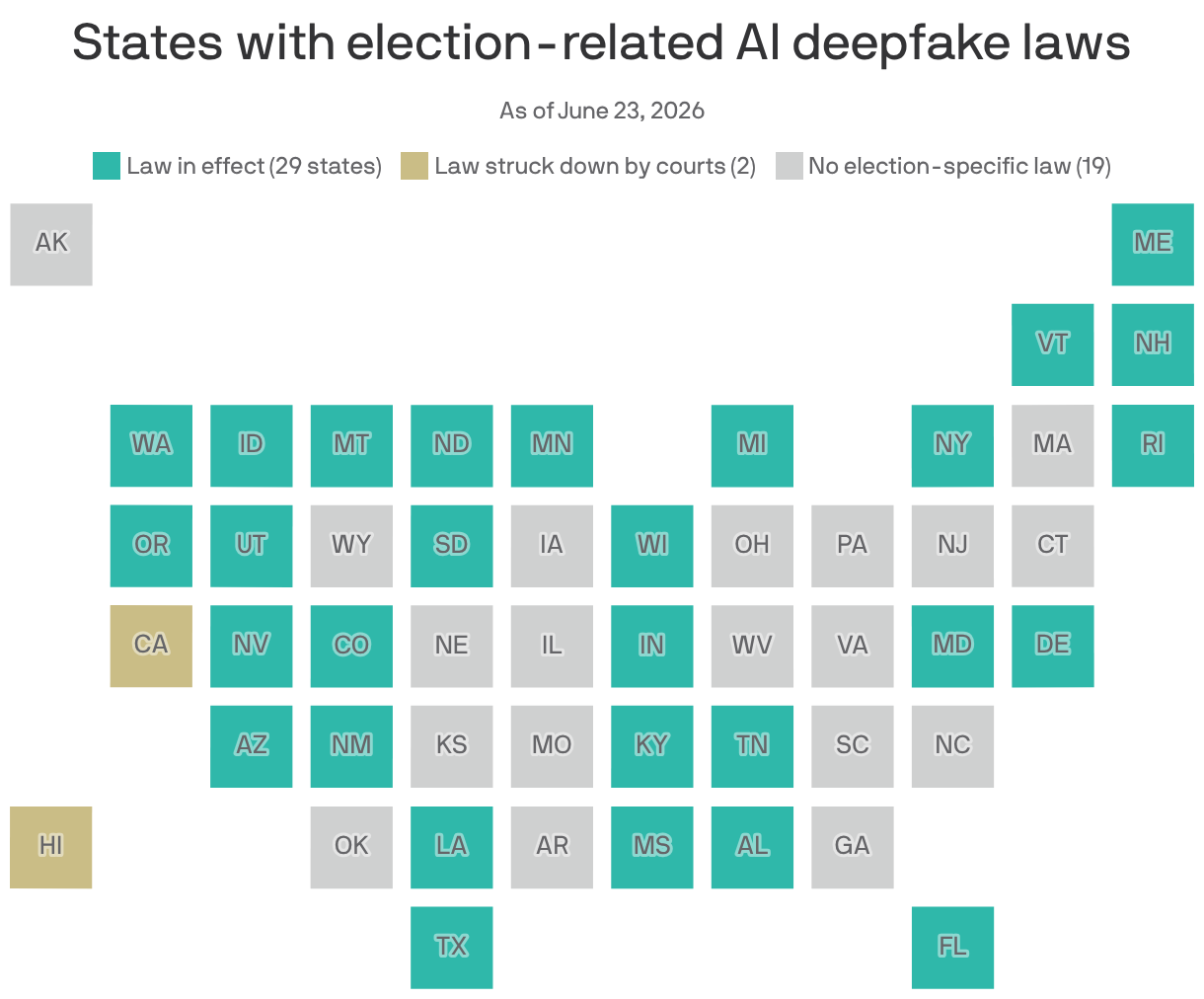
State of play: Michigan is among around 29 states with AI election deepfake laws in effect, according to the National Conference of State Legislatures.
- Michigan's laws require disclosure when AI, or "materially deceptive media," is used in campaign ads.
- Many states have similar disclosure requirements.
- Meanwhile, Minnesota and Texas prohibit political deepfakes for a certain number of days before an election. Maryland's ban is year-round.
Zoom in: AI became a hot topic in the Michigan governor's race. Former candidate state Sen. Aric Nesbitt used likenesses of Gov. Gretchen Whitmer and others in a campaign video, per the Free Press.
- U.S. Senate candidate Mike Rogers also went viral for an AI image in which he appeared more buff.
Zoom out: At the federal level, lawmakers have yet to establish a baseline standard for election AI deepfakes.
Context: Congress' first AI deepfakes law addressed a different issue.
- The Take It Down Act, which took effect in May, marked Congress' first attempt at tackling nonconsensual intimate imagery — an issue that has collided with election ads targeting women lawmakers.
The bottom line: Proposals to tackle AI in elections have been floated in Congress for years, but states have moved faster — creating different realities for voters depending on where they live.