Gordie Howe Bridge opening nears after long wait

Add Axios as your preferred source to
see more of our stories on Google.
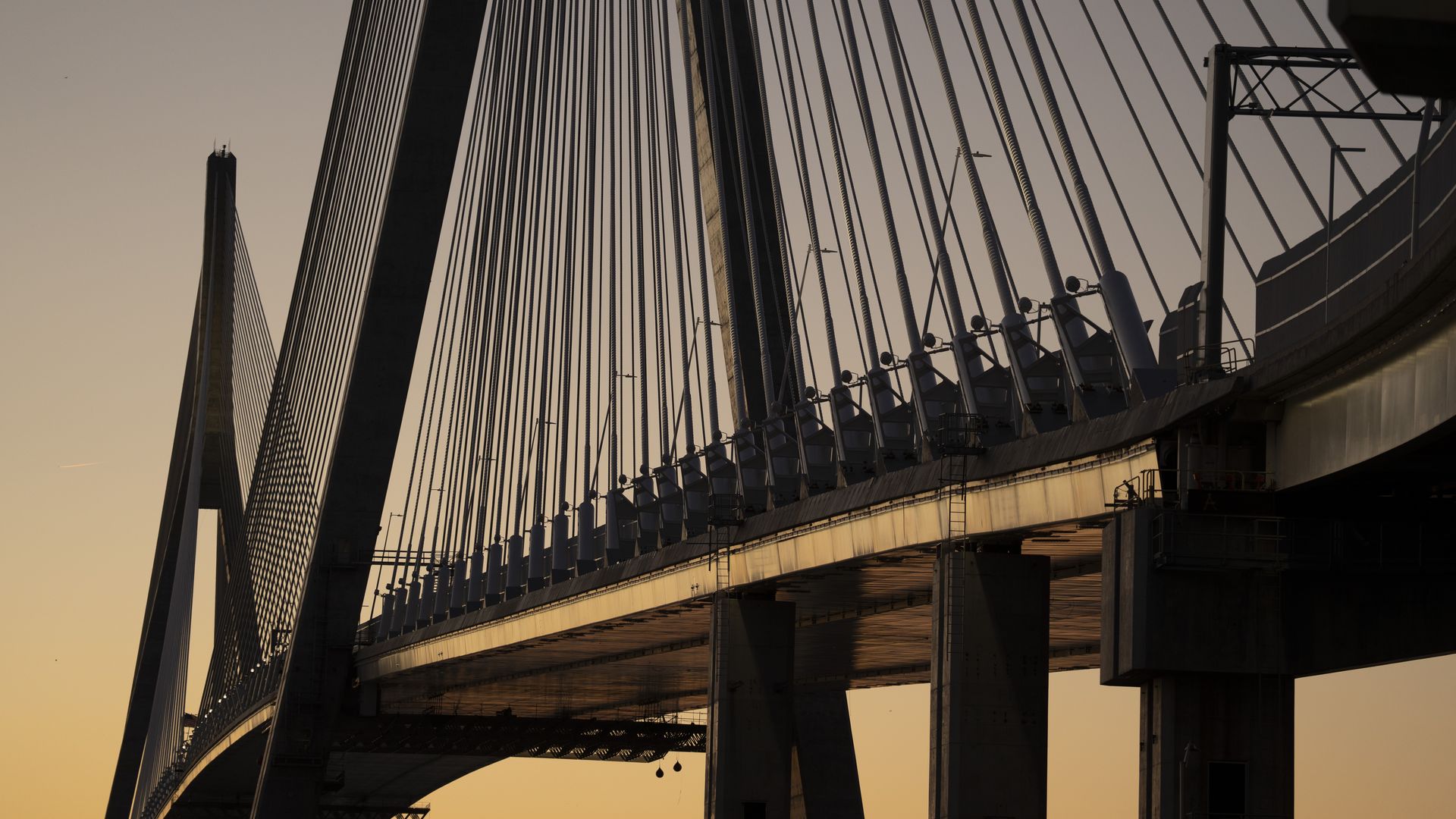
Photo: Courtesy of the Gordie Howe International Bridge
Businesses have moved from waiting to cautious preparation after Canada and the United States finally agreed to the Gordie Howe International Bridge's July 27 opening.
Why it matters: A decades-long effort to build the span between Detroit and Windsor and years of construction delays were followed by months of uncertainty this year as President Donald Trump sought to rewrite the two countries' financial deal.
- Companies in logistics, manufacturing, farming and other international trade have awaited the new crossing's promised economic growth.
State of play: Now, there's a mix of optimism and skepticism ahead of the highly anticipated date, after previous plans for a June opening were nixed.
What they're saying: "Here we are now, and I feel like there's been a bit of a pressure relief valve," Glenn Stevens Jr., executive director of MichAuto, tells Axios.
- "I think now there's really a feeling of optimism and that spirit of cooperation, I feel, has kind of emerged again."
Context: Companies transporting goods between Detroit and Canada will benefit from the bridge easing friction at what's considered North America's busiest commercial border crossing.
- Wayne State professor Michael Belzer, who studied cross-border freight infrastructure for decades, says the region's economy depends on a complex, integrated freight transportation system — and the cost of delaying additional crossing capacity is enormous.
Case in point: Companies will waste less time waiting in congestion, get easier freeway access on the Canadian side, move their products more predictably, use improved border technology and security, and move through an increased number of lanes (six) compared with the existing Ambassador Bridge (four), Stevens says.
- It's important for the auto industry, which operates on a "just in time" strategy to stay efficient, reduce costs and get parts to factories when they're needed.
Zoom in: "I'll be honest, I'm skeptical whether they'll actually open on time, but of course I'm cheering for them …" Herman Dhade, president of Detroit Immigration Law Firm, tells Axios.
- Long-term, he adds, the bridge's opening should help not just the economy, but also immigration — relieving pressure from overworked border officers and offering another streamlined port of entry where workers and businesses can get paperwork processed.
Yes, but: Dhade adds that he'd advise clients with complex immigration issues to continue going through more established border crossings for a few months.
- "You don't want to be the very first person that is processed on the new bridge, and you know, the systems aren't working or tested or whatever … So I'm a little cautious … until all the kinks are worked out."
What's next: Watch whether or not Dhade's early concerns prove warranted once traffic starts on July 27.
What's in the deal
The deal the U.S. and Canada struck to open the bridge would split net profits from tolls between the two countries for 15 years, according to the Detroit News.
Yes, but: Revenue during that period won't amount to much, Canadian Prime Minister Mark Carney told CTV.
- "There's not going to be a lot of net to split … We are sharing after Canada is paid back," he said, adding that the U.S.'s money would go toward regional economic development.
- It's unknown who would handle the fund holding the economic development dollars, per the News.
Between the lines: Carney defended the deal to Canadians in saying not a lot of profit will go to the U.S., while Trump said on social media that the deal is "much better" for the U.S. than it was before.
Zoom in: The Windsor-Detroit Bridge Authority will also seek "concurrence" from the U.S. before instituting some toll rate changes, according to a news release.
Flashback: The profit-splitting is a substantial change from the original 2012 deal. Under that, Canada paid for the construction of the bridge and was going to collect all toll revenue in order to pay down those costs.
- Michigan co-owns the bridge and was expected to receive half of toll revenue later down the road, after the bridge's building costs were paid back.
- But Trump in February threatened to block the bridge's opening until a deal better for the U.S. was made.