Michigan advocates want human composting legalized

Add Axios as your preferred source to
see more of our stories on Google.
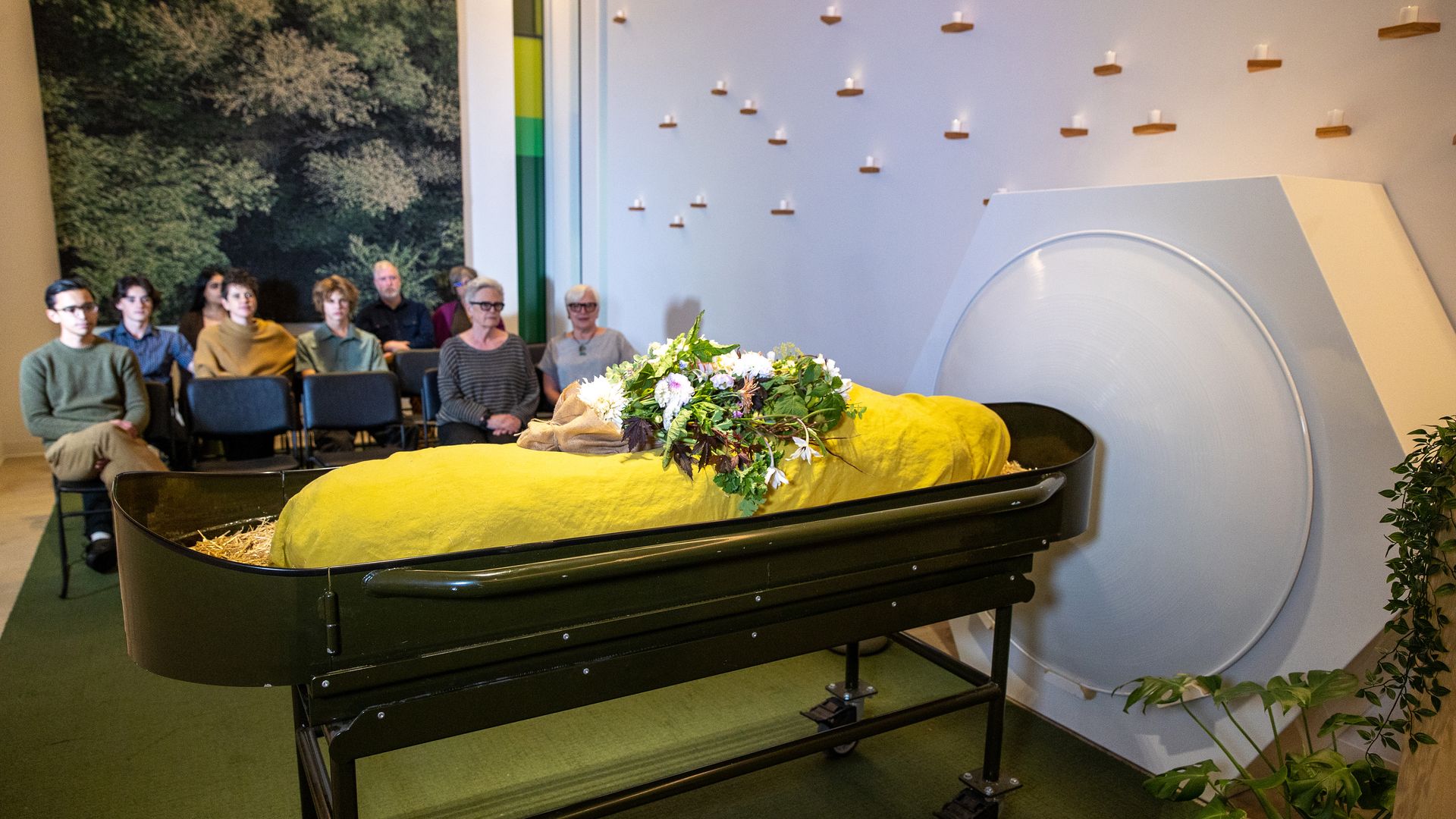
Guests sit near a shrouded mannequin in front of a vessel, or container, for human composting at Recompose in Seattle. Photo: Mat Hayward/Getty Images for Recompose
Green burial advocates want Michigan law to allow peoples' remains to be returned to the earth as usable soil.
Why it matters: The human composting burial method is still illegal here, but gaining traction nationally.
- It's seen as an environmentally friendly and nature-connected alternative to traditionally polluting, non-biodegradable death care like burial, embalming and cremation.
- Like cremation, it bypasses the massive land needs of ever-filling cemeteries.
What they're saying: "I really think the future of death care is green alternatives," says Grand Rapids resident Daniel Holland, an advocate for human composting, also called natural organic reduction (NOR).
- "We've got to stop polluting our world, and the younger generation knows that more than before."
Flashback: Holland works for the Michigan Department of Treasury, but his family on his father's side owns a cemetery. He recalls as a child watching a large smokestack on top of the crematorium, concerned about the neighborhood downwind.
- He later became interested in NOR after watching farming videos on YouTube with composting used for dead animals.
- "This has been on my mind since I was a kid," he says. "I thought, 'Wow, we should be doing this for humans.'"
Now, Holland is immersed in the industry. He's testing NOR processes under his company, Boundless NOR, to be ready for — he hopes — Michigan's eventual legalization.
Working with Holland is Chelsea resident Mike Mitchell, a retired funeral director with an environmental science degree.
- "... We are sorely behind [other states] in allowing this," Mitchell says.
- He adds that change is slow in the funeral business, with a lack of education and awareness of green methods. Some businesses see it as a threat instead of an added option.
Zoom out: The practice is legal in around 14 states, with bills pending in others, per Earth Funeral, another human composting company.
- Michigan residents can access human composting by transporting the deceased person to a provider in another state, like Seattle-based Recompose.
How it works: Recompose says its process uses 87% less energy than cremation, mimicking natural decomposing cycles on the forest floor and returning the body's nutrients to nature.
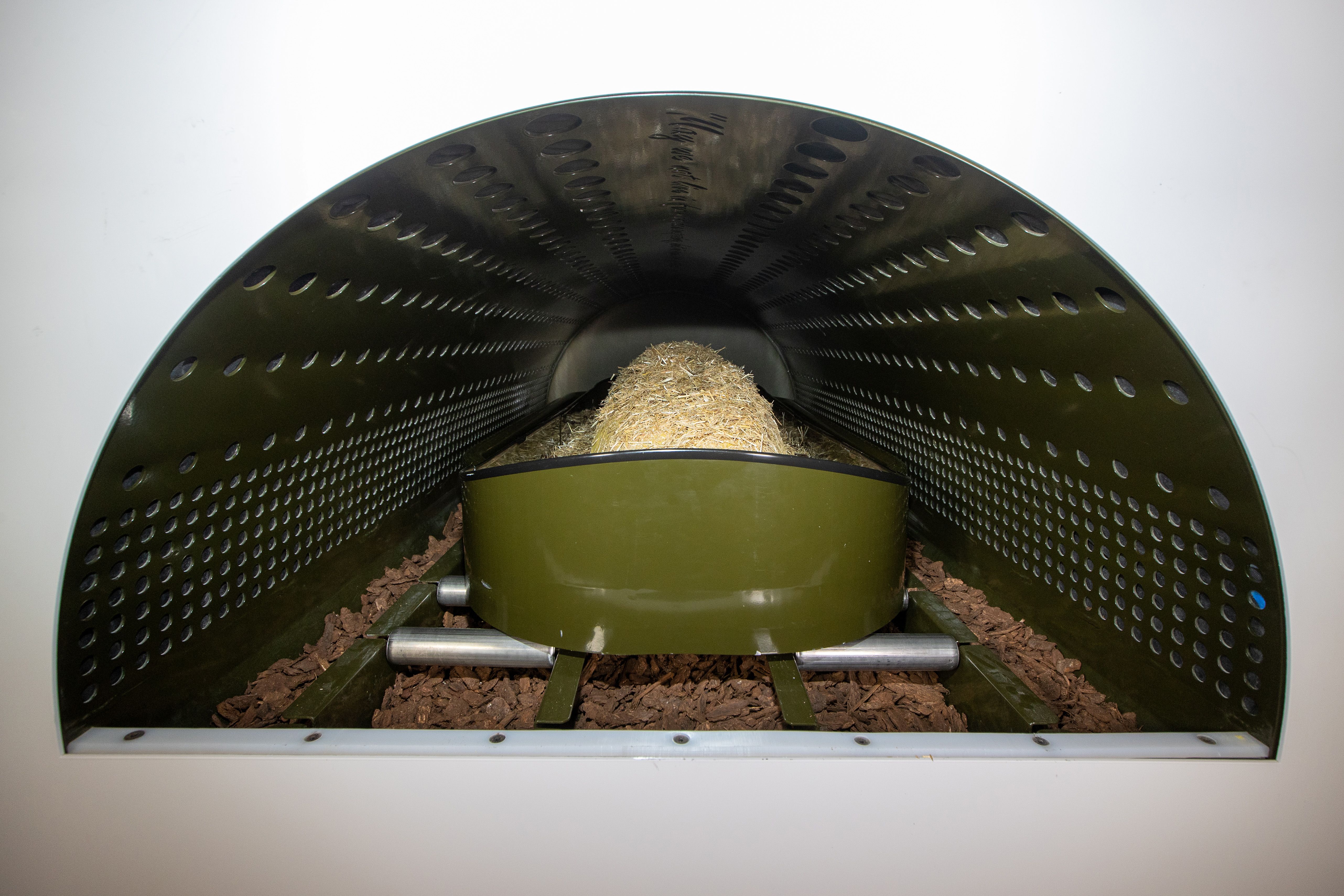
- The deceased person is laid in a closed vessel with wood chips, alfalfa and straw for five to seven weeks. A "laying in" ceremony can be held, similar to a funeral process with the body interred at a cemetery.
- Microbes break down the vessel's contents into around one cubic yard of soil.
- The soil is cured for three to five weeks, then can be used like compost — say, in a garden or to nourish a memorial tree.
Around half of clients are from out of state, Recompose founder Katrina Spade tells Axios.
- The business serves Michiganders by coordinating transport via commercial flight. Transport adds an estimated $2,000-$2,500 to the $7,000 cost.
- Once the process finishes, the soil can be shipped back to Michigan.
What's next: Advocates want the state legislature to act — potentially as part of a larger cemetery rules update — with a goal of licensing NOR businesses by 2028.