Detroit River gets $10M cleanup boost

Add Axios as your preferred source to
see more of our stories on Google.
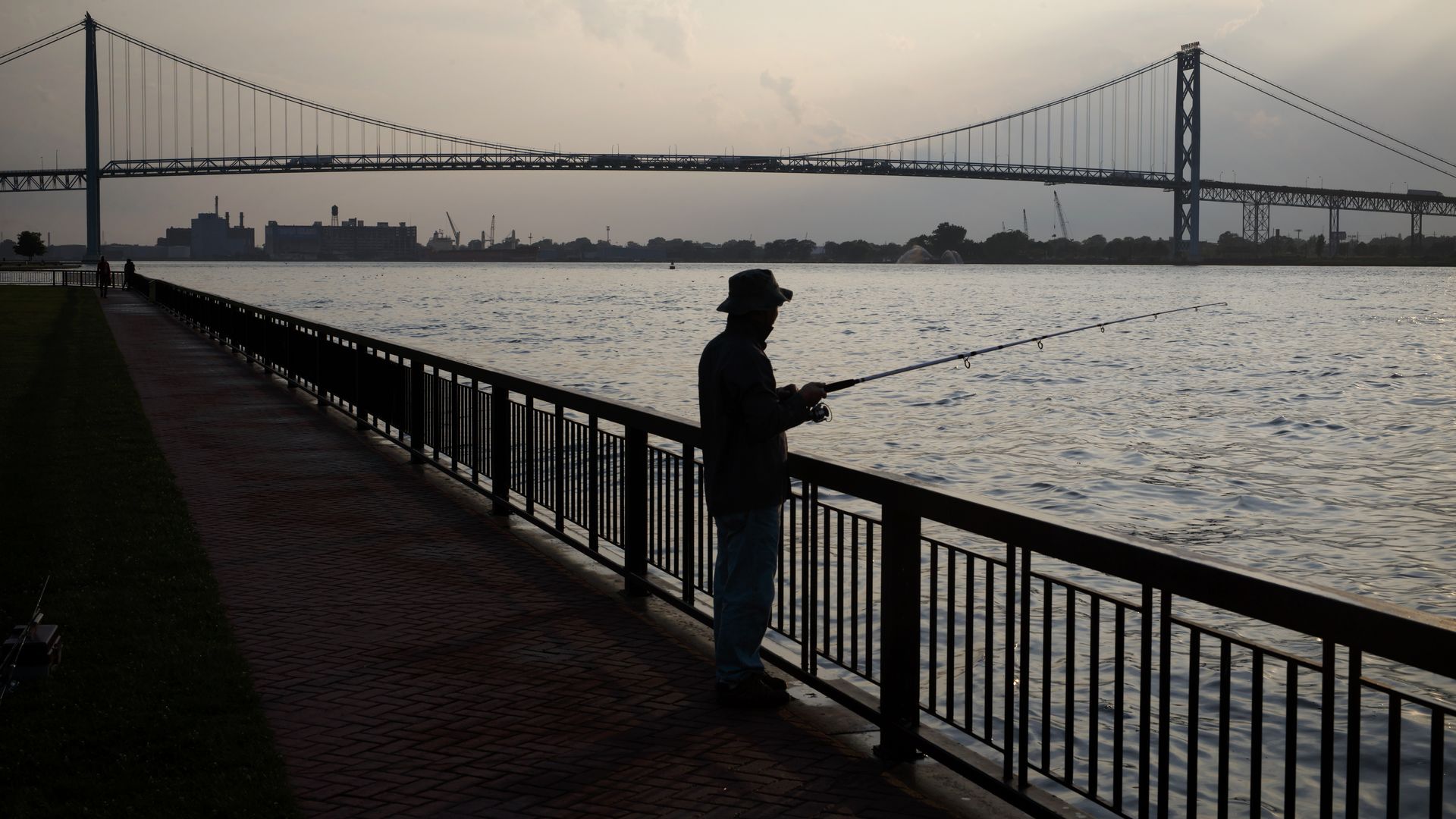
Photo: Cole Burston/Bloomberg via Getty Images
The Detroit River is getting $10 million from the federal and state governments to fix one of its last big environmental concerns.
Why it matters: The river, long polluted by industry, waste and stormwater runoff, has undergone extensive remediation work since being declared an "area of concern" in 1987.
State of play: The new public dollars will target contaminated sediment — or the solids at the bottom of the river.
- Sediment is the Detroit River's "last major remaining" hurdle to its complete restoration, per the Michigan Department of Environment, Great Lakes and Energy, or EGLE, but it's a big one.
Zoom in: Experts will study and design a plan to remove contaminated materials in the riverbed and complete more habitat restoration.
- More funding for the actual cleanup will be needed.
Reality check: A full solution to the contaminated sediment problem could cost $1 billion, Planet Detroit reported last year.
Follow the money: The Environmental Protection Agency is providing $6.5 million through the Great Lakes Legacy Act, with another $3.5 million through a state fund designed to boost federally funded infrastructure, climate and economic development projects.
Catch up quick: Recreation areas, shoreline and natural habitats have been restored along the Detroit riverfront, Belle Isle and downriver islands over the years, while some contaminated industrial sites have been targeted and cleaned.
- For example, fish habitats were restored between 2017 and 2024 on the uninhabited Sugar Island near Lake Erie — an important area for fish-spawning.
What they're saying: "The Detroit River is one of Michigan's most important natural and economic resources, and this investment marks another major step forward in restoring its health and protecting its future," EGLE director Phil Roos said in a news release.
- "Through strong partnerships at the federal, state and local levels, we are making real progress cleaning up contamination, restoring critical habitat and reconnecting communities to the river. This funding ensures that momentum continues."