Glass Academy turns art into experience

Add Axios as your preferred source to
see more of our stories on Google.
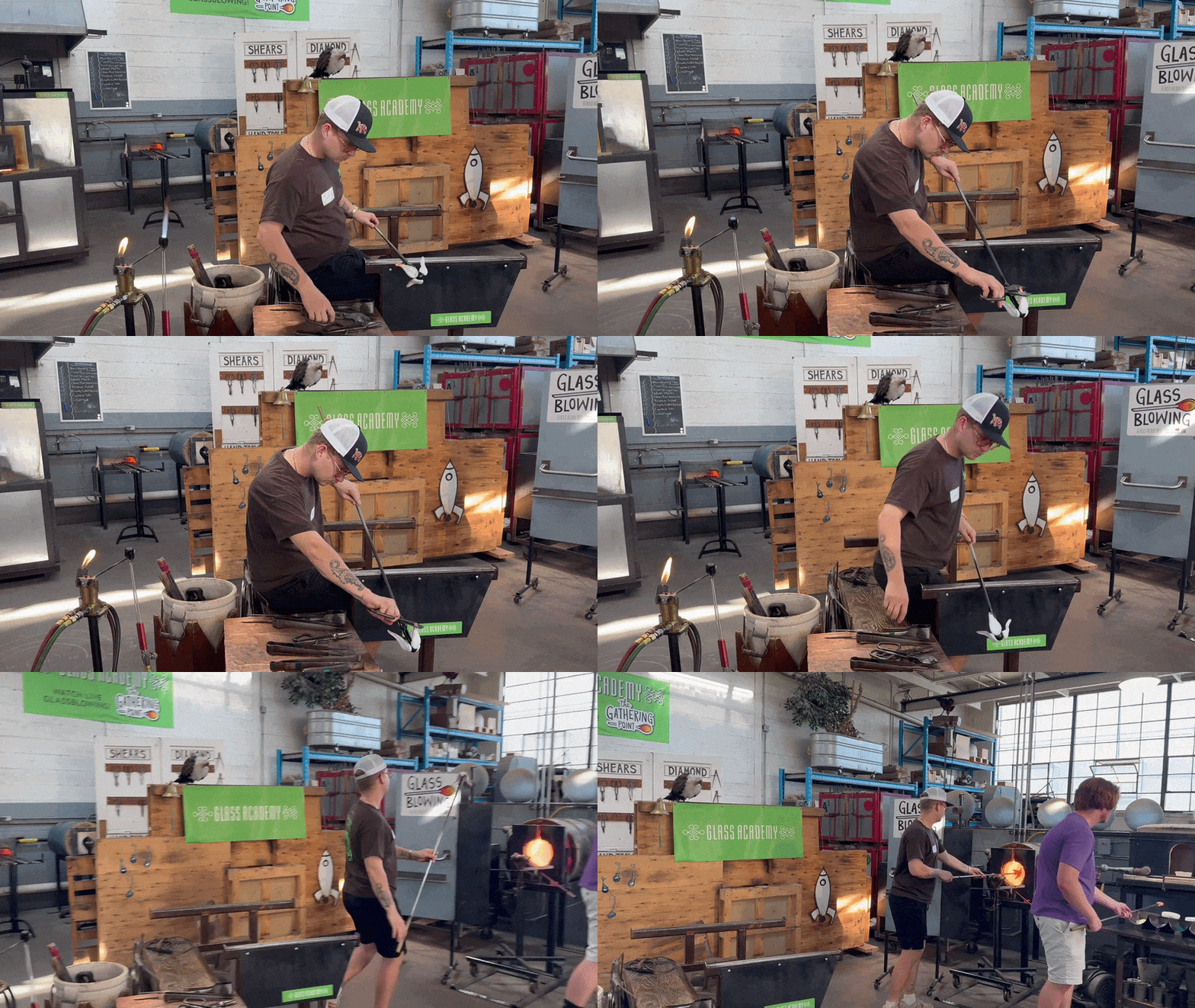
Asked why the art of glassblowing captivates people so thoroughly, Michelle Plucinsky says: "It's like a campfire."
Why it matters: That pull — like a moth to a flame — has shaped the evolution of Plucinsky's decades-old Glass Academy business.
- It's a simple idea: Take the natural draw of glassblowing, a mysterious art that the untrained eye barely understands, and make it accessible to the public.
Flashback: Plucinsky and Chris Nordin established their original glass business in Detroit in the 1990s and moved to a former industrial building in Dearborn around 2003. They're now co-owners with their son Jacob Nordin.
- The business has transformed after beginning as a wholesale operation that sold glass art to galleries.
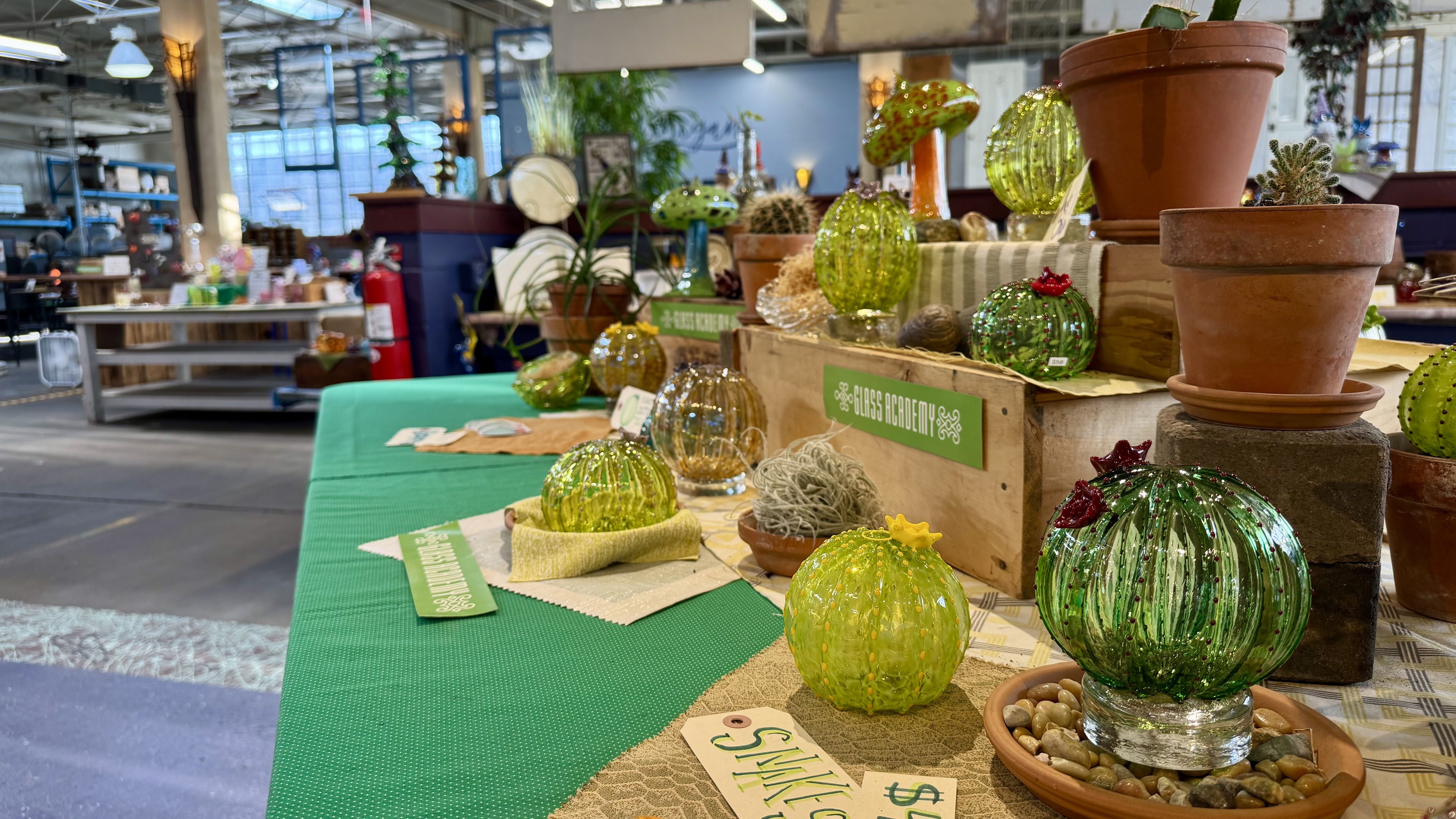
State of play: Now, a third of revenue comes from online sales, driven by interactive livestreaming.
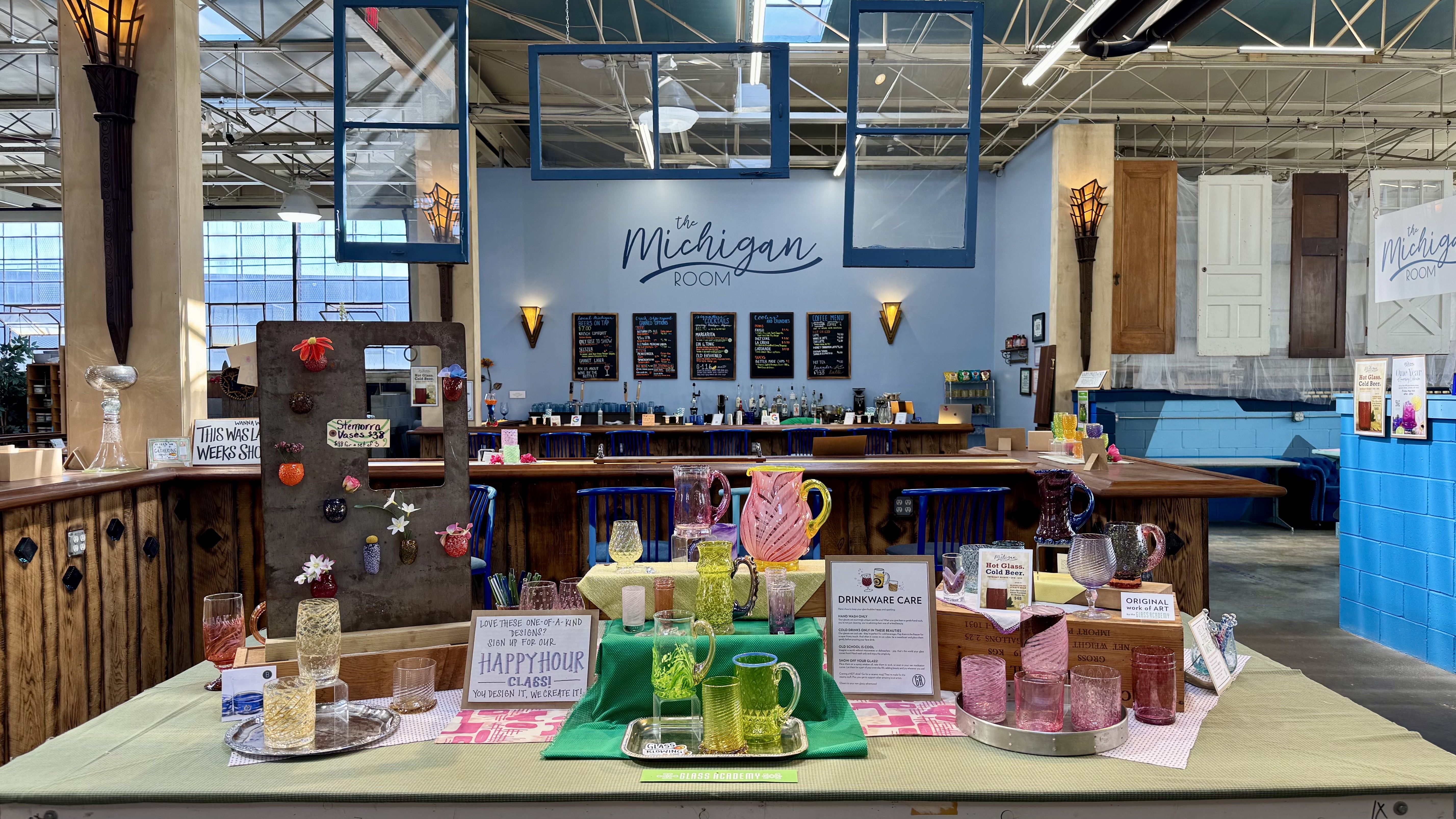
- Another third comes from classes and the rest from retail and drinks — a year-old bar with seats to watch the glassblowers serves beer and cocktails in custom glasses.
- The academy demystifies what can be an intimidating glassblowing process through in-depth tours, live demos and beginner-friendly experiences.
- It also sells smaller, lower-cost pieces and emphasizes personal connection through its events.
New ideas, like cocktail-making classes where attendees can buy handmade glasses that pair with their drinks, also allow the Glass Academy to collaborate with other entrepreneurs.
- The academy also demos at the Michigan Renaissance Festival.
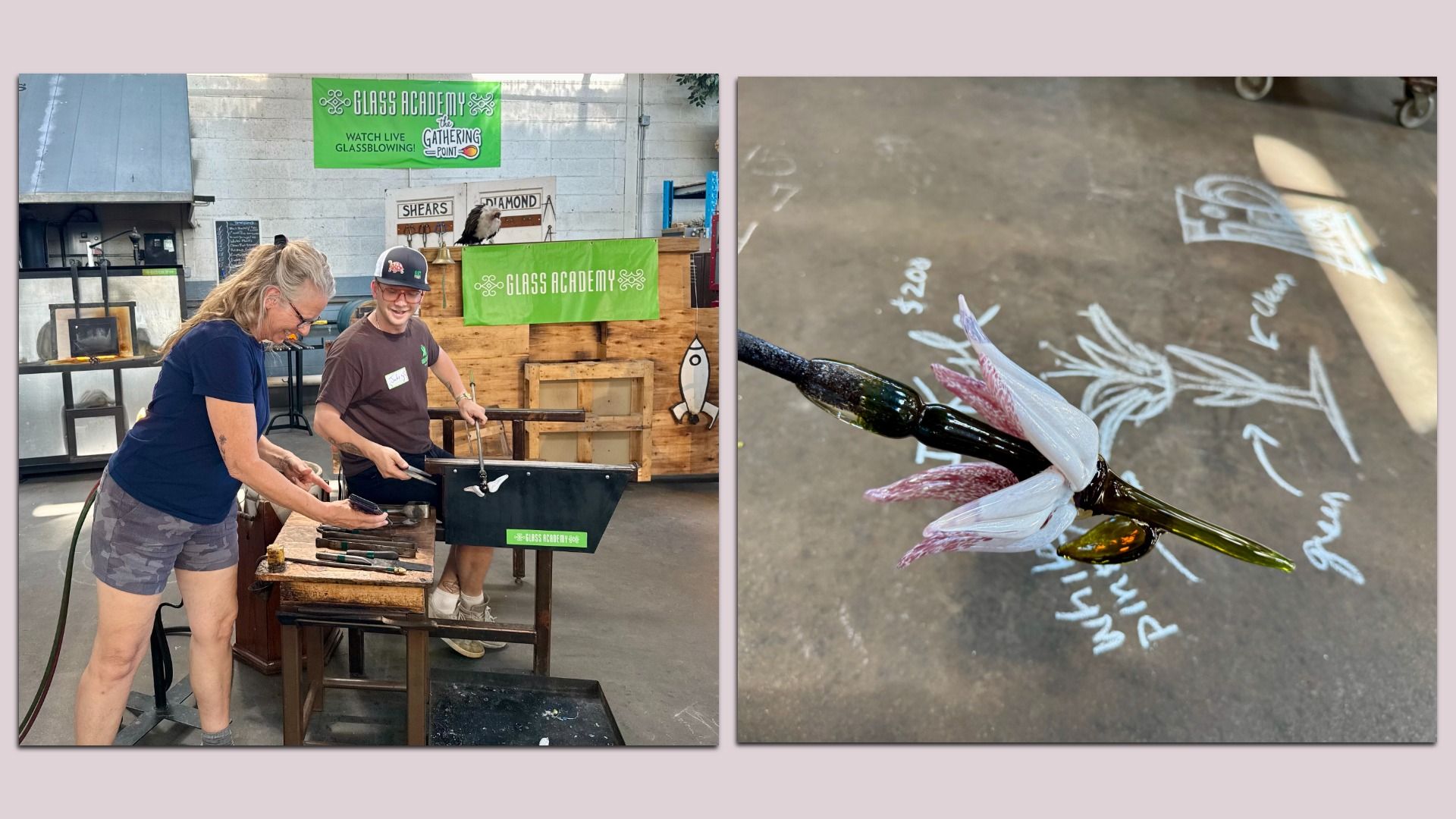
What they're saying: "It feels like it's alive, like you don't understand the medium or what it's going to do, but here's this person [with] this long stick … and suddenly there's something that manifests on the end of the pipe that looks like something you know," Plucinsky tells Axios while watching her son Jacob at work.
Zoom in: Plucinsky, from Dearborn, started glassblowing while working at The Henry Ford in Dearborn. She became skilled at it, and the museum paid for her continued education in it.
- But for Jacob, the art is more innate.
- "[Jacob] grew up watching us, so his skill level is elevated and he doesn't even know why," she says, while he blows glass in front of onlookers with drinks during the academy's 4-8pm Demo Thursdays.
- "He will do moves and he doesn't quite understand the logic behind them."
The bottom line: Plucinsky says her family's artistic mindset is an advantage for building a sustainable business.
- "... We have more ideas than we know what to do with, because I think we think in non-traditional paths. We've learned over time not to put all eggs in one basket."
How it works
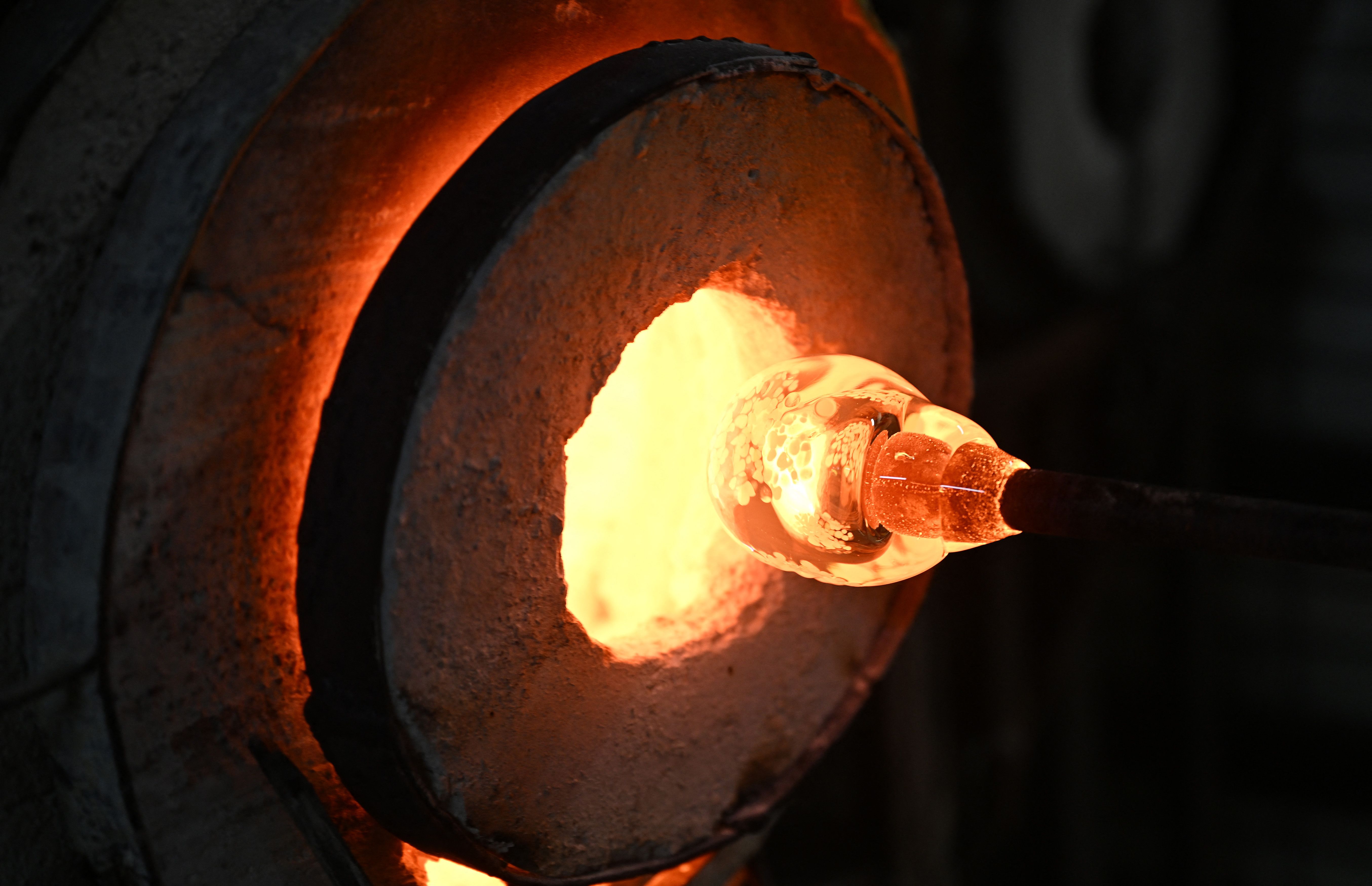
Glassblowing, a centuries-old art form that takes years to learn, begins with heating glass until it's molten and malleable.
The artist gathers a lump of molten glass onto the end of a hollow blowpipe, per Epiphany Glass, a Pontiac-based studio. The molten glass is then rolled on a steel table called a marver to help shape and cool it.
- Observers will see the artist bring the molten glass back and forth between the metal and a heated chamber that's used to keep it malleable.
- The pipe is continuously rotated so gravity doesn't pull the glass out of shape.
Then, the glass can be dipped into piles of frit, or crushed colored glass, which fuses to the surface to create color.
- For hollow pieces like cups or ornaments, the glassblower blows into their pipe to create a bubble.
- Once it's removed from the pipe, the completed piece goes into an annealer, a kiln-like oven that slowly cools the glass to prevent cracking.
Asked if every glassblower has a couple burn spots from the molten material, Plucinsky says "way less than you would think."
- "You know the people around you. It's like dancing, you're very aware of your surroundings."
If you go: The Glass Academy's range of classes and hands-on demo experiences start at $57.
- Other local operations also offer glassblowing classes or workshops, including Rusty Bug Glassblowing Studio in Hazel Park, the Michigan Glass Project and Michigan Hot Glass Workshop in Detroit and the Wyandotte Art & Glass Center.