Reported hunger strike renewed at Michigan ICE detention center

Add Axios as your preferred source to
see more of our stories on Google.
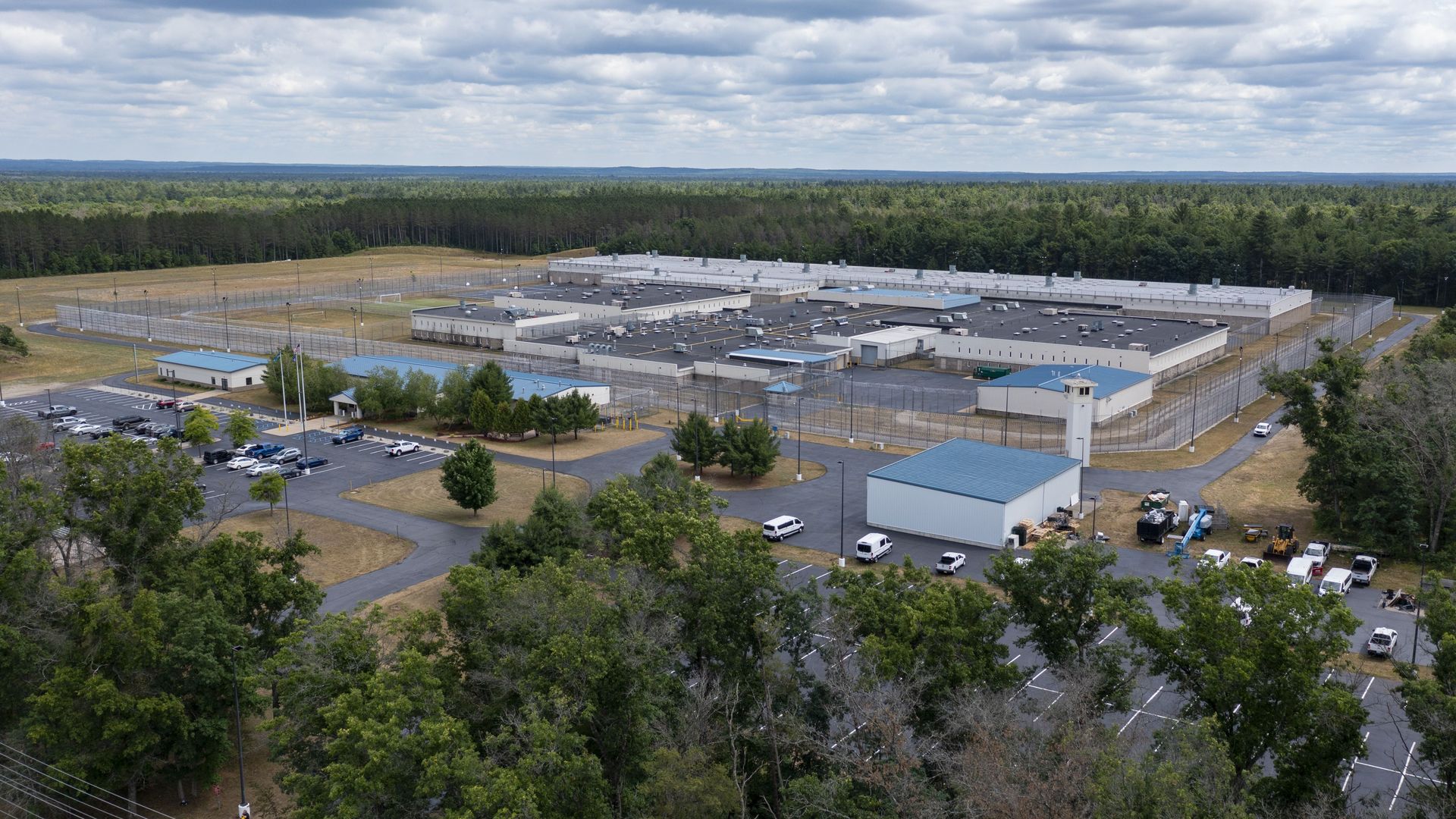
ICE's North Lake Processing Center in Baldwin, Michigan, seen in 2025. Photo: Jim West/UCG/Universal Images Group via Getty Images
Advocates say some detainees at a Michigan immigration detention center — ICE's biggest in the Midwest — decided Saturday to reignite a major hunger strike that began early last week.
Why it matters: Unsafe conditions, intimidation, medical neglect and delays in legal assistance prompted the protest among hundreds of the detainees at North Lake Processing Center in Baldwin, per advocacy group No Detention Centers in Michigan and multiple news outlets.
State of play: Advocates gathered Sunday outside North Lake in solidarity after detainees decided Saturday to renew the hunger strike that most people had paused after several days, a spokesperson for the advocacy group told Axios.
- The group shared a statement last week from Ahmad Alnajdawi, a detained immigrant from Jordan: "I want the people outside to know, they're treating us like animals."
- "There are people who are suffering from many different illnesses with no treatment," a statement from an unnamed ex-detainee who was released on Friday says, adding that people are also striking from work duties.
Zoom in: The Michigan Immigrant Rights Center, which provides pro bono legal advice for those at North Lake and Michigan's other detention centers, confirmed to Axios last week that it spoke with strike participants.
- This one appears more significant than previous hunger strikes there, spokesperson Christine Sauvé told Axios Friday.
- MIRC hears from detainees and families about not receiving medication on time for serious chronic illnesses, delay or denial of medical care, and spoiled and inadequate food.
The other side: An unidentified U.S. Department of Homeland Security (DHS) spokesperson has refuted these claims, saying in an emailed statement that there's neither a hunger strike nor subpar conditions at the center operated privately by GEO Group.
By the numbers: North Lake's estimated average daily population is 1,390, with an average stay of 49 days, per Relevant Research data as of April 2.
What they're saying: "It is a longstanding practice to provide comprehensive medical care" for detainees in ICE custody, the DHS spokesperson wrote.
- Detainees are provided three dietician-certified meals, clean water and necessities, and phones to speak with family and lawyers, DHS says.
- GEO Group says all of its facilities meet strict federal standards and provide high-quality, humane care.
- "Being in detention is a choice," the DHS statement claimed, adding that detainees are "encouraged" to "take control of their departure" by receiving $2,600 and a free flight to "self-deport."
Reality check: Immigration law experts generally reject the idea that detention is a simple "choice," as it often is mandatory or driven by federal policy decisions.
- Many people recommended to self-deport may still have legal avenues to remain in the U.S., so experts recommend they consult an immigration attorney, El Pais reports.
- Plus, per El Pais, those who do take the federal "CBP Home" path may still face negative consequences.
Catch up quick: North Lake, a former prison, opened as an 1,800-bed detention center in June 2025.
- Poor conditions and overcrowding at North Lake have been previously reported by detainees, advocates and family members — including after Nenko Gantchev died while in custody in December. Gantchev died of natural causes, per the autopsy released this month.
- Concerns have prompted visits from politicians, including in February by U.S. Rep. Haley Stevens (D-Birmingham), who reported afterward that some detainees were afraid and confused about their reasons for being detained, and got solitary confinement for unknown reasons.