Detroit winters are getting shorter


Add Axios as your preferred source to
see more of our stories on Google.
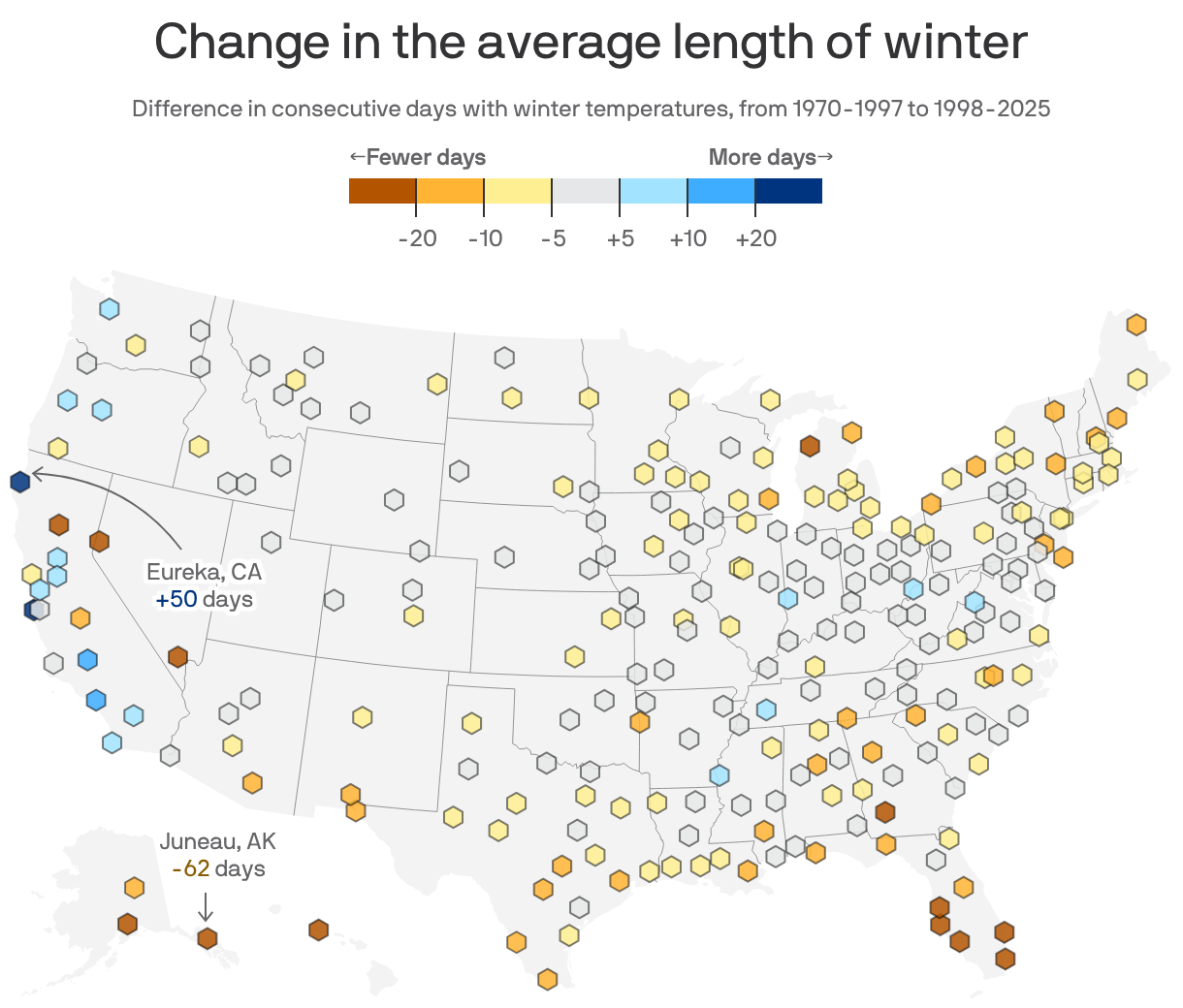
Climate change has shaved more than a week off of Detroit's winters in recent years.
The big picture: This winter has been brutally cold, snowy and icy for millions of Americans — yet winters are getting shorter across most U.S. cities.
- That's per a new analysis based on temperatures rather than calendar dates from Climate Central, a climate research group.
Zoom in: In Detroit, winter has been about eight days shorter since 1998 compared with the 1970s, '80s and earlier in the '90s.
- That's roughly in line with trends in the other U.S. cities with shorter winters.
How it works: Climate Central defined "winter" as the coldest 90 days of the year in a row during the 1970-1997 period, then compared the frequency of those temperatures during the 1998-2025 period.
What they're saying: "The temperatures that have historically defined winter are now starting later and/or ending earlier in most U.S. cities," Climate Central says.
By the numbers: Detroit's winter has been colder than usual this season, monthly NWS temperature data shows.
- Last month's average temp was 27.8 degrees, compared to February's historical average of 28 degrees between 1991 and 2020.
- January had an average temp of 20.6 compared to the historical average of 25.8.
- December 2025's average temp was 27.7 compared to the historical mark of 31.3.
The bottom line: Maybe Detroit's next winter will feel shorter than usual.