Wayne State professor's new book digs into race and space in Detroit

Add Axios as your preferred source to
see more of our stories on Google.
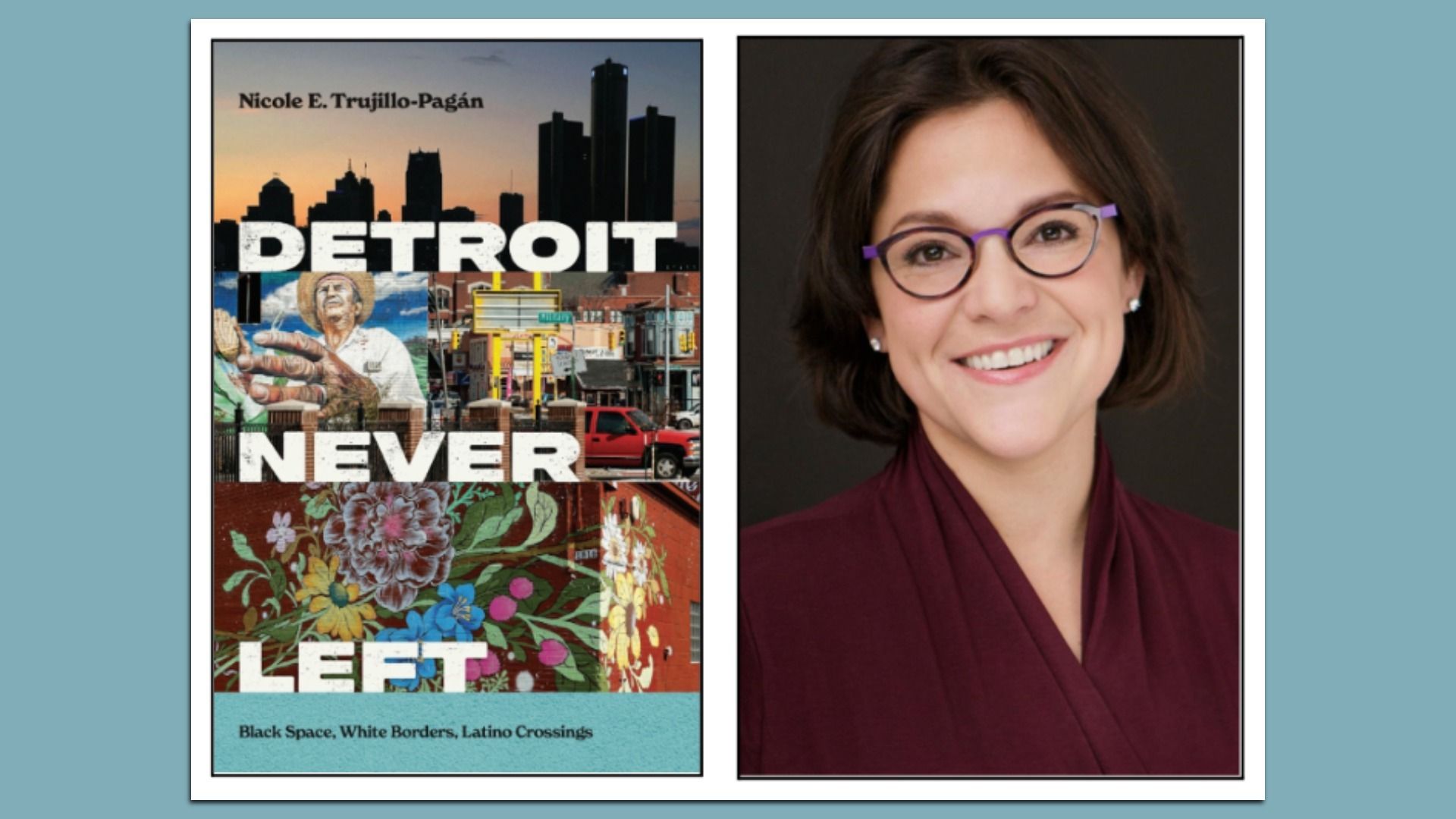
"Detroit Never Left" and Nicole Trujillo-Pagán. Images: Courtesy of NYU Press
A new book about race, place and Detroit's revitalization examines how narratives about the city's recovery from bankruptcy may benefit outsiders while marginalizing residents.
Why it matters: In "Detroit Never Left: Black Space, White Borders, Latino Crossings," author Nicole Trujillo-Pagán aims to challenge the city's corporate-driven story.
- The book, out March 3, delves into the borders, exclusions, racism and segregation that have defined the city's past and present.
State of play: The Wayne State associate professor of sociology spent eight years researching and writing the book, interviewing young Latino Detroiters, along with politicians, nonprofit leaders, city workers and others involved in the bankruptcy and after.
- Many young residents told her they feel changes in the city happen "to" them instead of "for" them.
- That contrasts with messaging from business and philanthropic leaders who have said investments are aimed at benefiting Detroiters.
Zoom in: A central theme of Trujillo-Pagán's research is the expression: "The overlay for the underplay."
- "When media or politicians [or someone with power] say one thing, they're in fact doing something else," she explains.
- For example, a corporation with a legacy that critics describe as disenfranchising longtime residents and low-income people also provides charity to those communities.
- She argues the two sentiments are not a contradiction of priorities, but part of the same strategy.
Context: Many praise influential figures in Detroit, like billionaire real estate mogul Dan Gilbert, for bringing investment and jobs to the city while revitalizing old downtown buildings.
Zoom out: But critics say business leaders' actions reshape the city for outsiders and can displace longtime residents.
Flashback: After growing up in New York City in the 1970s amid its financial crisis, Trujillo-Pagán later moved to Detroit in 2006 to work for Wayne State.
- She initially assumed many young Detroiters would want to leave amid high unemployment and unreliable city services at the time.
- Conversations with students completely shifted her perspective.
What they're saying: "You had to see the city from their perspective to understand that there was a real disconnect between what the media said about Detroit, and how Detroiters experience Detroit," Trujillo-Pagán says.
- When she'd ask students where they want to go after graduation, "they're looking at me like I'm crazy. 'What are you talking about? Our lives, our family, everything's here.'"
- That prompted interviewing youth and researching the book, which examines how Latino communities intersect with the dynamics of anti-Blackness and white power structures in Detroit.
What's next: Trujillo-Pagán will host events to discuss the book locally, including 3-5pm Saturday, April 18 at the Detroit Public Library's main branch.
- The date is to be determined for another event at the U of M Detroit Center.
- She'll also host at Ann Arbor's downtown library Sept. 23 for Hispanic Heritage Month.