Rev. Jesse Jackson built lasting ties to Detroit

Add Axios as your preferred source to
see more of our stories on Google.
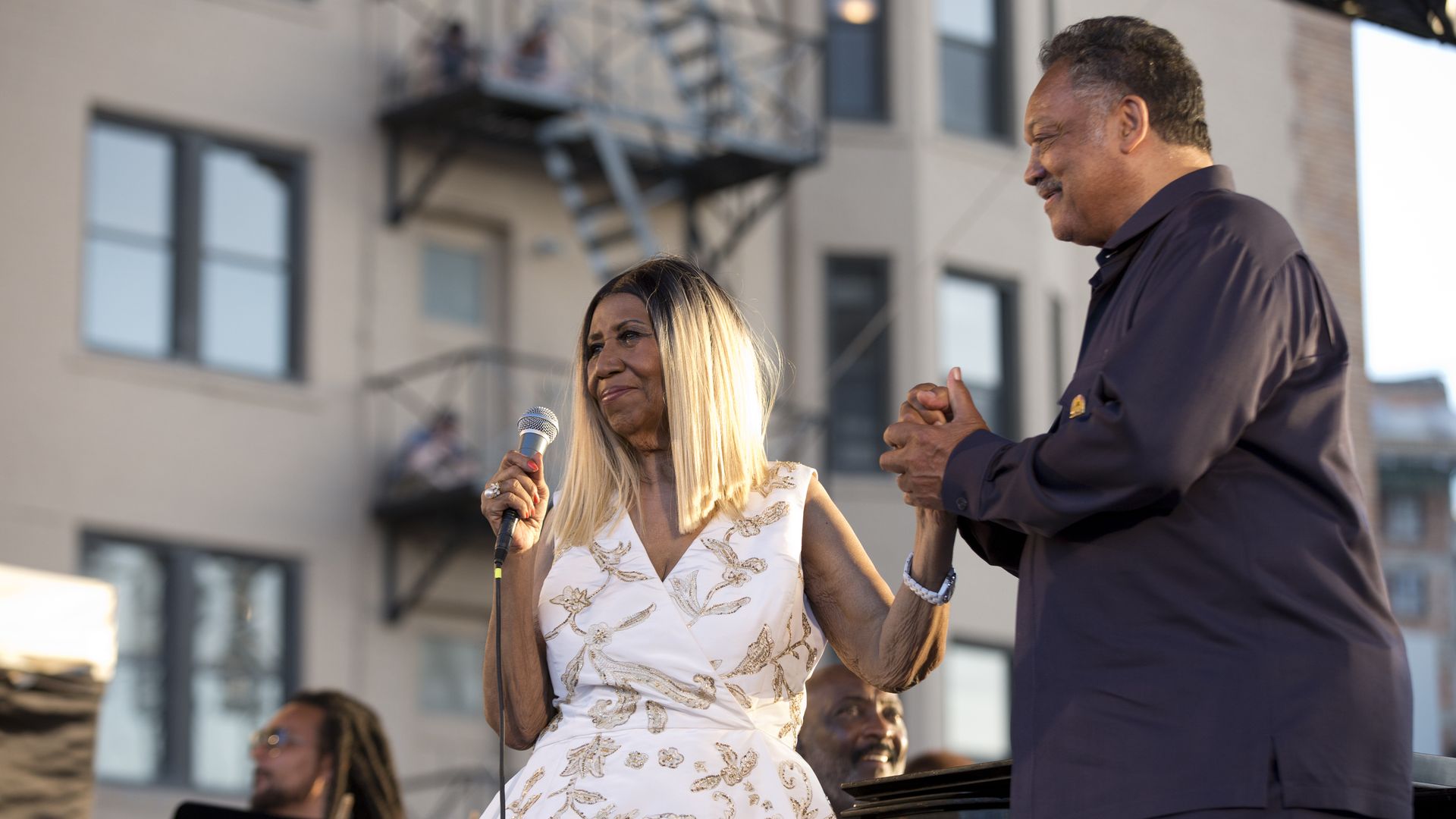
The Rev. Jesse Jackson with singer Aretha Franklin during the 2017 Detroit Music Weekend. Photo: Monica Morgan/Getty Images
The Rev. Jesse Jackson formed a tight bond with Detroit and its local leaders over several decades fighting racial inequality and injustice.
Why it matters: The civil rights icon, who died Tuesday at 84, marched here for equal rights and advocated for diversity in the auto industry.
- Over the years, he worked with local leaders to carry out the mission of the civil rights organization he founded, the Rainbow PUSH Coalition.
What they're saying: "Rev. Jackson had a special connection to Michigan and especially the city of Detroit," Gov. Gretchen Whitmer said in a statement.
- "He visited often, standing with labor, working with local leaders, and inspiring the next generation of changemakers."
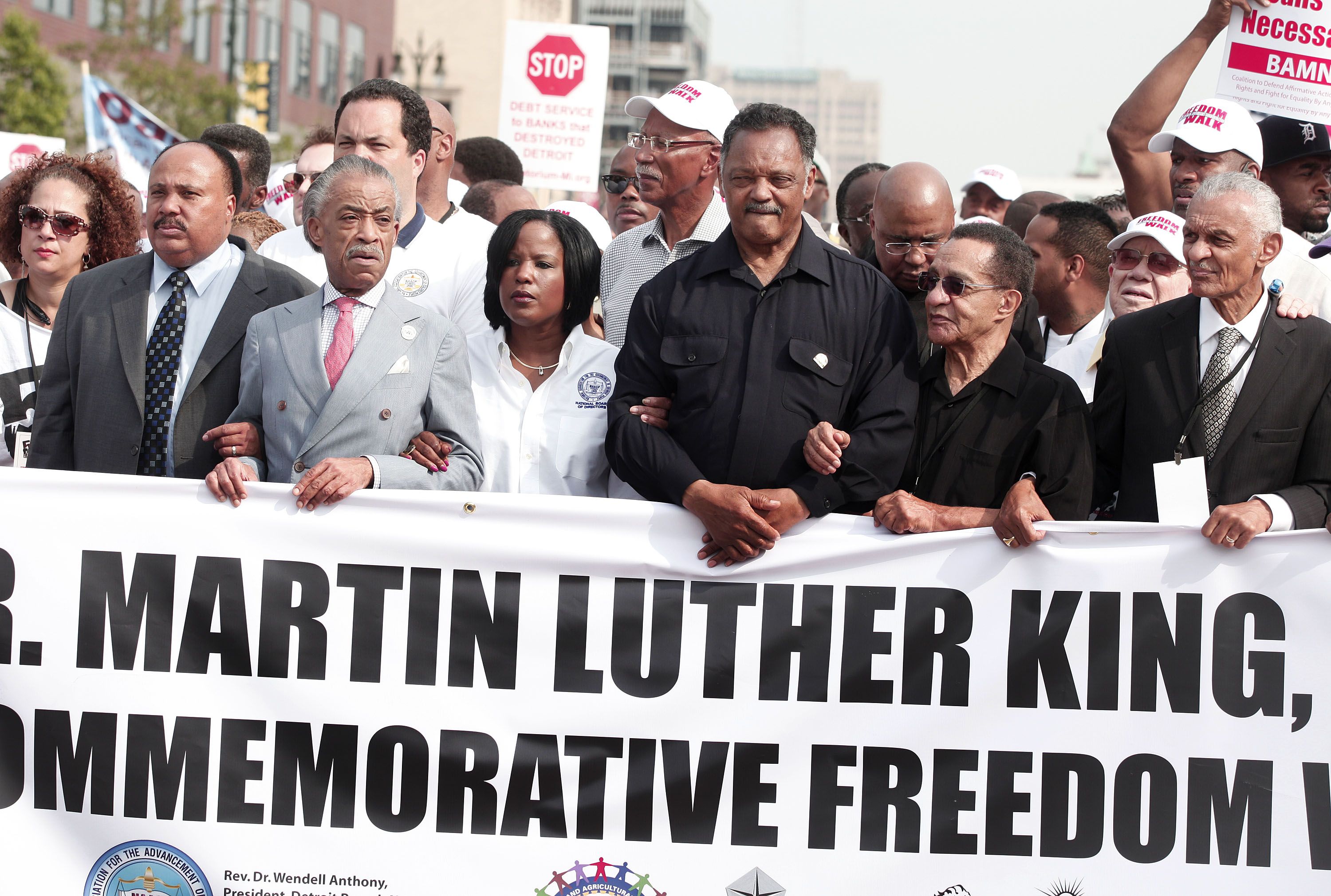
Flashback: Jackson grew up in Greenville, South Carolina, and after college joined King's Southern Christian Leadership Conference.
- Jackson was known for mobilizing young civil rights activists and organizing marches, taking part in famous events himself, including the 1963 March on Washington for Jobs and Freedom and the 1965 Selma to Montgomery March.
- Jackson quickly became part of King's trusted inner circle. He was talking to King from the hotel courtyard just minutes before he was assassinated in Memphis in 1968.
Zoom in: Jackson traveled to Detroit frequently, going back to the 1970s, delivering a message of economic empowerment and nonviolence.
- At Cobo Arena in 1985, his anti-drug address reached 10,000 high schoolers in attendance at a time when local officials wanted to use metal detectors in high schools to prevent violence, Michigan Advance reported.
In 1971, Jackson founded Operation Rainbow PUSH (now Rainbow PUSH Coalition), a nonprofit dedicated to improving the economic conditions of Black communities.
- Rev. Jim Holley, pastor emeritus of Detroit's Historic Little Rock Baptist Church, was Jackson's classmate in 1966 at Chicago Theological Seminary and led Jackson's PUSH organization in Michigan.
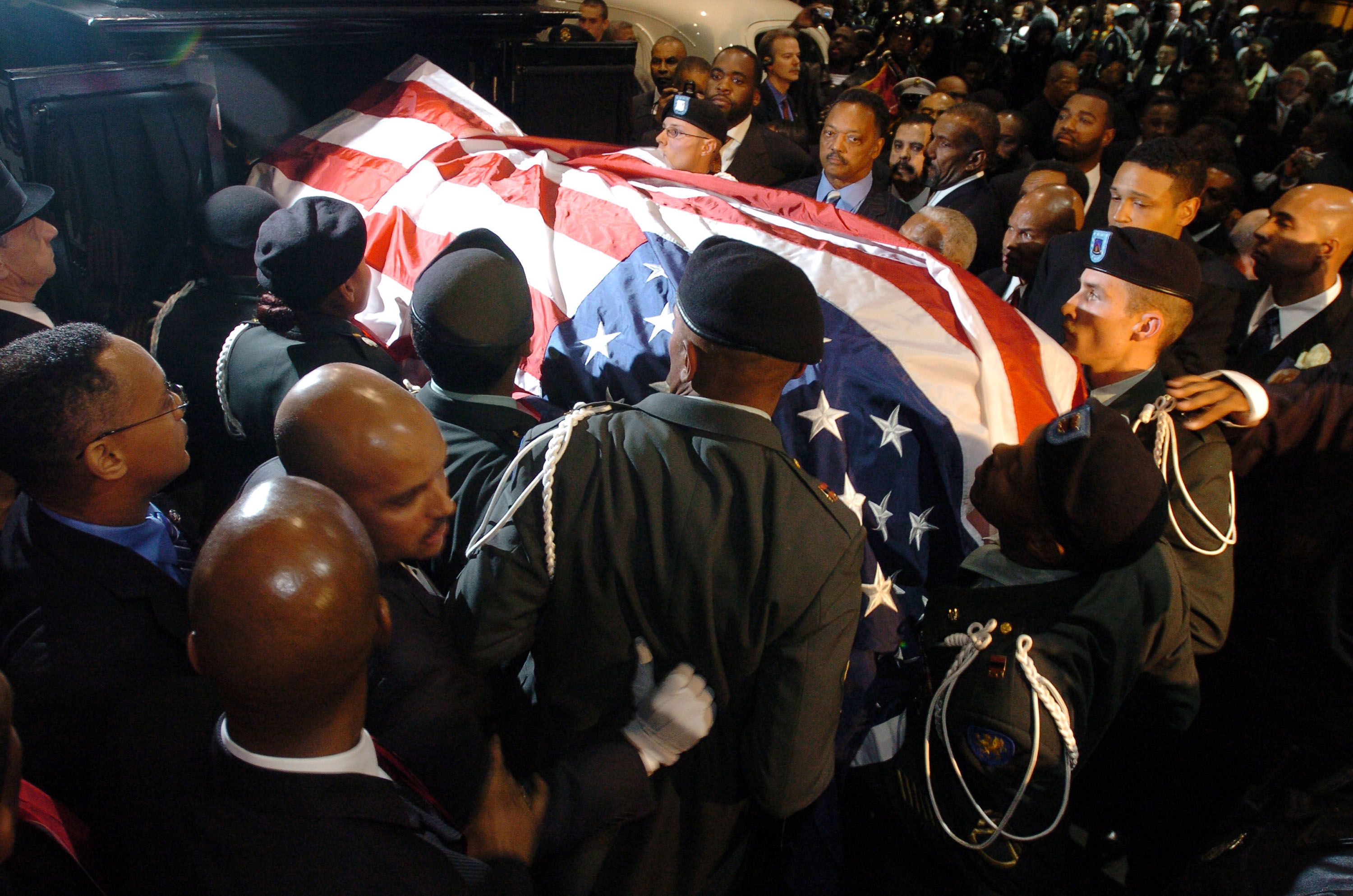
Detroit and Michigan also played important roles in Jackson's runs for president in 1984 and 1988.
- Jackson won the Michigan presidential caucuses in 1988, becoming the first Black candidate to win a presidential primary or caucus.
- Detroit's then-Mayor Coleman A. Young, however, didn't endorse Jackson's campaigns.
Jackson was initially diagnosed with Parkinson's disease in 2015, but his diagnosis was later revised to a rare neurological disorder called progressive supranuclear palsy. He had been confined to a wheelchair in recent years.
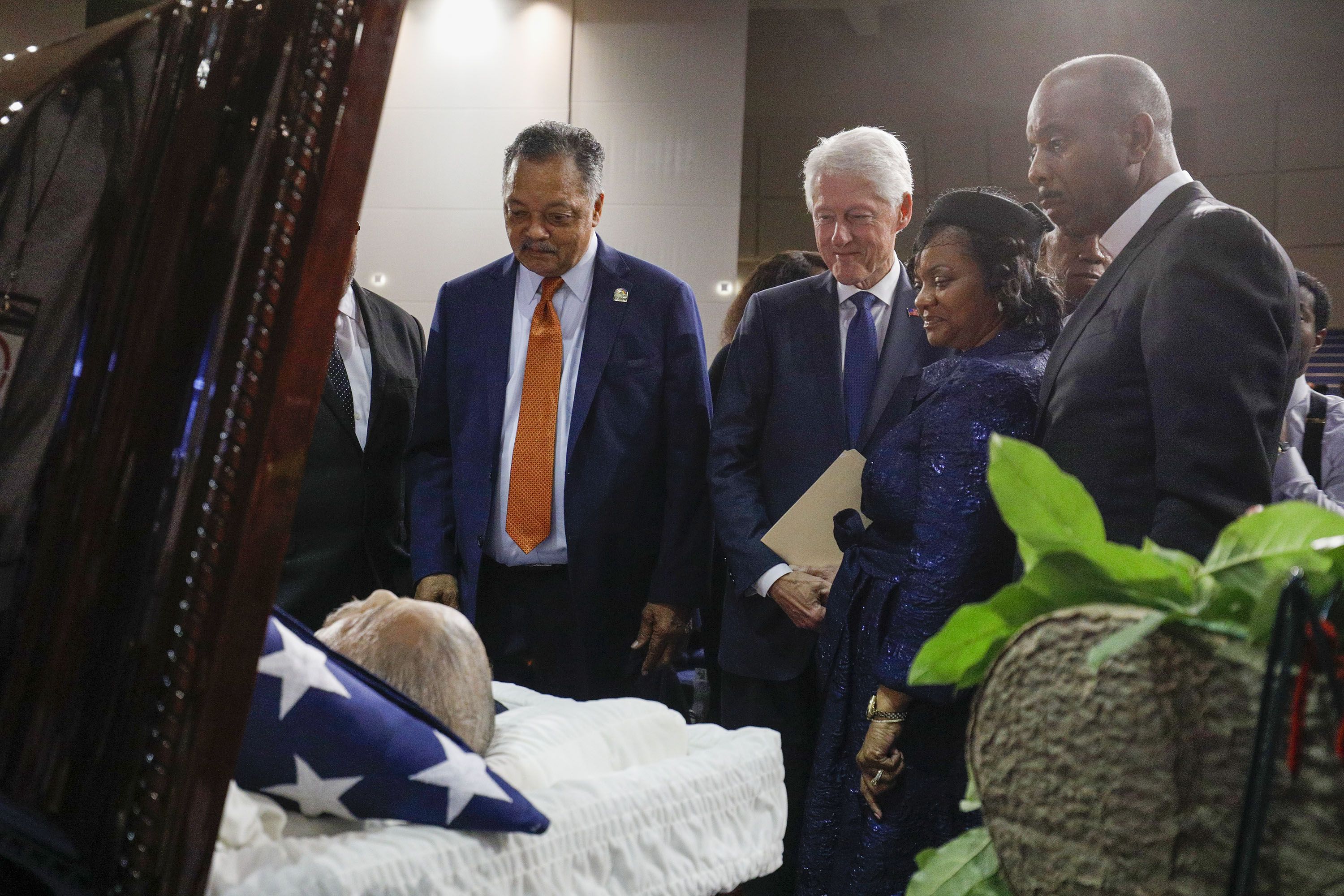
- He visited Detroit in 2018 for Aretha Franklin's funeral, recalling her dedication to civil rights issues, and in 2019 for former U.S. Rep. John Conyers Jr.'s funeral.