Michigan's bottle return rates plummet

Add Axios as your preferred source to
see more of our stories on Google.
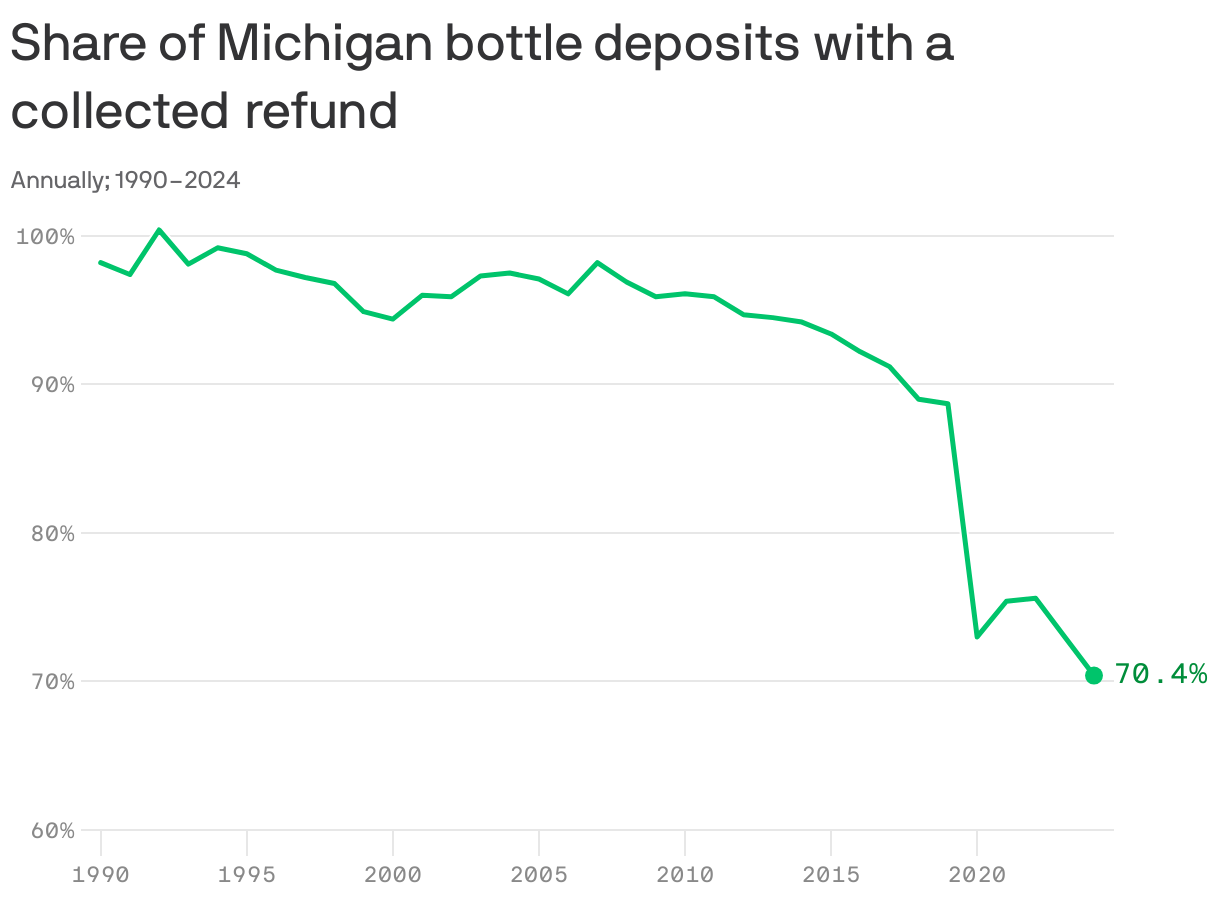
More Michiganders are skipping the hassle of collecting their 10-cent bottle and can deposits — and the state is making millions in the process.
The big picture: Only 70% of deposits were redeemed last year, the state's lowest rate going back to 1990, state data shows.
- Since the pandemic, Michigan's bottle and can return rates have fallen drastically from the 96% annual average from 1990-2019.
Many factors are to blame, including:
- People are less incentivized by the 10-cent return, particularly if they have curbside recycling at home.
- Bottle return rooms at grocery stores can be unclean, with a foul odor.
- Retailers reject containers from brands they don't sell.
Follow the money: As Michigan's deposit redemption rate has fallen, the state has made more money.
- More than $116 million went unclaimed last year, leaving $87.6 million to the state, its largest cut on record, Bridge Michigan reports.
- Under the law, the first $1 million in unclaimed deposits goes to a state police fund for enforcement.
- Of the remainder, 75% goes into a state environmental fund and 25% goes back to the retailers who collect empties.
What they're saying: The data shows Michigan's bottle and can return system isn't working, even as the state's recycling rate reached a new high in April for the fourth straight year, says Drew Beardslee, vice president of government affairs for the Michigan Retailers Association.
- "There's this reverse incentive where the state benefits when the system doesn't work, because the amount that goes back to the state is at an all-time high," Beardslee tells Axios.
Catch up quick: Voters approved Michigan's bottle law in 1976 to discourage littering and keep the state's roads, parks and waterways clean.
- Michigan's treasury department is in charge of collecting and distributing unredeemed deposits.
State of play: Reforming the law is difficult. Because voters originally approved it through an initiative petition, any change would need to be voter-approved or gain the support of three-quarters of the Legislature, per Bridge.
- Environmental groups have proposed expanding the law to include water, juice and sports drink bottles.
- Allowing empties to be returned at stores even if they don't sell that brand, known as universal redemption, also has been discussed.
- Retailers, however, oppose the law's expansion because it would increase costs.
💭 Joe's thought bubble: After countless rejected craft beer bottles, I decided years ago that my time is more valuable than returning my empties. I just recycle them.
📬 We want to hear from you! Do you think Michigan's bottle return system works? Do you religiously return your empties? Hit reply and let us know.