Lee Plaza restoration work begins after decades of vacancy

Add Axios as your preferred source to
see more of our stories on Google.
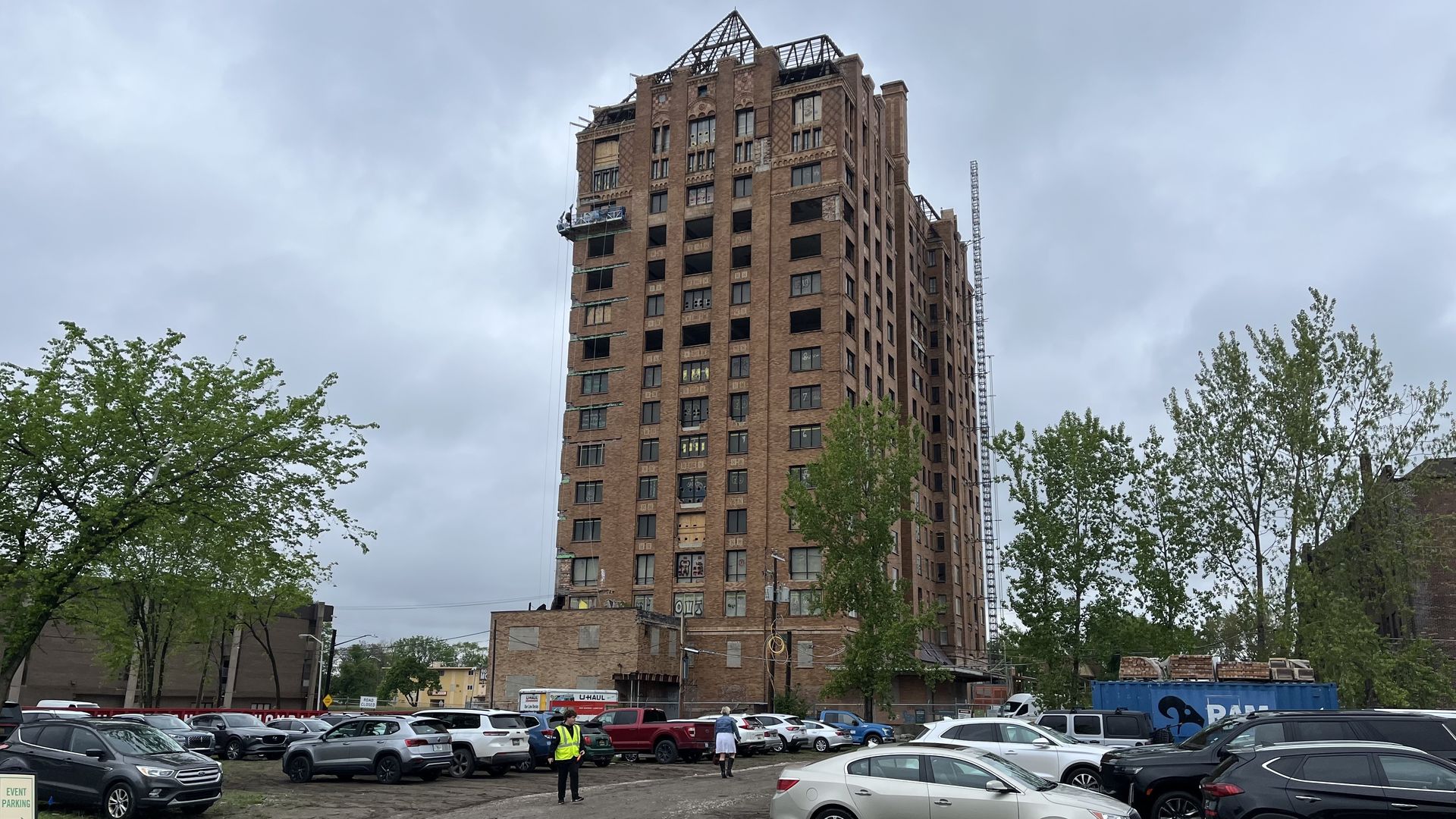
Lee Plaza, 2240 W. Grand Blvd. Photo: Joe Guillen/Axios
A former luxury hotel near downtown that was ravaged by thieves and vandals at the turn of the century is finally being restored after decades of vacancy.
Why it matters: Lee Plaza's revival — once considered too costly and complex to complete — will transform a hulking eyesore on West Grand Boulevard that has stood for decades as a constant reminder of the city's decline.
State of play: The project's development team — the Roxbury Group, Ethos Development Partners and Lighthouse — closed last week on its financing package, allowing restoration work to begin, about seven years after the project was conceived.
What they're saying: "This is what a great city should be doing — we should be saving the best of our architecture and we should be making it into housing that's available to everybody," Mayor Mike Duggan said at Tuesday's groundbreaking.
By the numbers: Once complete late next year, the 15-story art deco building will have 117 affordable housing units for seniors. Rent will start at $450, Duggan said.
- A planned second phase, financing for which has not been finalized, is expected to include up to 65 more apartments.
Context: The project will restore the building's art deco facade and its fancy first-floor common areas.
- The terra cotta lion heads — the theft of which made headlines about 20 years ago — will be re-created.
Catch up quick: The tower opened in 1927 as a luxury residential hotel and was named after Ralph T. Lee, who built several hotels and apartment buildings around the city at the time, per HistoricDetroit.org.
- The Great Depression soon followed, contributing to insurmountable financial problems.
- The city took ownership in 1969 and converted it into housing for low-income seniors. It closed in 1997 after years of losing residents.
Follow the money: Details of the project's financing package provided at the groundbreaking did not include specific figures, but the package's funding sources include:
- American Rescue Plan Act (ARPA) funds via the City of Detroit.
- Grants from state lawmakers and the Michigan State Housing Development Authority.
- Historic and low-income housing tax credit investments from JPMorgan Chase and Royal Bank of Canada.
What's next: With work at Lee Plaza underway, Duggan said there's one major unfinished project in the city that he wanted to tackle before leaving office at the end of the year — the beleaguered Herman Kiefer site.