Former Detroit nonprofit CFO "ashamed" before sentencing

Add Axios as your preferred source to
see more of our stories on Google.
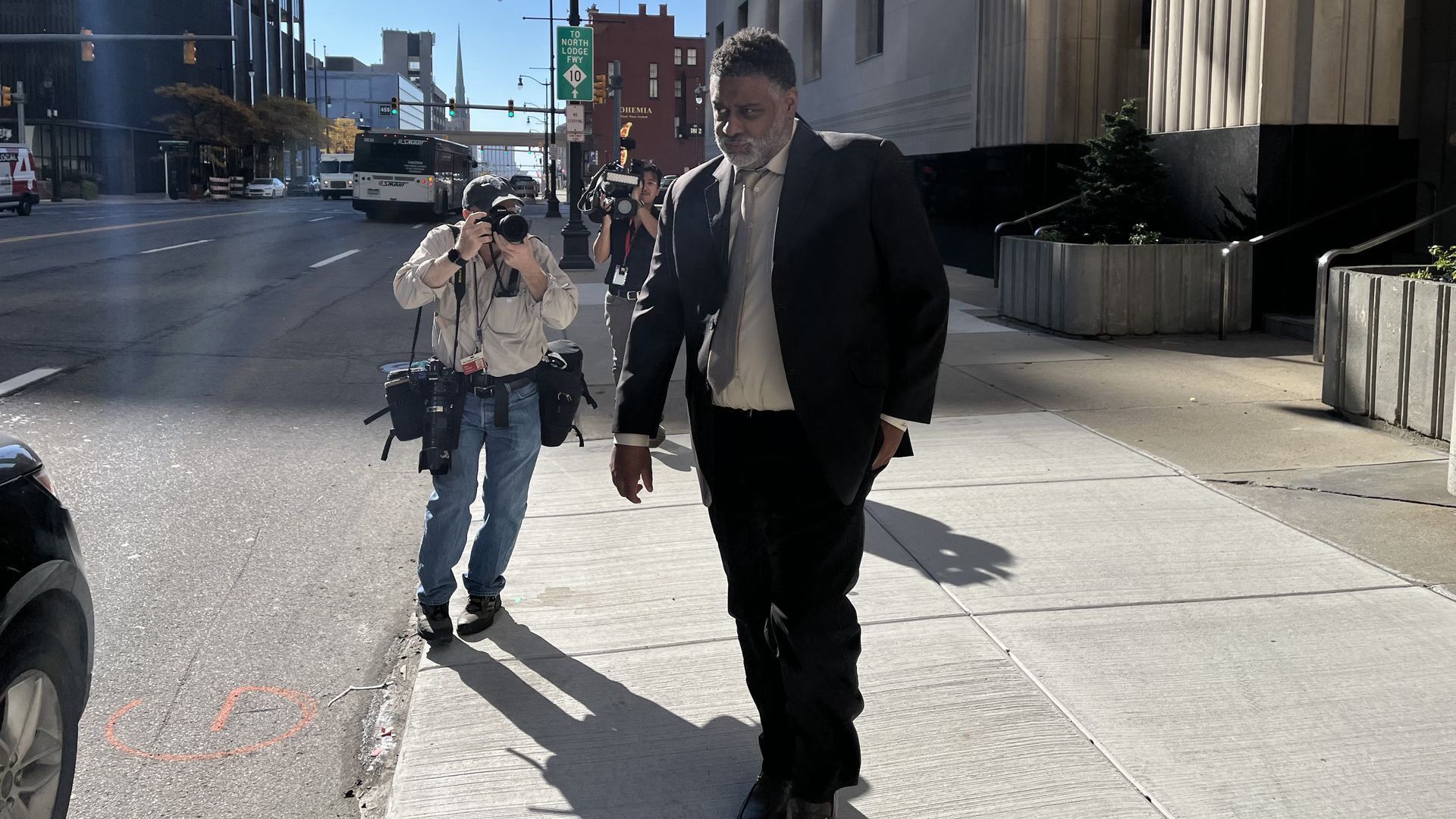
Former Detroit Riverfront Conservancy CFO William Smith leaving federal court in October. Photo: Joe Guillen/Axios
Days before his upcoming sentencing in federal court on Thursday, former Detroit Riverfront Conservancy CFO William Smith said he is "ashamed" and "extremely remorseful" for stealing more than $40 million from the nonprofit over more than a decade.
Why it matters: The Detroit Riverfront Conservancy is among the city's most impactful nonprofits, having invested hundreds of millions of dollars since 2003 through public and private donations to transform the downtown riverfront from neglected industrial land into an award-winning public space.
State of play: Smith's apology was filed last week in hopes of receiving a lighter sentence than the 18 years in federal prison the government is seeking.
- The sentencing memorandum his lawyers filed asks for a sentence of roughly 12.5-15.5 years, noting Smith's cooperation with prosecutors and lack of criminal history.
Catch up quick: Smith, 52, pleaded guilty in November to wire fraud and money laundering, each carrying a maximum sentence of 20 years.
- He also agreed to a minimum of $44.3 million in restitution.
- The Conservancy began questioning Smith in March 2024, he was suspended the following May and charged in June.
The other side: While Smith and his attorneys are seeking leniency, federal prosecutors say Smith's greed is hard to fathom.
- "This was a crime borne out of avarice so extreme that it remains difficult to fully grasp," acting U.S. Attorney Julie A. Beck wrote in the government's sentencing memo. "Private jets, suites at NFL games, floor seats at NBA games, over $3 million in cash transfers to his mistress, luxury vehicles — Smith's appetites were simply insatiable."
By the numbers: To illustrate the lengths of Smith's deception, prosecutors detailed his methods for falsifying records and the sheer volume of his illicit spending. For example:
- For the 131 months he was stealing from the Conservancy, Smith averaged two wire transfers per month. The smallest was $21,000 in 2023. The largest was $496,000 in 2013.
- On 211 separate occasions, Smith transferred Conservancy money to pay off his American Express bills. The average payment was $70,852, for a total of more than $14 million.
What's next: U.S. District Judge Susan K. DeClercq is scheduled to sentence Smith at 10am Thursday at the downtown courthouse for the U.S. District Court for the Eastern District of Michigan.