Areas that could suffer without FEMA include Detroit


Add Axios as your preferred source to
see more of our stories on Google.
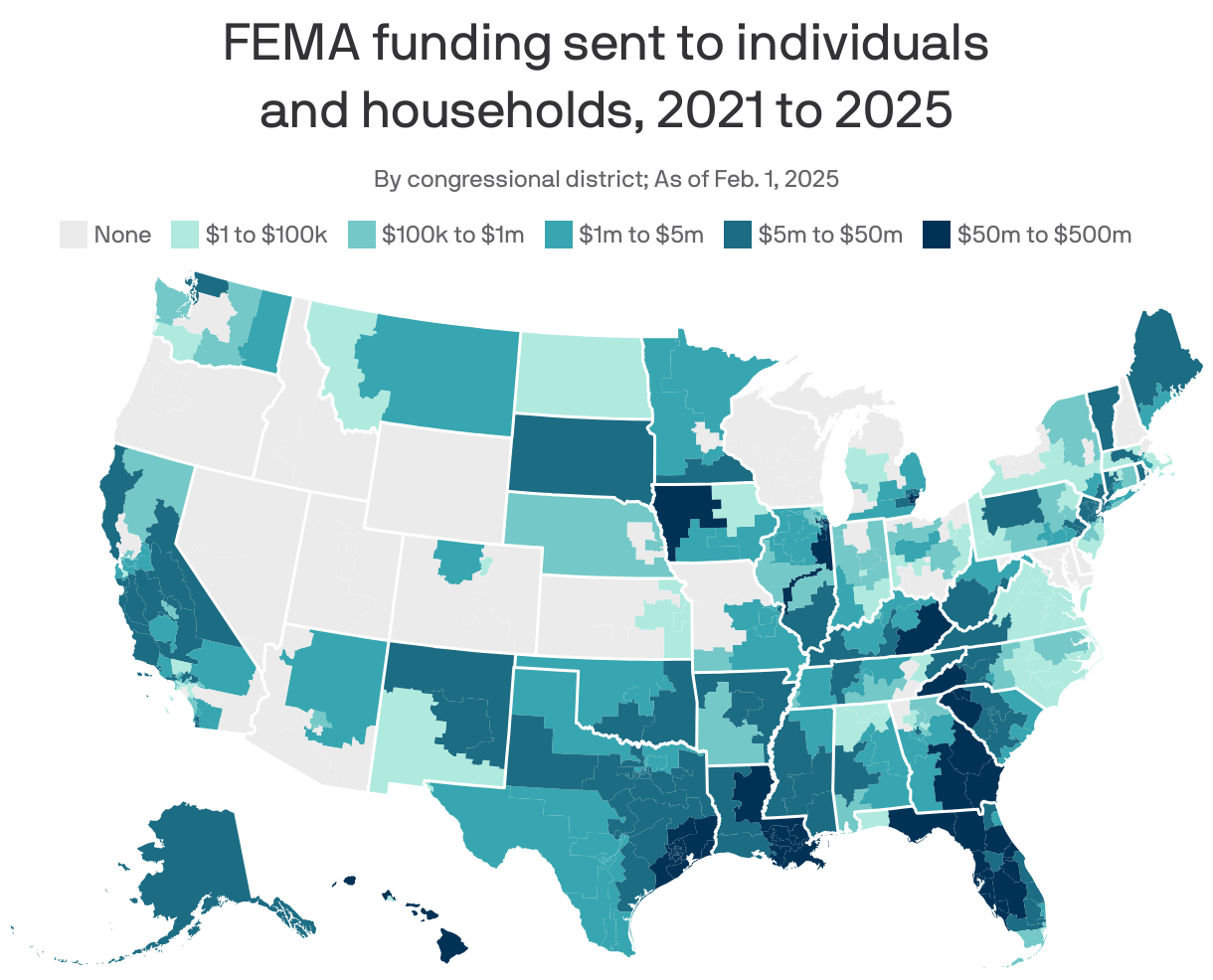
Some of the most disaster-prone areas could face the greatest financial burdens in a world with less federal relief assistance, a new analysis finds.
Why it matters: President Trump earlier this year floated "fundamentally overhauling or reforming" FEMA or "maybe getting rid" of it entirely — fueling concerns that U.S. disaster relief could be thrown into chaos.
- With their infrastructure challenges, Detroit and Southeast Michigan have utilized significant FEMA funding, including $433 million in response to the August 2023 tornadoes and flooding — though that figure also includes mid-Michigan counties.
Driving the news: Trump signed an executive order last week to shift disaster readiness to state and local governments.
- FEMA and other federal agencies, including the Department of Housing and Urban Development (HUD), already funnel billions of dollars to individuals and communities. Detroit recently got nearly $347 million from HUD to prevent basement flooding from storms.
- It's unclear how or whether Trump's order might change disaster funding, or whether it would result in fewer federal dollars for disaster-wracked areas like Detroit.
Friction point: Some FEMA reform advocates call for giving states "block grants" of relief money to spend as they see fit, rather than to meet specific needs — but others worry that would lead to fraud and abuse, or that many states lack the resources and expertise to rebuild without help.
Zoom in: Michigan's 12th and 13th congressional districts, which both include Detroit, had $257 million and $315 million in FEMA dollars sent to more than 200,000 individuals and households from 2021-2025, per a new analysis from the Carnegie Disaster Dollar Database.
- Rising water levels and increasingly extreme weather don't mix well with the city's easily overwhelmed sewer system, Planet Detroit reported.
What they're saying: When disasters occur, the federal government helps clean up, shelter people and provide water, says Sarah Labowitz of the Carnegie Endowment for International Peace, who led the analysis.
- "All of that is supported by a federal disaster relief ecosystem that spreads the risk around the country, spreads the costs around the country. And if we stop spreading the costs around the country, then it's going to fall on states, and it's going to fall on states really unevenly."