Michigan gets more federal money than it sends


Add Axios as your preferred source to
see more of our stories on Google.
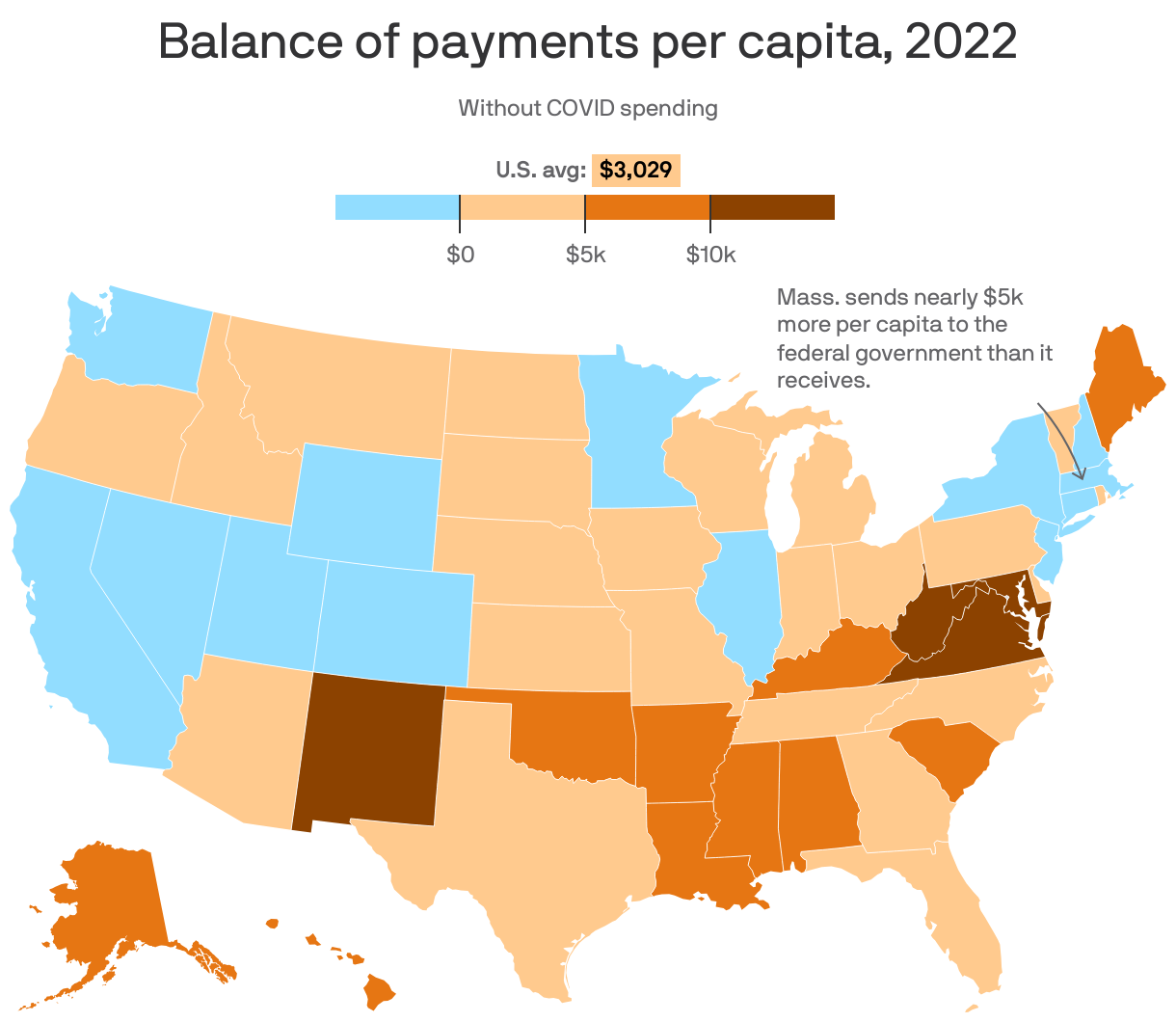
Only 13 U.S. states send more money to the federal government than they receive, a recent analysis found, and Michigan isn't one of them.
Why it matters: The Trump administration's push for states to be more financially independent brushes up against the reality that many depend on federal money for everything from disaster relief to food aid.
Zoom in: Michigan gets $2,689 more per capita from the federal government than it sends, discounting COVID-19 relief spending, according to a 2024 Rockefeller Institute of Government report.
How it works: Each state's balance of payments reflects how much federal money is distributed there (in the form of programs like Medicaid and SNAP, for example) versus how much money residents and businesses send to the federal government (via income or employment taxes, for instance).
- A negative figure means a state sends more to the federal government than it receives, while a positive figure means it gets more than it gives.
Zoom out: Massachusetts (-$4,846), New Jersey (-$4,344) and Washington (-$3,494) had the lowest balance of payments per capita as of 2022, according to the report.