Michigan's new cage-free law and bird flu leading to expensive eggs

Add Axios as your preferred source to
see more of our stories on Google.

Illustration: Sarah Grillo/Axios
Metro Detroit shoppers are noticing rising egg prices and bare shelves after a new state law prohibiting the sale of non-cage-free eggs took effect.
The big picture: Consumers across the country have been dealing with higher egg prices for a while due to inflation and an ongoing bird flu outbreak, which has affected some local flocks.
- But Michigan's new egg law has added another complication.
Zoom in: A notice about the new cage-free law was posted to the refrigerator at Kroger in Royal Oak on Tuesday, where a dozen store-brand eggs cost $3.99. Kroger's price in Macomb County last month was $3.29 for a dozen, per the Detroit News.
- Meijer on 8 Mile Road was selling a dozen store-brand eggs for $4.59 yesterday.
- At Western Market in Ferndale on Monday, the egg shelves were practically bare, and a sign about bird flu, also known as highly pathogenic avian influenza, was posted.
What they're saying: "I know that there have been some sourcing issues resulting in less than fully stocked grocery shelves here today," Tim Boring, director of the state's Department of Agriculture and Rural Development, tells Axios. "This egg market is pretty fluid."
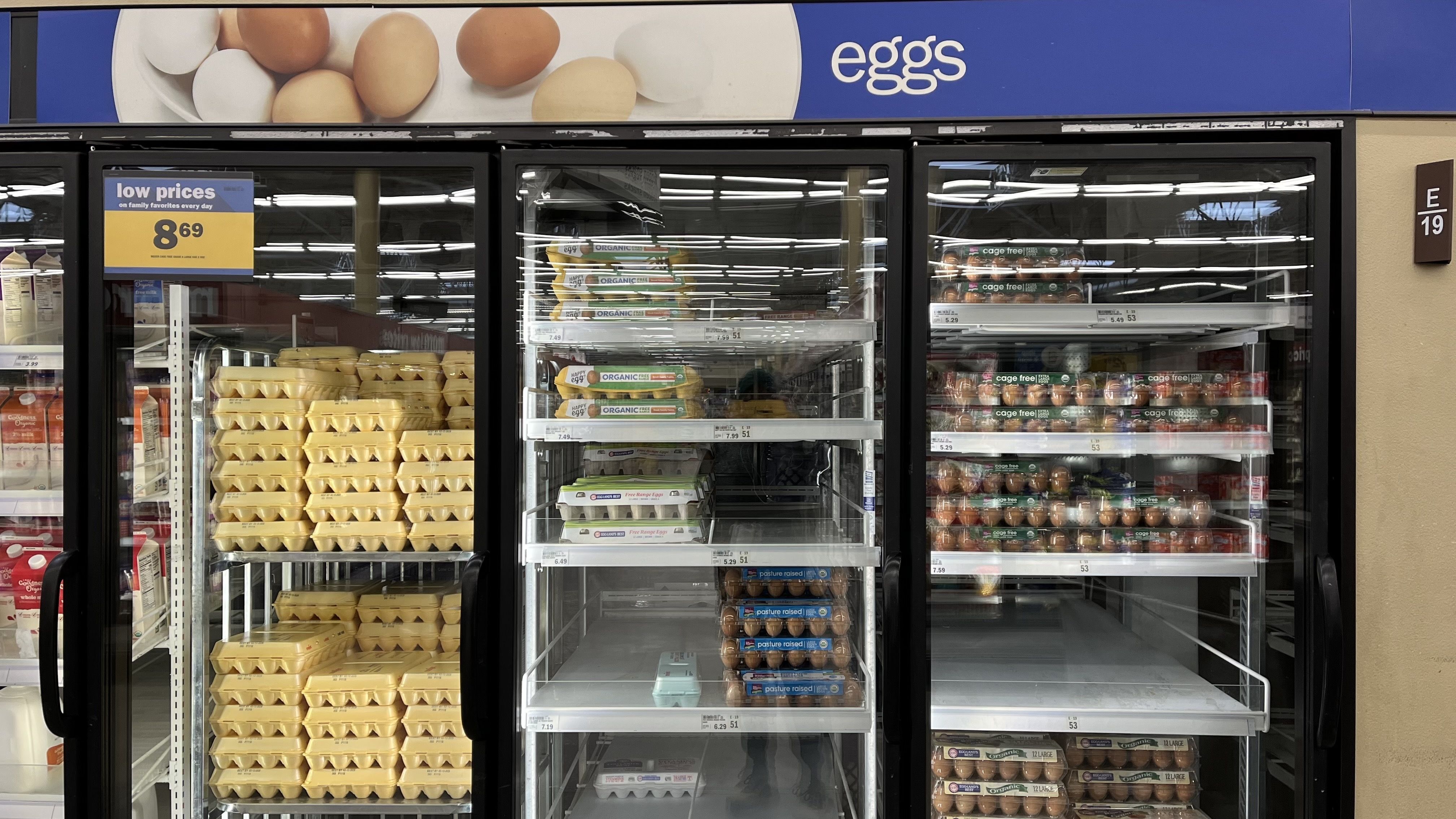
Zoom out: Up north, in Alpena, Save-a-Lot was pricing a dozen eggs at $4.99 on Monday while a local state representative contemplated changing the new law.
- "We're hearing a lot about it, and it needs to be fixed," Rep. Cam Cavitt (R-Cheboygan), told the Alpena News. "This just doesn't make any sense."
Catch up quick: The law, originally passed in 2009, had a 2019 implementation date.
- The law requires businesses that sell shell eggs to ensure they come from cage-free housing systems. Producers with fewer than 3,000 hens are exempt.
- In 2019, lawmakers pushed back implementation to Dec. 31, 2024.
What we're watching: President-elect Trump campaigned on bringing down grocery prices but said in a recent interview with Time magazine that lowering prices may be difficult to actually accomplish.
The bottom line: Eggs are still safe to eat, but they're not getting any cheaper.