Whitmer's support for paid family and medical leave gets fuzzy

Add Axios as your preferred source to
see more of our stories on Google.
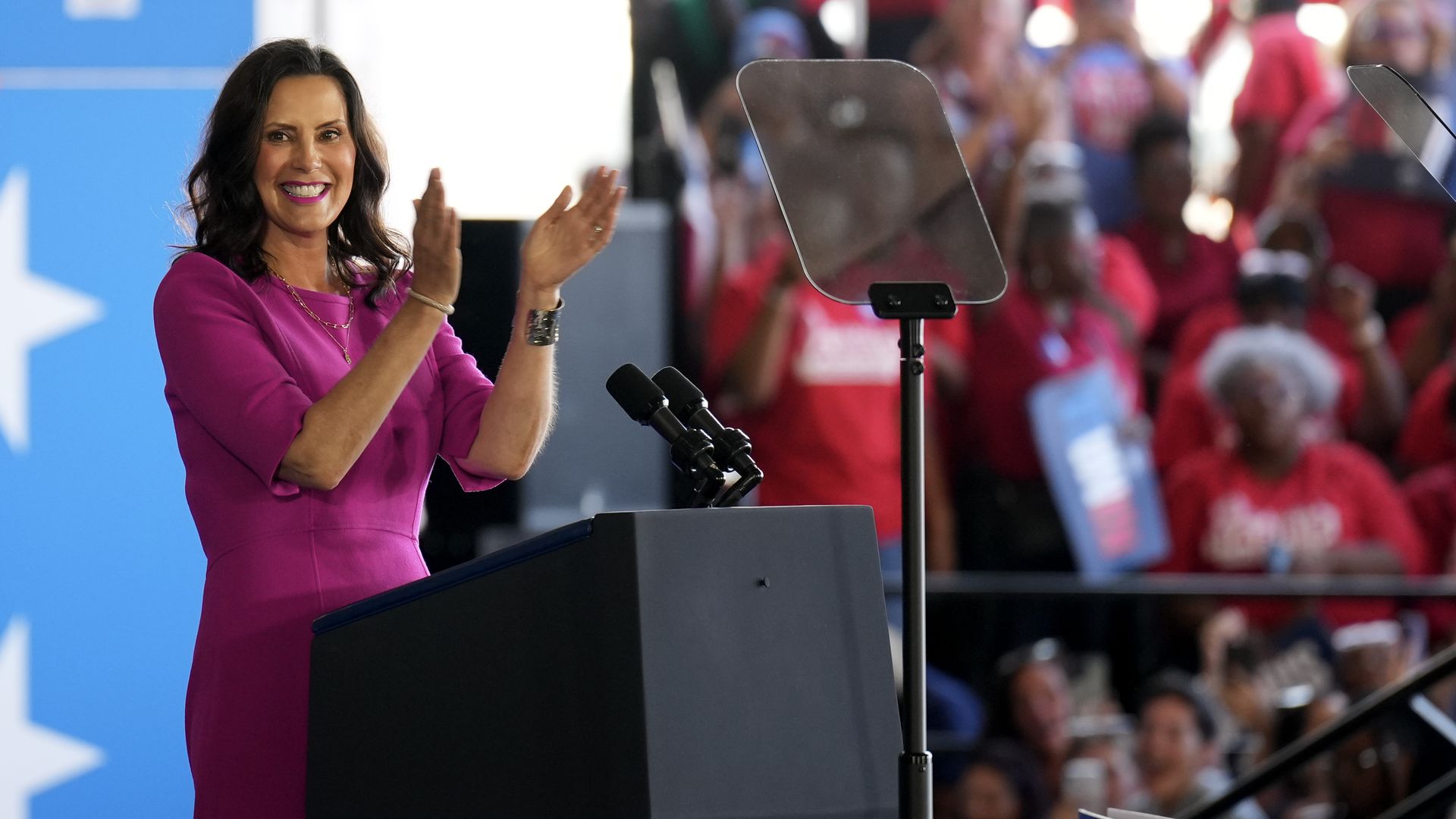
Gov. Gretchen Whitmer speaks before last week's Harris/Walz rally at Detroit Metro Airport. Photo: Andrew Harnik/Getty Images
Gov. Gretchen Whitmer's public enthusiasm for a statewide paid family leave program has waned as business groups warn it could hurt the economy.
Why it matters: Last August, Whitmer prioritized the implementation of paid family and medical leave, urging lawmakers to establish a program to provide workers and their families with "breathing room" if a new baby arrives or a relative falls ill.
Zoom out: New laws across the country are expanding access to benefits to reduce the stress and financial burden of these life events.
State of play: Democratic Michigan lawmakers rolled out a paid family and medical leave proposal in May 2023.
- A payroll tax would pay for the state-run program to provide up to 15 weeks of paid leave for workers to care for a new child, help a sick parent or take time off for other family or medical emergencies, the Free Press reports.
- A new state-commissioned actuarial analysis pegs the program's initial annual cost at between $1.3 billion and $1.6 billion.
The big picture: Whitmer is a rising star within the Democratic Party. As governor, she often touts initiatives that make life more affordable for working and middle-class families.

Flashback: "No one should have to choose between being there for their family and a paycheck," Whitmer said last August, per the Detroit News. "It's time for paid family and medical leave."
The latest: Whitmer seems to have significantly decreased her support.
- Her office did not provide answers to Axios Detroit's questions about the governor's stance on the proposed paid leave program and the recent cost analysis.
- "We are reviewing the report and proposed legislation," a Whitmer spokesperson emailed Axios Detroit this week.
Meanwhile, advocates are encouraged by the new cost study.
- It shows "that a state-run plan would not bankrupt the state. This means that it's something that is possible and we need the political will to make it so," Sen. Erika Geiss, D-Taylor, told Crain's.
The other side: Business groups say the proposal is too costly for employers and workers, even if some small businesses were to be exempted.
- "There's no way we can support that," Amanda Fisher, Michigan director of the National Federation of Independent Business, told Crain's.