Yesterday's "ghost" streams are today's problem

Add Axios as your preferred source to
see more of our stories on Google.
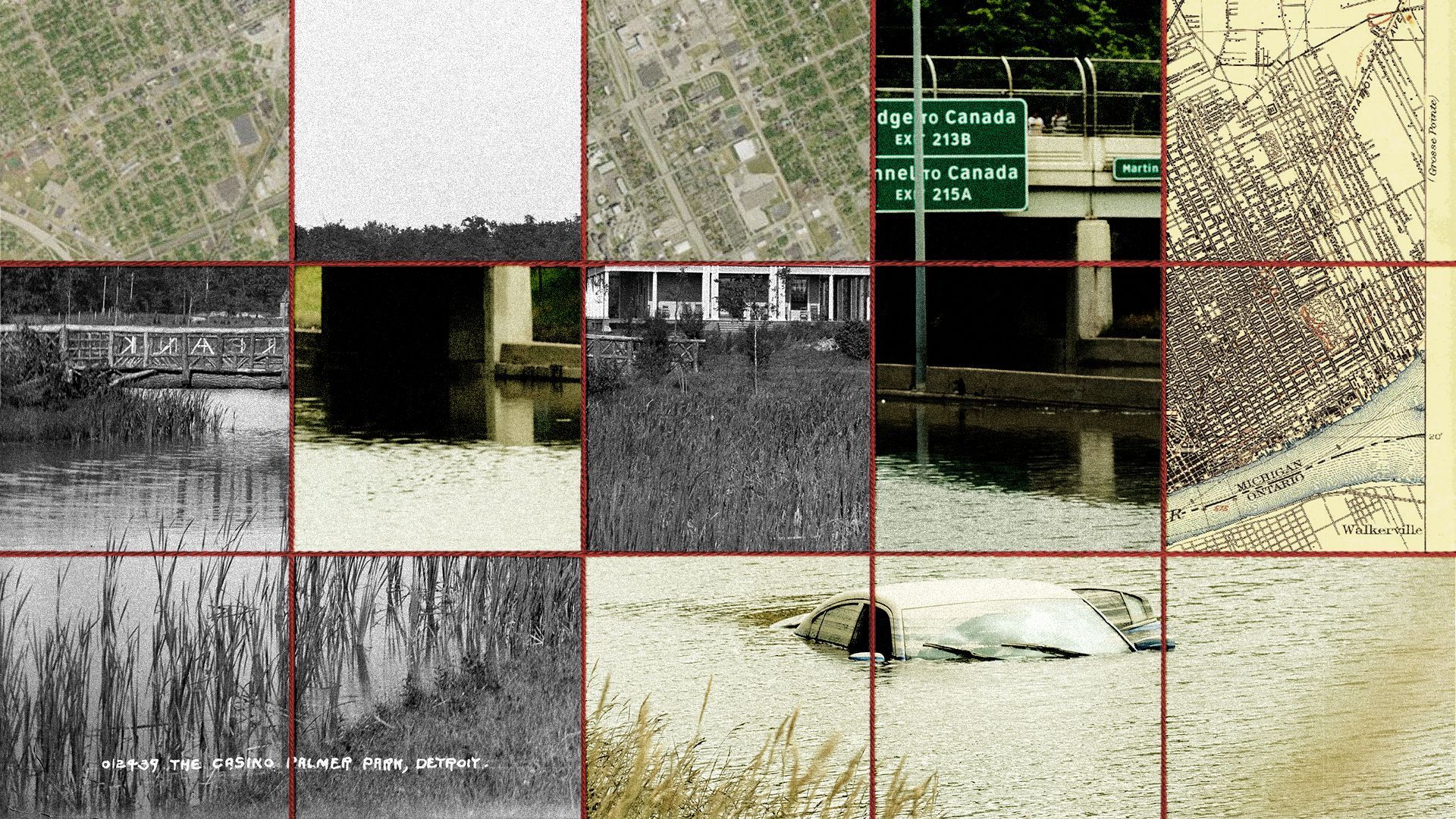
Photo illustration: Lindsey Bailey/Axios; Photos: U.S. Geological Survey, Heritage Images, SOPA Images/Getty Images
Old streams buried or destroyed in the name of development are still haunting Detroit neighborhoods.
Why it matters: These so-called ghost streams and former wetlands are flood risks that aren't well-known — yet they disproportionately impact lower-income neighborhoods, per a recent study by U of M-Dearborn researchers.
- Flooding plagues areas of Detroit like Jefferson Chalmers and Warrendale, and is wildly expensive to fix.
Flashback: To meet demands as Detroit's population grew in the 1800s up through the 1950s, people plowed over streams or dropped them underground and covered them, says Jacob Napieralski, professor and lead author of the study.
- The study estimates the city has lost at least 85% of its streams since 1905.
State of play: The researchers cross-referenced historical maps of former rivers with current flooding risk data, as well as redlining maps — the federal government's 1930s system for grading neighborhoods on financial risk and racial discrimination, which led to denying mortgages to people of color and solidifying segregation.
- They found that these ghost streams increase flooding risk, which is worse in neighborhoods historically impacted by redlining.
The intrigue: "If you live in a FEMA-designated floodway, you are mandated to get flood insurance. But the floodways are only adjacent to existing rivers and streams," Napieralski tells Axios.
- So if you live by a ghost stream, he says, you may be totally unaware that you're prone to flooding.
How it works: Though many waterways' naturally organized networks have been dismantled, water still has to find somewhere to go when it rains.
- So it often goes another, less natural route that's not designed to handle water. That leads to flooding in basements and other built areas.
- Communities with more vegetation, parks and rain gardens can mitigate flooding better than those with more concrete.
- Flooding also further damages already-struggling infrastructure in historically redlined communities.
Of note: Finding ghost streams near you requires "a little bit of detective work, but it's doable," Napieralski says.
- Water authorities and cities don't generally have information, but you can browse through historical topographic maps via the U.S. Geological Survey or look up flood risk data through the First Street Foundation.