Michigan wasted 2.8 million tons of food in 2022

Add Axios as your preferred source to
see more of our stories on Google.
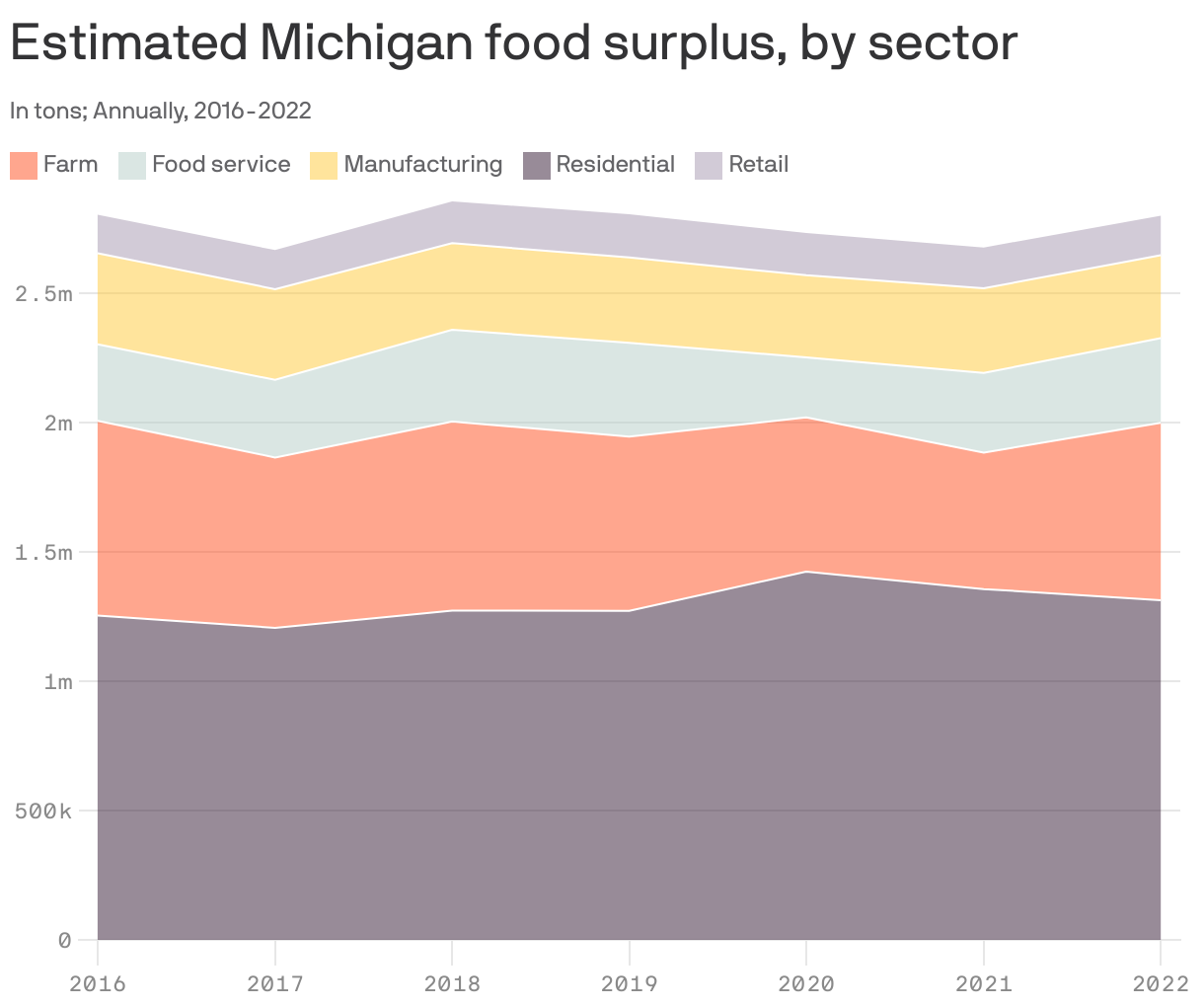
Consumers and businesses in Michigan produced 2.8 million tons of surplus food in 2022, just as much as in 2016, per data from the nonprofit ReFED.
Why it matters: Wasting food also wastes the resources that went into producing it, with ripple effects on climate resources and the economy.
- Food waste makes up 24% of municipal landfill input and contributes to 6.1% of U.S. greenhouse gas emissions.
- On average, a person wastes $759 on uneaten food each year.
By the numbers: Across the country, people and businesses wasted 88.7 million tons of food.
- That's equivalent to nearly 145 billion meals worth $473 billion.
- In Michigan, residential waste made up 1.3 million tons, or 47%, of the total.
Be smart: Food surplus refers to food uneaten or unsold by people and businesses.
Of note: Though our state's food surplus figure hasn't substantially budged over the last six years, Gov. Gretchen Whitmer's MI Healthy Climate Plan includes a goal to cut food waste in half by 2030.
The big picture: As you mull over your resolutions for the new year, keep in mind ReFED's list of "Food Waste Five" strategies for reducing waste at home:
- Store food properly.
- Freeze food to extend its freshness — many of us mean to do this but fail to follow through.
- Check "best by" and "sell by" labels.
- Dedicate a day each week for eating leftovers.
- Plan your meals before buying groceries, and follow those plans once they're set.