Winters are warming around Detroit, but expect snow

Add Axios as your preferred source to
see more of our stories on Google.


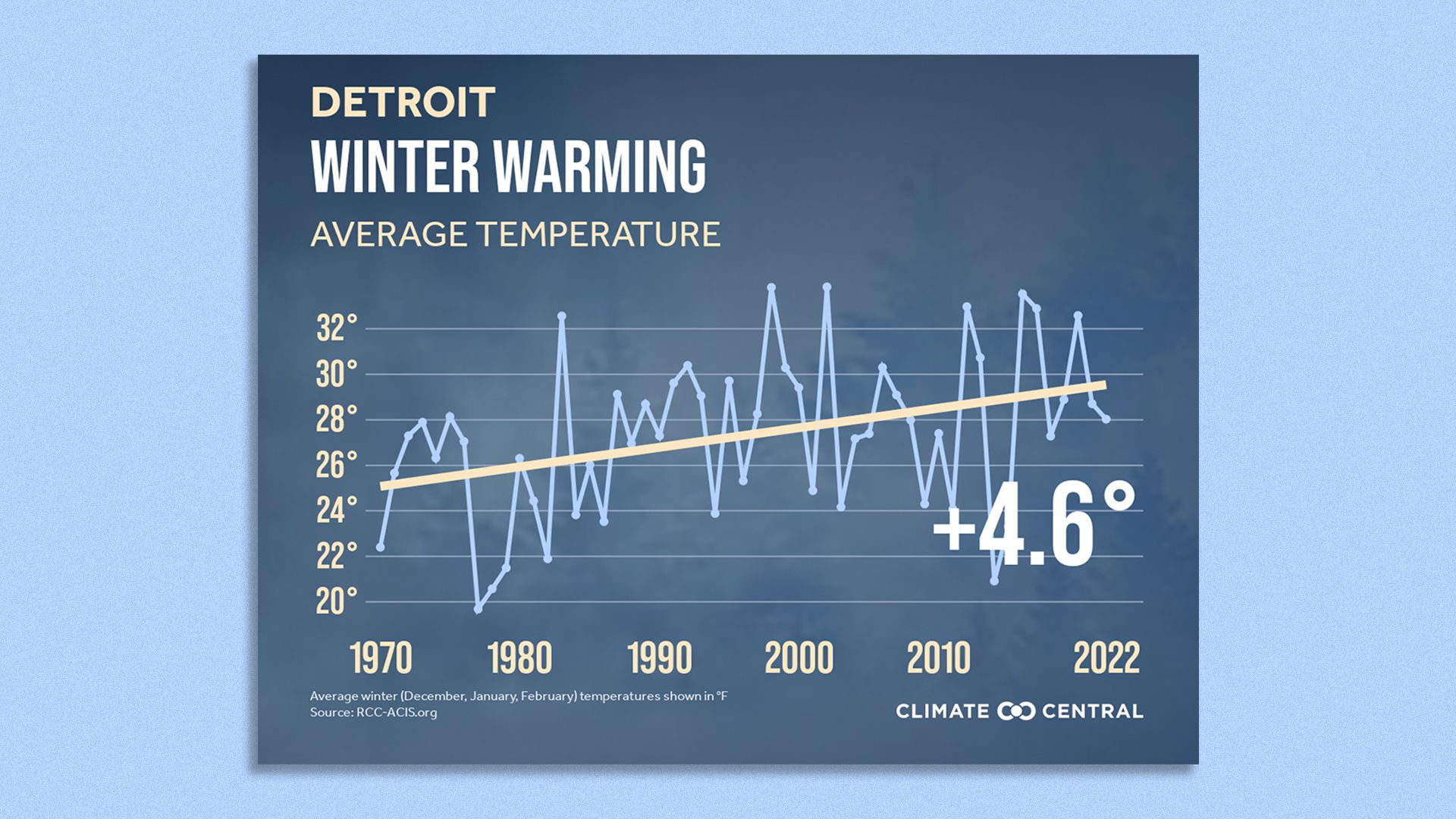
Detroit's average winter temperature has warmed 4.6 degrees since 1970.
Why it matters: Less cold can mean more mosquitoes and ticks, problems for fruit crops and ecosystem changes, according to the nonprofit research and journalism organization Climate Central's winter weather analysis this year.
- Our temperature change is more extreme than the United States overall, which saw a 3.3-degree change across 238 places measured nationwide over the last 52 years, according to Climate Central.
Yes, but: That doesn't mean we won't see substantial snowfall or big storms this year.
- Climate change could be making snowstorms more potent, as rising ocean temperatures and more moisture in the atmosphere cause an uptick in heavy rain and snow, according to Axios' Andrew Freedman.
Between the lines: Metro Detroiters should expect a wetter-than-normal winter this year, local National Weather Service meteorologist Alex Manion tells Axios.
- It's harder to tell just yet how much of the precipitation will fall as snow versus rain, Manion adds.
What's ahead: "If we're looking far into the future, we're going to have this balance between wetter events, more storm systems, but with warmer temperatures," he says. The phenomenon will make frequent winter rain events more likely.
- "But in the near term (of 5-10 years), it's possible with the added moisture in our region that we may even see periods of more snowfall than normal."
By the numbers: The region sees average snowfall of 35.4 inches per winter, according to Manion.
- The snowiest winter in the area in recent memory was 2013-14, with 94.9 inches.
- We had the fifth snowiest season in our records in 2007-08, at 71.7 inches.
Zoom out: Winters in the Great Lakes and Northeast are warming more than other areas, per Climate Central.
- For 75% of U.S. locales, the coldest months are warming faster than other seasons.
- Cold snaps are an average of six days shorter than in 1970.