Jay Wang plans Wasabi's next chapter

Add Axios as your preferred source to
see more of our stories on Google.
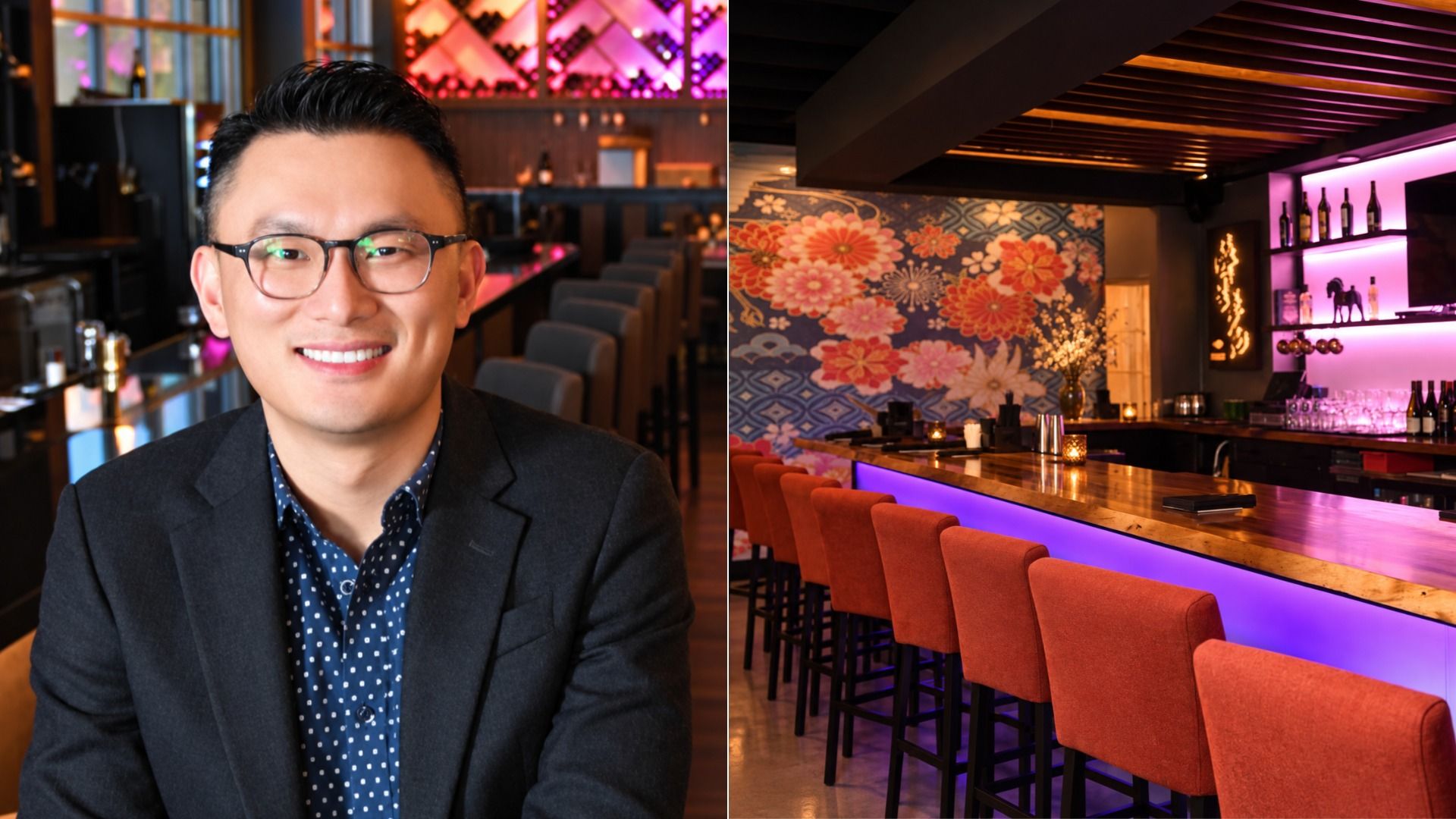
Jay Wang (left) and the interior of a Wasabi restaurant (right). Photos: Courtesy of Wang
When Jay Wang decided to open his first Wasabi restaurant in Des Moines, the Chinese immigrant and former New Yorker had no clue what the reception would be.
Why it matters: Now, he is celebrating 15 years in the business, and after years of expanding, he wants to consolidate and train the next generation of restaurant owners who want to take up the mantle.
How it started: Wang moved to New York at 18 years old, studying business management and training as a sushi chef in Manhattan before co-owning a popular sushi restaurant in Philadelphia.
- When he and his wife decided they wanted to have a second child, they wanted to move to a more family-friendly place. They remembered enjoying Des Moines while attending a wedding here in 2010.
- By 2011, they were opening the first Wasabi restaurant, Wasabi Chi, in the Beaverdale neighborhood.
- "I was nervous," Wang tells Axios. "What if people were just gonna eat meat and potatoes?"
Zoom in: After Wasabi Chi gained popularity following a positive review in the Datebook Diner, he opened a second location downtown called Wasabi Tao.
- Now, his company, Wasabi Restaurant Group, operates seven restaurants across the metro and in Ames. Over the years, he's also sold or closed restaurants, including the original Wasabi Chi and Wasabi Tao locations, as well as Aura in Clive.
- We chatted with Wang about his experiences and what's next.
🍣 The menu: Around 60% of his restaurants' sales come from sushi, Wang says. He sources his fish from three vendors in Hawai'i, Minneapolis and Chicago.
- With multiple locations, Wang says he now has stronger buying power than ever for quality fish (and he says it's helped other restaurants as well).
🧑🍳 Finding chefs: When Wang was starting, he struggled to find sushi chefs, and he invited potential employees from the East and West coasts to "try out" Iowa and live in his basement before committing.
- 10 different chefs have stayed in his home.
- "My mom's a really good cook, so it was one of my selling points," he says.
🌮 Where he likes to dine: Pho 515 in Asian grocery store C-Fresh, Harbinger, on Ingersoll Avenue, and Flame the Taqueria, on Merle Hay Road.
- "I always get the beef taco they've got. It's so good," Wang says.
🛒 Grocery favorites: He visits C-Fresh and picks up spices, lemongrass, spicy sauces, fresh produce and live crab when it's available.
🔮 What's next: Owning restaurants is difficult right now, due to the rising costs of gas, labor, food and property taxes, Wang says. Customer trends have also shifted away from alcohol, which had been a major sell at his restaurants.
- Wang says he's doing OK in comparison to the rest of the industry, but while he's spent the last few years "aggressively expanding," this year and next year will be a "period of consolidation," he says.
- He's looking at selling some of his restaurants or training business partners who can make their own profit stream from Wasabi.
- "We had 15 years, and there's at least going to be another 15 years," Wang says. "My next generation of managers or managing partners, they'll be able to do what we do and even do better than what we were doing."