Des Moines explores neighborhood disaster hubs

Add Axios as your preferred source to
see more of our stories on Google.
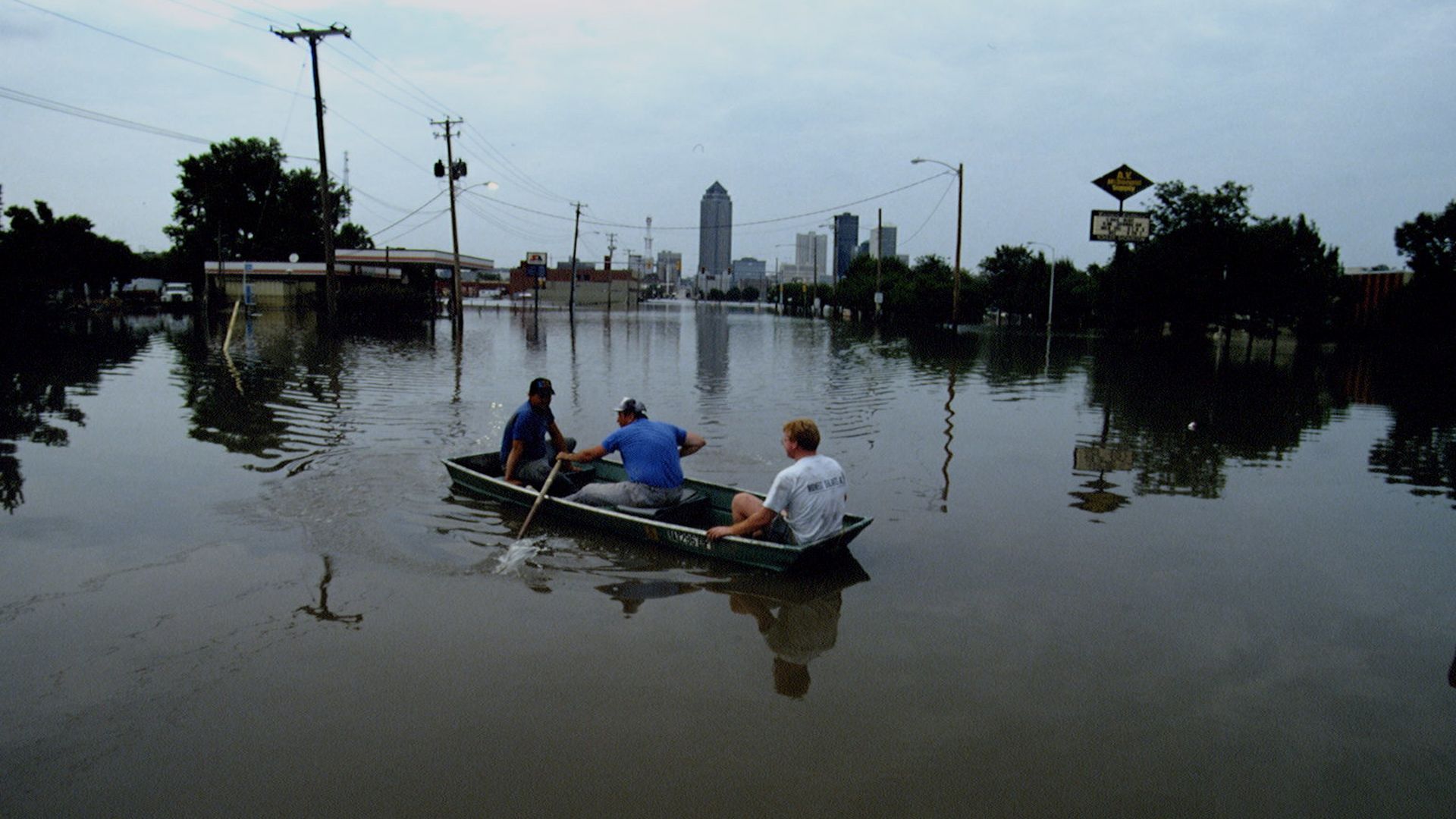
Flooding in Des Moines in 1993. Photo: Brooks Kraft LLC/Sygma via Getty Images
Des Moines is developing a plan to turn neighborhood spaces into hubs where residents can access power, water and other assistance during extreme weather and disasters.
Why it matters: They could make disaster response more local, accessible and dependable.
Driving the news: The Iowa Environmental Council (IEC) is collaborating with the city to develop guidance for a network of resilience hubs.
- Cody Smith, IEC’s director of climate initiatives, tells Axios that the work is preliminary and focused on defining what a hub should be, when it would be activated, and how residents would know where to go.
How it works: Resilience hubs are community-serving spaces — such as recreation centers, nonprofit facilities, libraries or schools — that can be activated in emergencies, beyond shelter during extreme temperatures.
The big picture: Cities like New Orleans equip sites with solar panels and battery storage so they can operate even when other spaces are unavailable.
- Baltimore supports a network of nonprofit and community-based hubs that can provide power, supplies, food, drinking water and other emergency support.
Zoom in: Des Moines’ version could eventually include other services, depending on the building, including emergency medical or prescription access, public health programming, housing services and temporary shelter.
State of play: IEC and the city plan to select one Des Moines location and run exercises simulating extreme weather scenarios.
- The goal is to identify what works, what gaps exist and which city departments or outside partners need to be involved.
By the numbers: The current city contract for IEC’s resilience hub guidance is about $31,000, Smith said.
- That does not include possible future infrastructure costs, such as backup power or microgrid technology.
The big picture: Smith said IEC’s hope is that every Des Moines neighborhood eventually has a resilience hub residents know how to access.
- He said the city could also rely on nonprofits or other organizations that already provide emergency-related services, rather than building the system from scratch.
What's next: IEC expects to deliver program guidance to the city manager’s office by the end of the year.
- Smith said IEC hopes to continue the partnership next year, though future work will depend partly on city budget discussions.