Study: DART redesign boosts job access but creates gaps

Add Axios as your preferred source to
see more of our stories on Google.
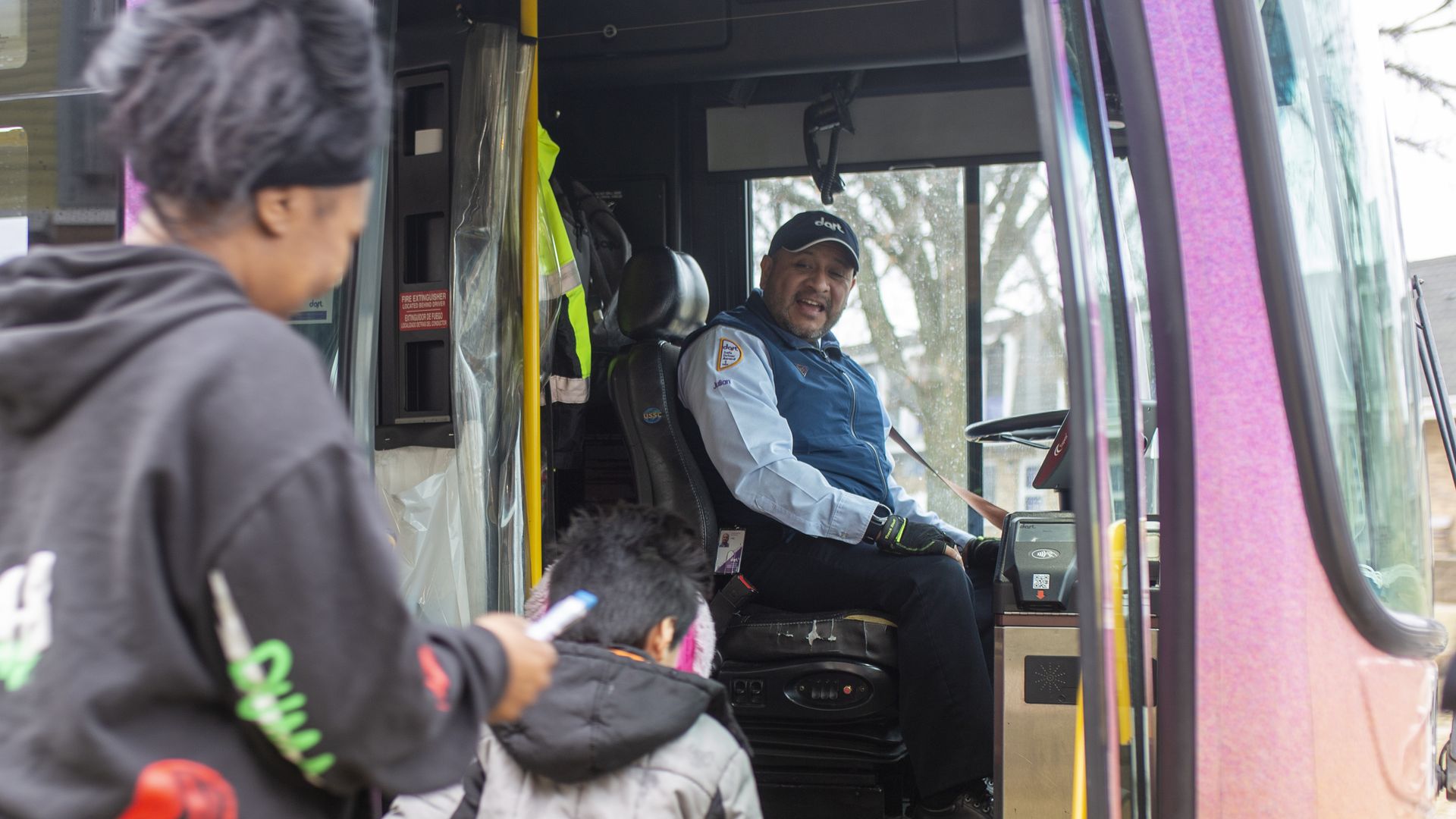
Photo: Courtesy of DART
DART's leaner bus network is projected to boost the regional economy, but the gains may come at the expense of transit access in several suburbs, according to a new study released Monday.
Why it matters: The study gives DART an economic case for its overhaul, but also raises questions about whether the benefits are distributed fairly across the metro.
Catch up quick: DART replaced its network last month with 11 routes that run more frequently along the metro's busiest corridors, aiming to improve the system's usability and make rides faster and more reliable.
- The redesign cut 17 routes, reduced total service hours by about 10%, and eliminated express routes and several specialized services.
- Bondurant and Pleasant Hill also withdrew from DART, ending service in those cities when the new network launched on June 14.
Driving the news: An independent study by the Des Moines Area MPO estimates that DART's new network will support employment for 5,655 workers and generate $17.39 billion in regional GDP over 25 years.
- That's compared with 4,467 workers and $13.7 billion under the previous network.
Stunning stat: The nearly 1,200 additional workers are expected to generate $147 million more in annual GDP, according to the study.
Reality check: The findings are projections based on transportation and economic modeling, not measured results from the newly launched network.
By the numbers: The study projects the new network will generate $1.48 in transportation benefits for every $1 spent, up from $1.16.
- Broader business output is projected at $2.15 per public dollar, up from $2.07 under the previous system.
Friction point: The redesign reduced or eliminated service in some lower-ridership areas, potentially worsening transit access or increasing driving costs in parts of West Des Moines, Urbandale, Waukee, Grimes and Norwalk, according to the study.
Separately, the workforce report estimates that broader transit cuts could increase local spending on homelessness, policing, health care and social services.
What they're saying: The changes were based on limited funding and on priorities set by the communities that help pay for its services, spokesperson Sarah Welch tells Axios.
- An evaluation of the new network's performance and the effects on areas no longer served is ongoing, she said.
What we're watching: How the DART Commission responds if the redesign creates significant access or driving-cost issues.