Iowa fertility rate tops U.S. average


Add Axios as your preferred source to
see more of our stories on Google.
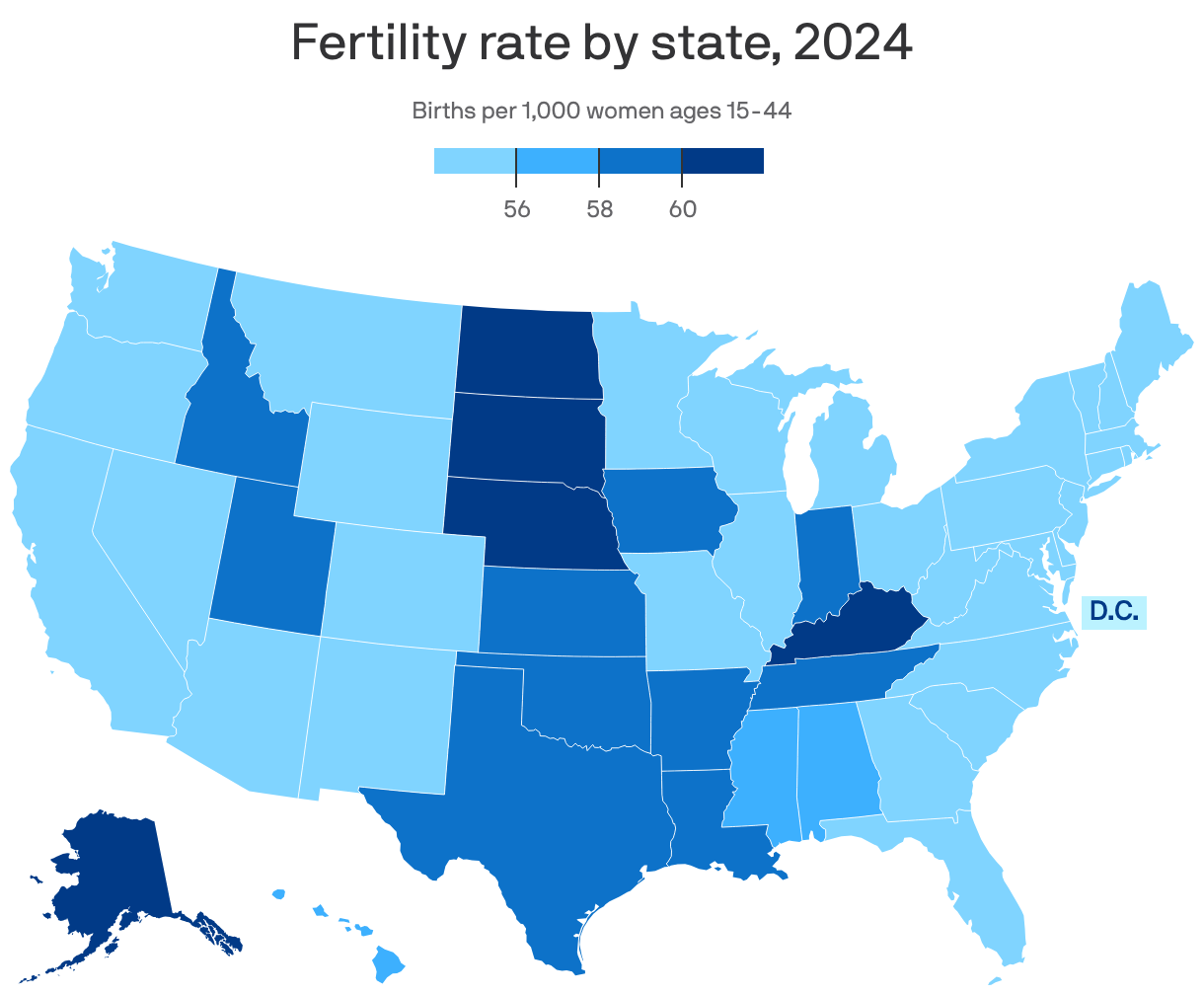
Iowa is part of a swath of central states where fertility rates remain relatively high despite a decades-long national decline.
Why it matters: It could help mitigate — though not reverse — the effects of declining birth rates on schools, the workforce and the state's aging population.
By the numbers: Iowa recorded 58.8 births per 1,000 women ages 15–44 in 2024, above the national rate of 53.8, according to CDC data.
- South Dakota led the nation at 66.7, with Nebraska second at 62.9.
What they're saying: Researchers say central states' comparatively high rates may reflect younger populations, more affordable family-sized homes and child care, cultural differences, and better access to higher-paying jobs for women.
Reality check: Fertility rates aren't the same as total births.
- Iowa has not escaped the broader decline, recording 36,052 births in 2023, according to final CDC data. That's nearly an 8% decline from 39,094 in 2013.