Smart sprinkler pilot draws quick Des Moines demand

Add Axios as your preferred source to
see more of our stories on Google.
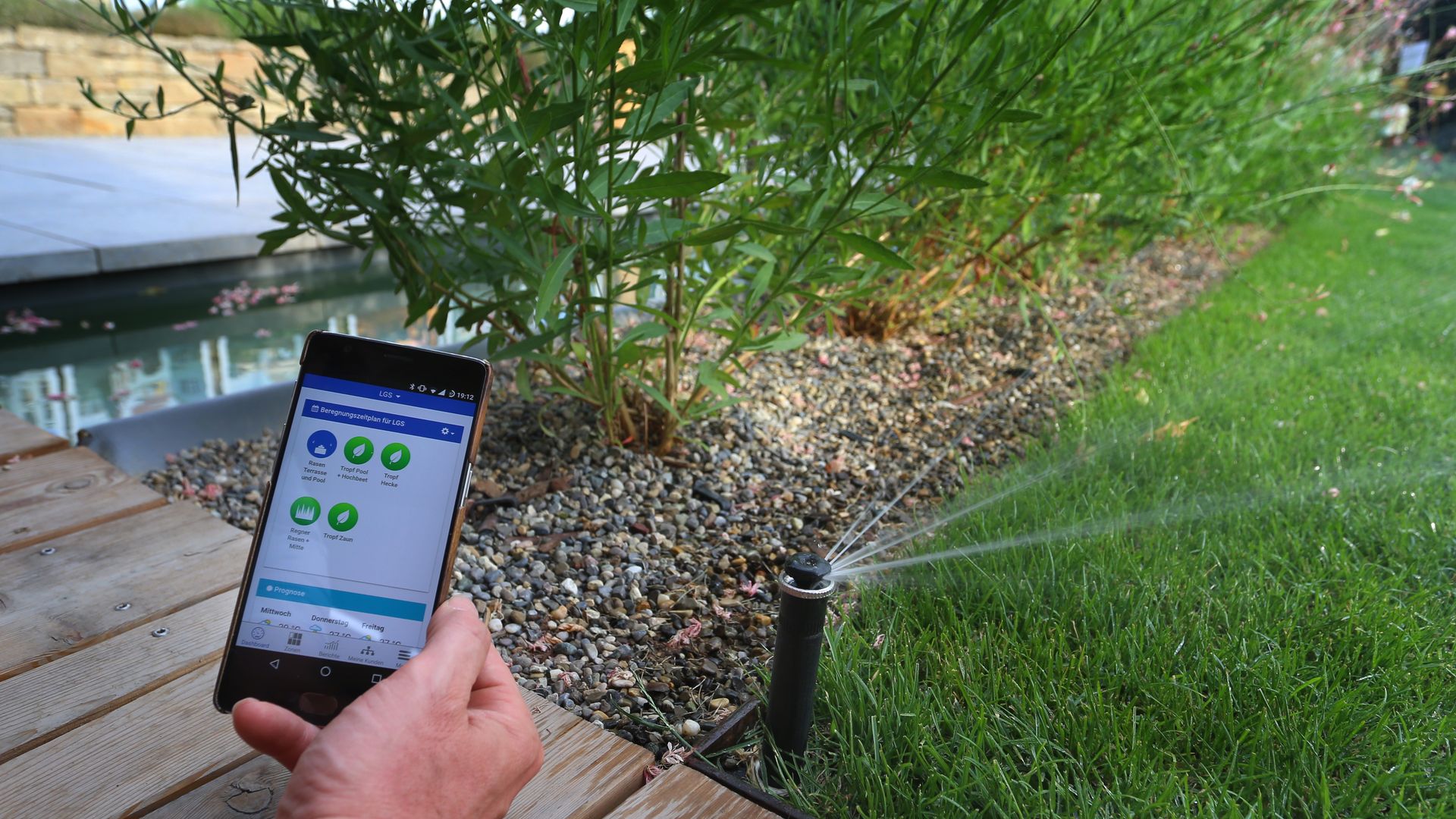
Photo: Karl-Josef Hildenbrand/picture alliance via Getty Images
Central Iowa homeowners have claimed almost all 60 free smart irrigation controllers in a pilot program testing how to ease summer water demand.
Why it matters: Central Iowa Water Works (CIWW) is testing whether small changes in lawn watering can deliver meaningful relief during periods of strained regional supply.
Catch up quick: CIWW developed the pilot to compare fixed-schedule irrigation with weather-responsive technology and to measure potential water savings.
- The $42,410 program, launched a week ago with unspent funds from last year, will not increase future water rates, executive director Tami Madsen tells Axios.
How it works: WiFi-connected devices replace fixed sprinkler timers and automatically adjust watering based on weather data, landscape conditions and predicted needs.
- Participants share irrigation information, providing CIWW with data to evaluate water savings and the effect on peak summer demand.
- The program can also shift watering schedules by up to 48 hours in response to expected high regional demand.
People who didn't receive one of the free controls can still participate in the pilot program by purchasing their own devices, which cost under $300.
Context: CIWW remains under Stage II water-use restrictions due to elevated nitrate levels, with homeowners asked to reduce outdoor watering by 50% and to follow an even-odd schedule.
- Businesses and governments were allowed to resume lawn watering yesterday after a ban and now follow the same restrictions as homeowners.
Stunning stat: Lawn watering can increase the metro's daily water use by 40%, from 50 million to 70 million gallons, according to a 2025 DSM Water Works estimate.
The big picture: Weather-based irrigation programs have long been used in Western communities to reduce water consumption.
- The EPA estimates that some controllers can save an average home up to 15,000 gallons annually — enough to flush a toilet about 30 times a day for a year, according to the CIWW.
What we're watching: Whether the results persuade CIWW to expand the program or to offer rebates for homeowner-purchased controllers.