Plug-in solar gets Iowa push

Add Axios as your preferred source to
see more of our stories on Google.
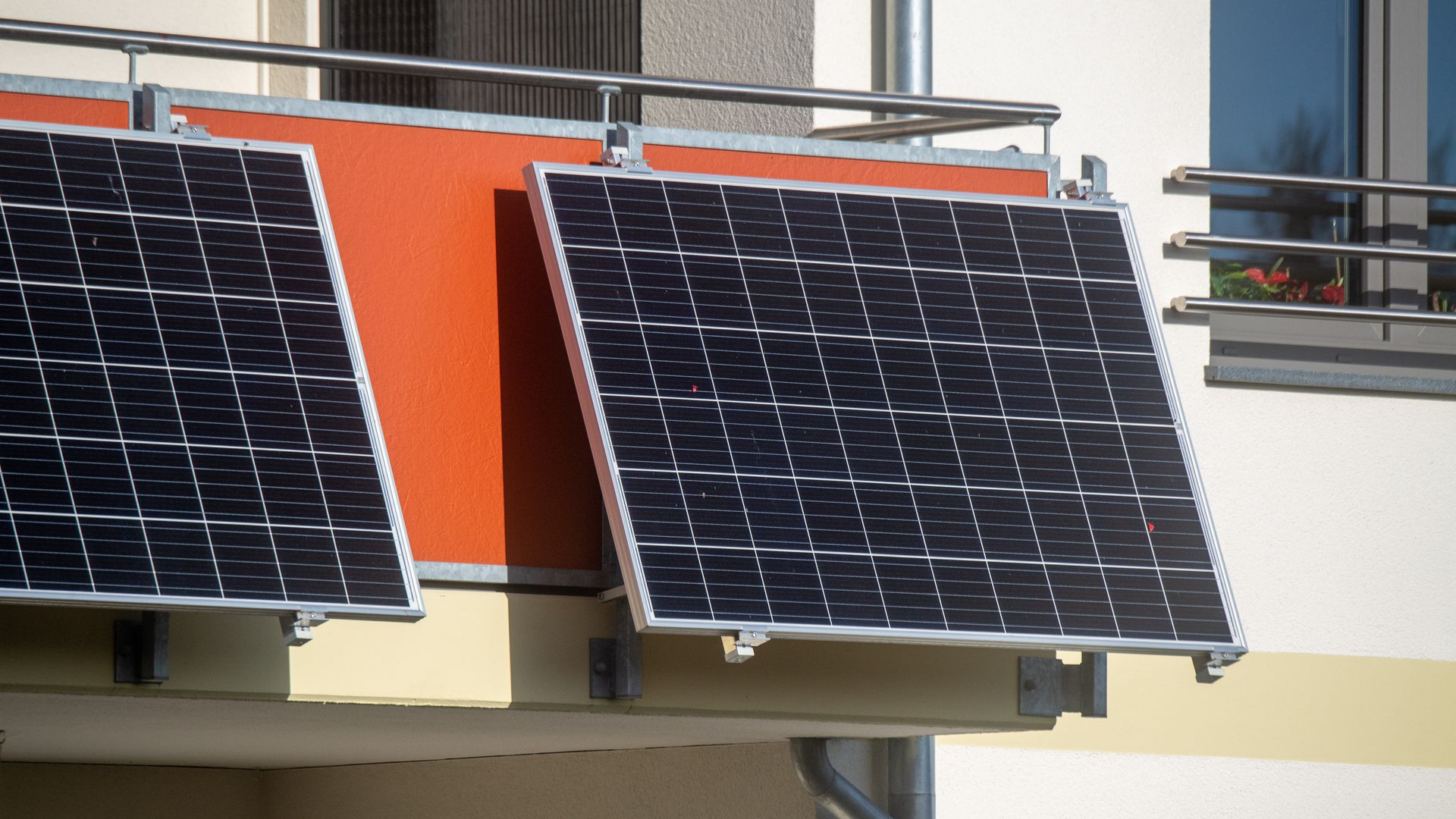
Photo: Stefan Sauer/picture alliance via Getty Images
A Des Moines lawmaker is pushing to allow Iowans to use plug-in solar kits — devices that connect to standard home outlets and offset electricity use.
Why it matters: The systems could offer a cheaper, more practical solar option, Rep. Sean Bagniewski (D-Des Moines) tells Axios.
Friction point: Iowa rules don't clearly state whether plug-in solar can be used without complying with utility interconnection rules, Bagniewski said.
State of play: Utilities could require customers to unplug balcony-style systems used without approval, Steve Guyer, senior energy policy counsel at the Iowa Environmental Council, tells Axios.
- And they could potentially shut off service if someone repeatedly refused to comply or used an unsafe, hardwired system, Guyer said.
Catch up quick: Plug-in solar systems typically consist of one or two panels paired with a small inverter.
- They're sometimes called balcony or portable solar because they take up the space of about two doors — making them more accessible to renters or to people whose roofs aren't suited for traditional solar.
Zoom out: The systems' use grew in Europe after German regulators issued technical rules for them in 2019, now allowing up to 800 watts — enough at peak output to run a small window air conditioner or several smaller household devices.
- The technology is emerging in the U.S., with Utah and Maine enacting plug-in solar laws, and other states considering similar proposals.
Stunning stat: The total power generated by plug-in solar in Germany is equivalent to that of a large power plant, per the Wall Street Journal.
Zoom in: An Iowa bill Bagniewski introduced in January would apply to devices that produce up to 1,200 watts and connect to a standard 120-volt outlet.
- It would also bar utilities from requiring prior approval, fees or additional equipment. It didn't advance in this year's session.
- No groups registered against the Iowa bill, but several utility and regulatory interests registered as undecided, including the Iowa Utilities Commission.
The other side: Utilities in other states have raised concerns that plug-in solar devices could pose safety risks, such as overloading home wiring.
Yes, but: Advocates like Cora Stryker, co-founder of Bright Saver, a California-based group that advocates for plug-in solar, tell Axios that certified devices include safety features to prevent problems.
- They automatically shut off during outages, for example, to prevent electricity from feeding back onto the grid and potentially shocking utility workers, she said.
By the numbers: A typical 400- to 800-watt plug-in solar system costs about $500 to $1,500, compared with over $30,000 (before rebates or incentives) for an average rooftop solar installation.
- Plug-in systems can reduce an electric bill by roughly $15 to $50 a month, depending on location, sunlight and utility rates.
- Rooftop solar can generate much larger long-term savings, but it typically requires professional installation, according to EnergySage, a solar marketplace and consumer information site.
What we're watching: Whether plug-in solar sparks legislative action.
- Bagniewski says several Republican lawmakers have reached out to co-sponsor the legislation, and he plans to reintroduce it in January.