Environmental group says Iowa has more CAFOs than reported

Add Axios as your preferred source to
see more of our stories on Google.
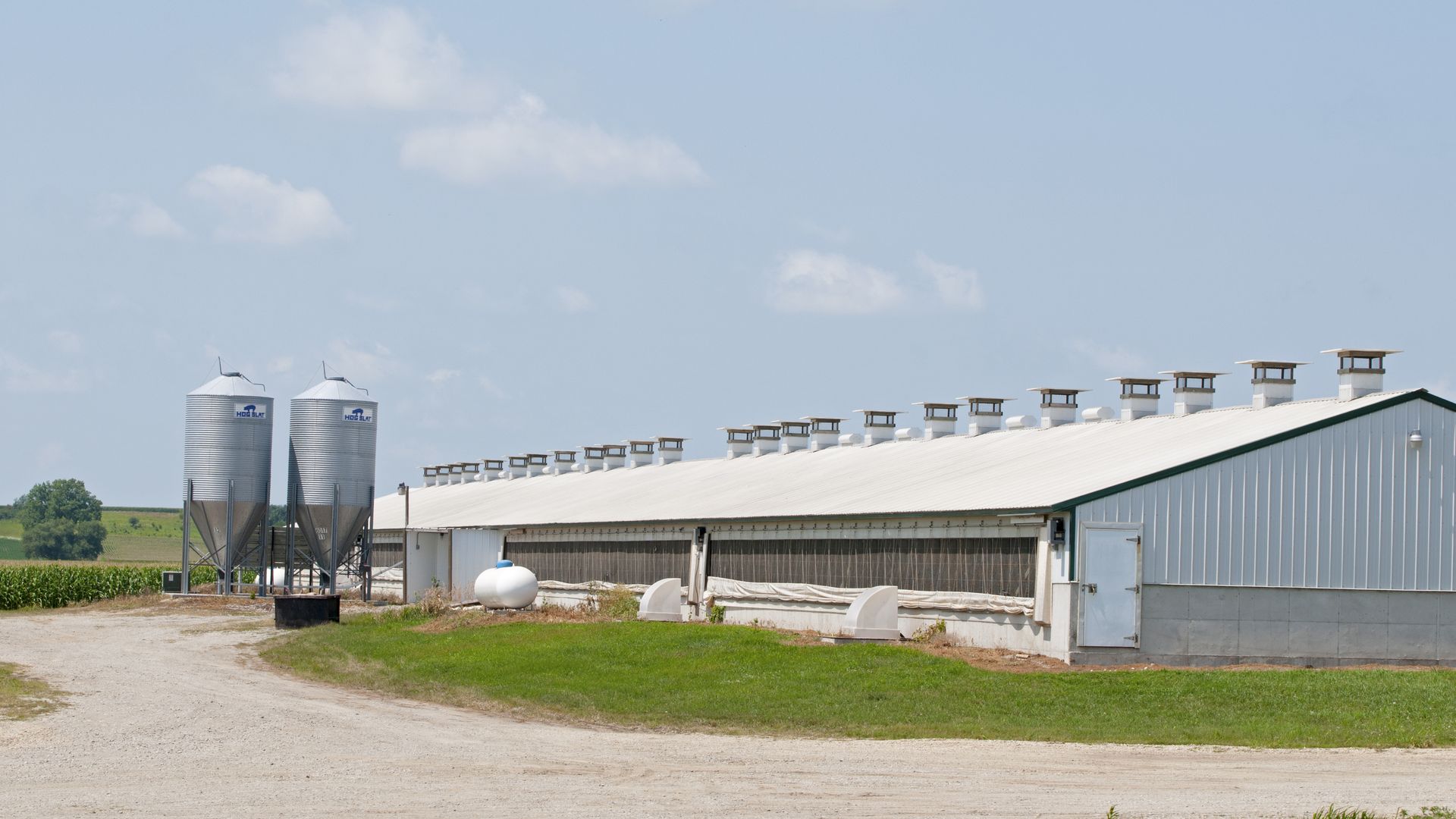
A hog confinement building in rural Iowa. Photo: Nancy Nehring /Getty Images
An environmental advocacy group says Iowa had more than 15,000 animal confinements in 2025, including thousands of small unreported operations.
Why it matters: Manure from any operation can still contribute to water contamination, which is a concern for Iowans dealing with high nitrate levels, says Anne Schechinger of the Environmental Working Group (EWG), which produced the report.
Driving the news: EWG counts 15,309 concentrated animal feeding operations (CAFOs) in Iowa, about 4,300 more than the roughly 11,000 in state records from 2025.
- The gap is made up mostly of smaller operations that fall outside what DNR requires facilities to report.
How it works: EWG says it identified the facilities using U.S. Department of Agriculture satellite and aerial imagery and layered it on top of the Iowa DNR's dataset, which includes only operations of 500 animal units or more.
- To account for inactive farms, Schechinger says analysts cross-checked imagery from multiple points in time, looking for signs a barn was no longer in use, including rust or visible disrepair.
The other side: The Iowa DNR's database is updated daily, but it excludes small confinements that aren't subject to reporting requirements, spokesperson Tammie Krausman tells Axios.
- DNR field offices in 2025 conducted around 750 inspections of facilities with manure management plans, with about 50 resulting in violation notices, including for manure application issues.
- "Additionally, aerial mapping cannot always verify if a facility actually has animals," Krausman said in an email.
Zoom in: David Cwiertny, a University of Iowa professor in environmental engineering, said the DNR's inspection number underscores a broader problem, noting that not enough facilities are being examined.
The big picture: Most Iowa animal confinements store manure in pits directly beneath the barns.
- Because that manure has to go somewhere, farmers periodically pump or haul it out and apply it to nearby farm fields as fertilizer.
- Facilities above 500 animal units are required to file a manure management plan with DNR specifying which fields they intend to apply manure to and how much they expect to produce.