Iowa's booze tax ranks among nation's highest


Add Axios as your preferred source to
see more of our stories on Google.
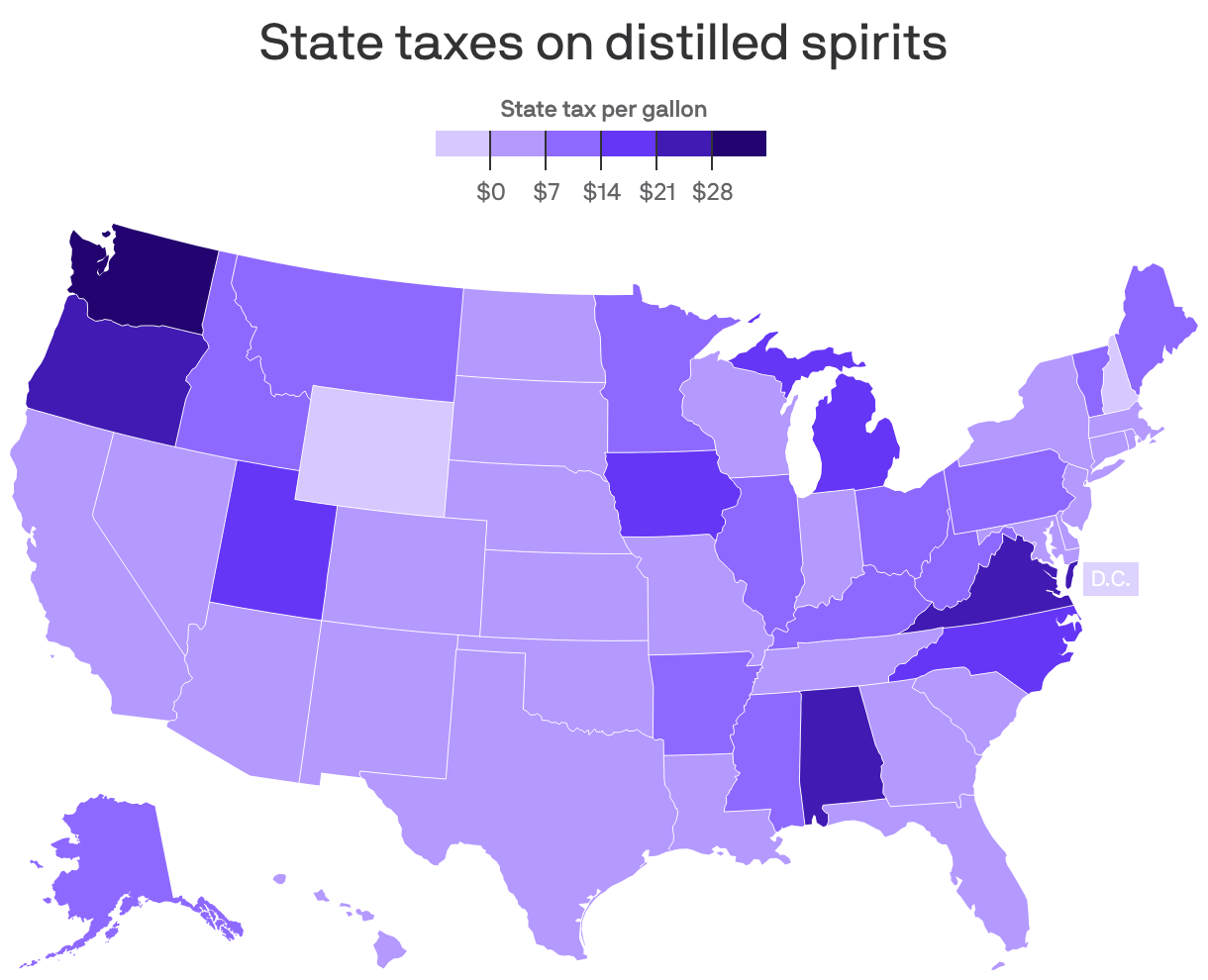
Iowa's booze drinkers pay one of the nation's steepest distilled spirits taxes: $15.14 per gallon — the seventh-highest among states, according to the Tax Foundation.
Why it matters: That state-line price gap can add up for travelers, bar owners and retailers — and Iowa's rate dwarfs that of every surrounding state.
By the numbers: Iowa taxes distilled spirits about 73% more than Minnesota ($8.74) and Illinois ($8.55), the next-highest neighboring states.
- The gap is wider in South Dakota ($4.93), Nebraska ($3.75), Wisconsin ($3.25), and Missouri ($2).
The big picture: Alcohol taxes vary widely across the U.S., with Washington topping the spirits list at $36.68 per gallon.
Between the lines: Iowa is a "control state," meaning the state controls liquor importation and wholesale distribution — a structure that helps explain why Iowa's tax rate is higher than those of neighboring states.
The latest: Lawmakers considered "repealing the state monopoly" in a House bill this year, but it stalled after passing a committee.