Is your dog from a puppy mill? Search this database

Add Axios as your preferred source to
see more of our stories on Google.
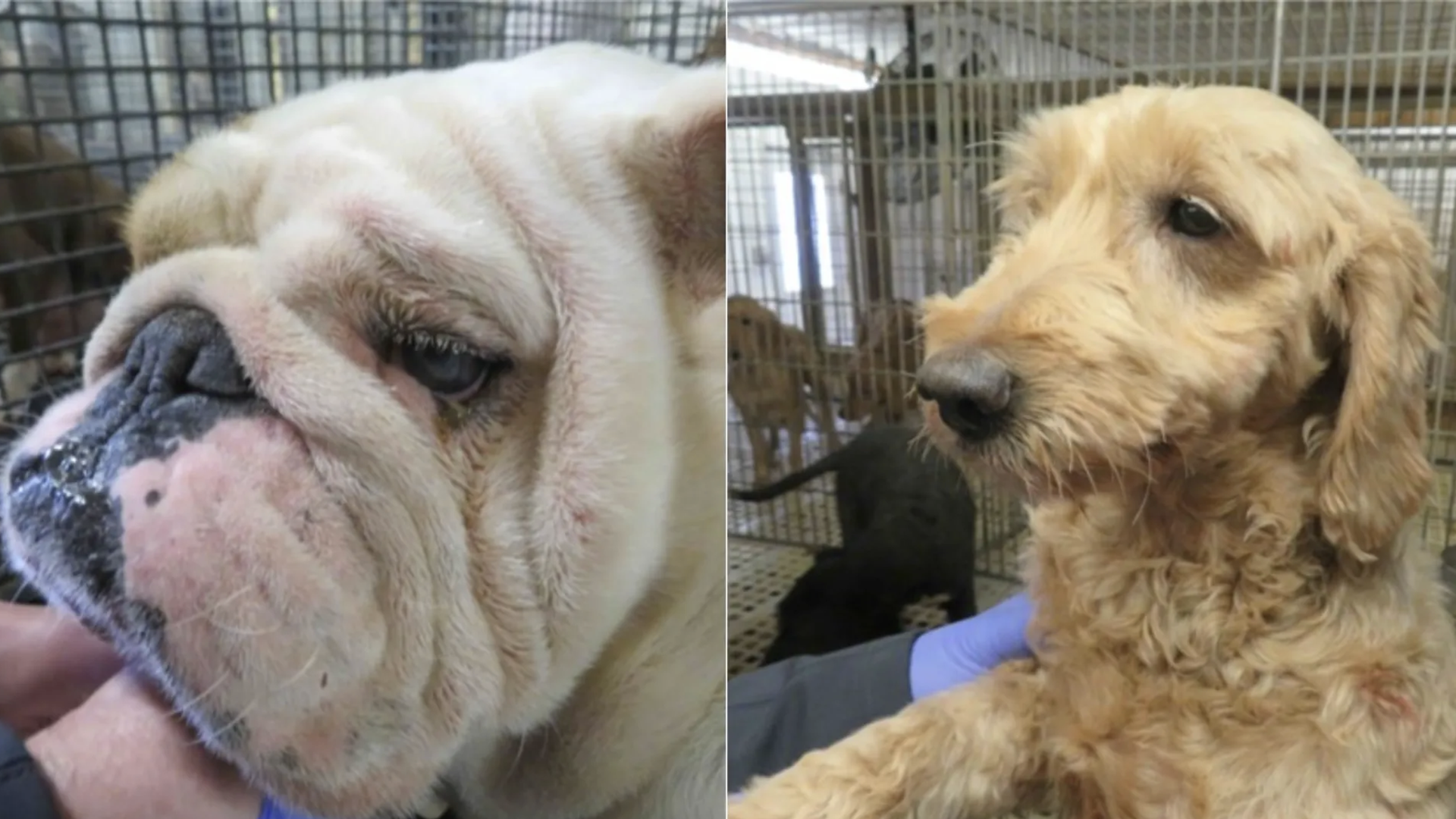
Dogs from puppy mills featured in the "Horrible Hundred" list. Photos: USDA
An Ames-based animal nonprofit has launched a new searchable nationwide database to help dog buyers determine if they're sourcing from puppy mill dogs.
Why it matters: Online puppy sales are booming, but oversight hasn't caught up, resulting in people purchasing dogs from breeders that keep the puppies and mothers in poor conditions.
- Iowa has historically led the nation in puppy mill violations.
How it started: Founder Mindi Callison started Bailing Out Benji in 2011 after she purchased a husky from Petland and learned that her dog, Benji, actually came from a puppy mill.
- Determined to educate people about puppy mills, she started the nonprofit, which has grown into a national organization that advocates for more transparency.
- Puppy mills are known for quickly churning out dogs, sometimes in poor conditions.
State of play: Bailing Out Benji launched a public directory that allows people to research breeders, pet stores and online brokers.
- The nonprofit updates the directory daily with information from the U.S. Department of Agriculture, state data, pet store sourcing documents and online seller info.
- The site includes violations, such as USDA warnings, non-compliance and state citations.
Between the lines: Anti-puppy mill advocacy groups historically focused on pet stores, but as cities and states cracked down on them, many such breeders shifted online instead, Callison says.
- Some breeders canceled their USDA licenses entirely and began selling directly to consumers through websites and social media because it was underregulated.
- People who own more than four breeding females, and don't require buyers to inspect dogs on-site, are required to have a license.
- Some states don't require breeder licenses at all, while others have different thresholds and rules. Iowa has stricter breeder licensing requirements than the USDA, but if a breeder has a USDA license, they're not required to comply with state standards.
Zoom in: Online puppy sellers often operate across state lines with little public oversight.
- Some online brokers host around 60,000 sellers, while fewer than 5,100 breeders nationwide hold USDA licenses, Callison says.
- Many sellers use multiple aliases, business names or websites, making it difficult for consumers to identify who they are actually buying from.
What they're saying: Violations listed in the directory can range from a paperwork citation to an extreme issue that requires veterinary care.
- She recommends people reach out to Bailing Out Benji if they have a question about what citations in the directory mean.
- "We know people buy dogs, so we just want to make sure every sale is good for the customer, and isn't causing harm to the parent dogs back at the breeding operation," she says.