Are you eating USA beef? New label rules are now in effect

Add Axios as your preferred source to
see more of our stories on Google.
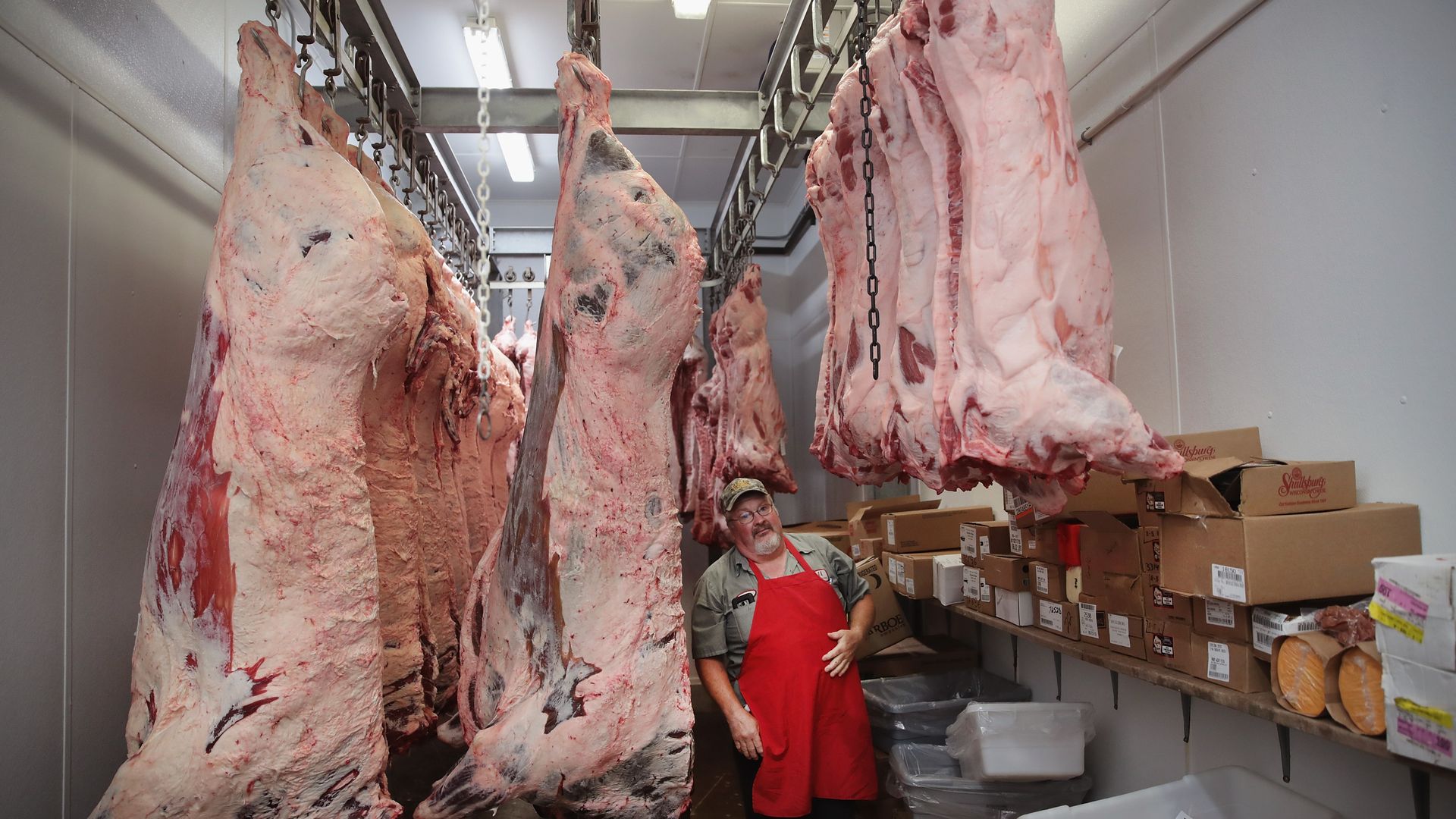
Consumers who care about the origin of their meat can buy directly from local producers, such as Elma Locker & Grocery, or look for listings in the Choose Iowa program. Photo: Scott Olson/Getty Images
Newly enacted "Product of USA" rules for meat, poultry and egg products are providing shoppers with more clarity, but the origin of products can still be elusive, the head of the Iowa Cattlemen's Association tells Axios.
Why it matters: Products such as burgers may contain meat from multiple countries, potentially affecting the "very high quality" expected of U.S. beef products, Cattlemen's CEO Bryan Whaley tells Axios.
Driving the news: The stricter voluntary Product of USA labeling standard compliance deadline took effect Jan. 1, requiring that meat carrying the claim come from animals born, raised, slaughtered and processed in the U.S.
- Previously, critics said, imported meat could receive a U.S. label after processing in the U.S., creating confusion for shoppers.
How it works: Any USDA-regulated establishment can use the label if the product qualifies and the company keeps documentation proving it.
- Companies generally do not have to submit a special label application or extra fees to use it.
State of play: The rules were finalized in 2024 under former Iowa Gov. Tom Vilsack, who served as USDA secretary in the Biden administration.
- They were intended to build on Biden's executive order promoting competition in the American economy.
Yes, but: While President Trump revoked Biden's order last year, his administration continued to promote the updated voluntary standard.
- The USDA launched a public awareness campaign in March, with Agriculture Secretary Brooke Rollins saying the label supports "transparency, fairness, and trust."
The intrigue: The Iowa Cattlemen's Association is not currently calling for mandatory country-of-origin labeling.
- The voluntary labels give shoppers a choice without requiring every packer or retailer to comply with a new mandate that could pass costs on to consumers, Whaley said.
The other side: Groups such as the National Farmers Union that support mandatory labeling argue that shoppers deserve clearer information about origins and that U.S. cattle producers should not compete against imported beef sold under confusing labels.
Between the lines: Beef has become part of a national grocery-price fight, with the White House backing increased beef imports to lower consumer prices despite objections from domestic producers and some members of Congress.
Stunning stat: Ground beef averaged about $6.86 a pound nationally in March, up roughly 20% from a year earlier, while steak prices have climbed more than 60% since 2020.
What we're watching: Whether more packers and retailers promote the voluntary label and whether pressure from cattle groups or consumers revives the national fight over mandatory beef labeling.