Step aside, Iowa Nice — better empathy means talking about yourself

Add Axios as your preferred source to
see more of our stories on Google.
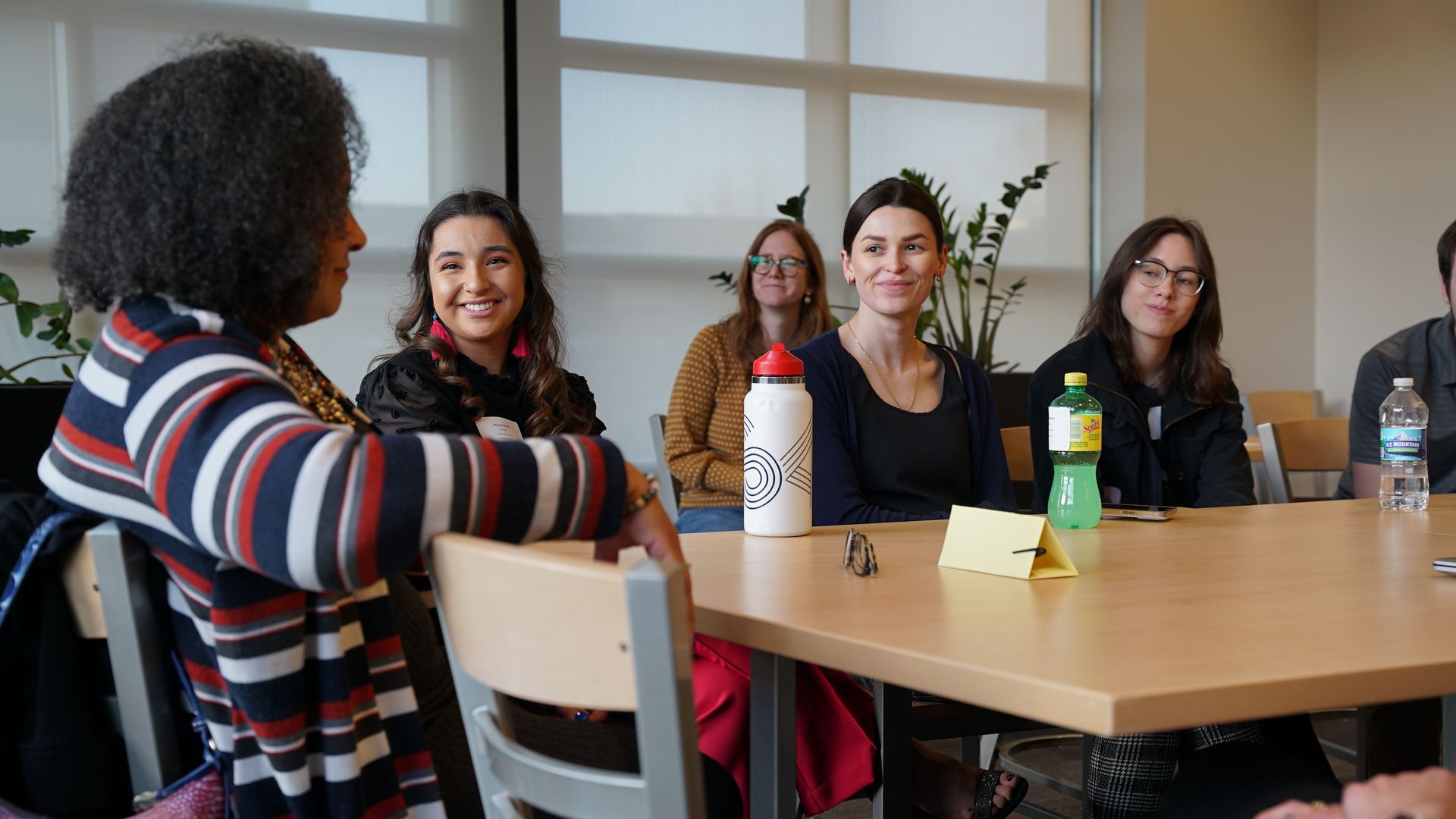
An "Open Book" discussion. Photo: Courtesy of Kapur
Iowans are taught to listen politely and let others speak, but a University of Iowa researcher has found that connection and empathy may actually grow faster when listeners think about themselves and talk back.
Why it matters: Storytelling is often used as a way to build empathy through lectures and TED Talks, but that may not be the most effective model, says JJ Kapur, an Iowa doctoral student studying psychology.
How it started: Kapur grew up in West Des Moines after 9/11 as one of the only Sikh kids wearing a turban in his school.
- To help other kids understand his son, Kapur's father visited his classroom each year for "Turban Time," tied turbans on classmates, and encouraged kids to ask JJ questions.
- Years later, as an adult, Kapur noticed that colleges still relied on the same traditional model of bringing in guest speakers, but he wondered if another format could work better.
State of play: Kapur partnered with Des Moines nonprofit CultureALL, whose Open Book program encourages speakers to share a personal story, but after the storyteller shares, they ask the audience to relate about their own lives, too.
- Kapur took this idea and designed a controlled study at Grand View University and split students into two groups: a group that attended a traditional TED Talk-style storytelling session, and a group that participated in Open Book's "reciprocal storytelling" format.
The result: Both groups became more empathetic over time, but the Open Book group gained immediate empathy that was retained two weeks later.
- And while the traditional group remembered biographical facts about the speaker, the Open Book group remembered how the story made them feel, building a relationship with the storyteller.
What they're saying: Kapur argues that traditional storytelling leaves our fast-driven brain in charge, which defaults to stereotypes and biases.
- Meanwhile, dialogue slows us down into more reflective thinking, where connection becomes possible.
What's next: Kapur wants to bring the model to rural communities and expand Open Book programming into higher education.

3 ways adults can improve empathy
Kapur suggests the following ways you can improve your ability to empathize in your own life:
1. Look inward before reaching outward. Before asking someone who is different from you about their culture or background, ask yourself how you see yourself in their story, which can help level the playing field.
2. Flip the Q&A. When someone shares an experience different from your own, resist the impulse to only ask them questions. Offer a piece of your own story that connects.
3. Check readiness — yours and theirs. Empathy requires psychological safety. Before diving into charged topics, notice your own emotional state and read the other person's cues. Is this a moment when both of you can actually be present? If not, the conversation can wait.